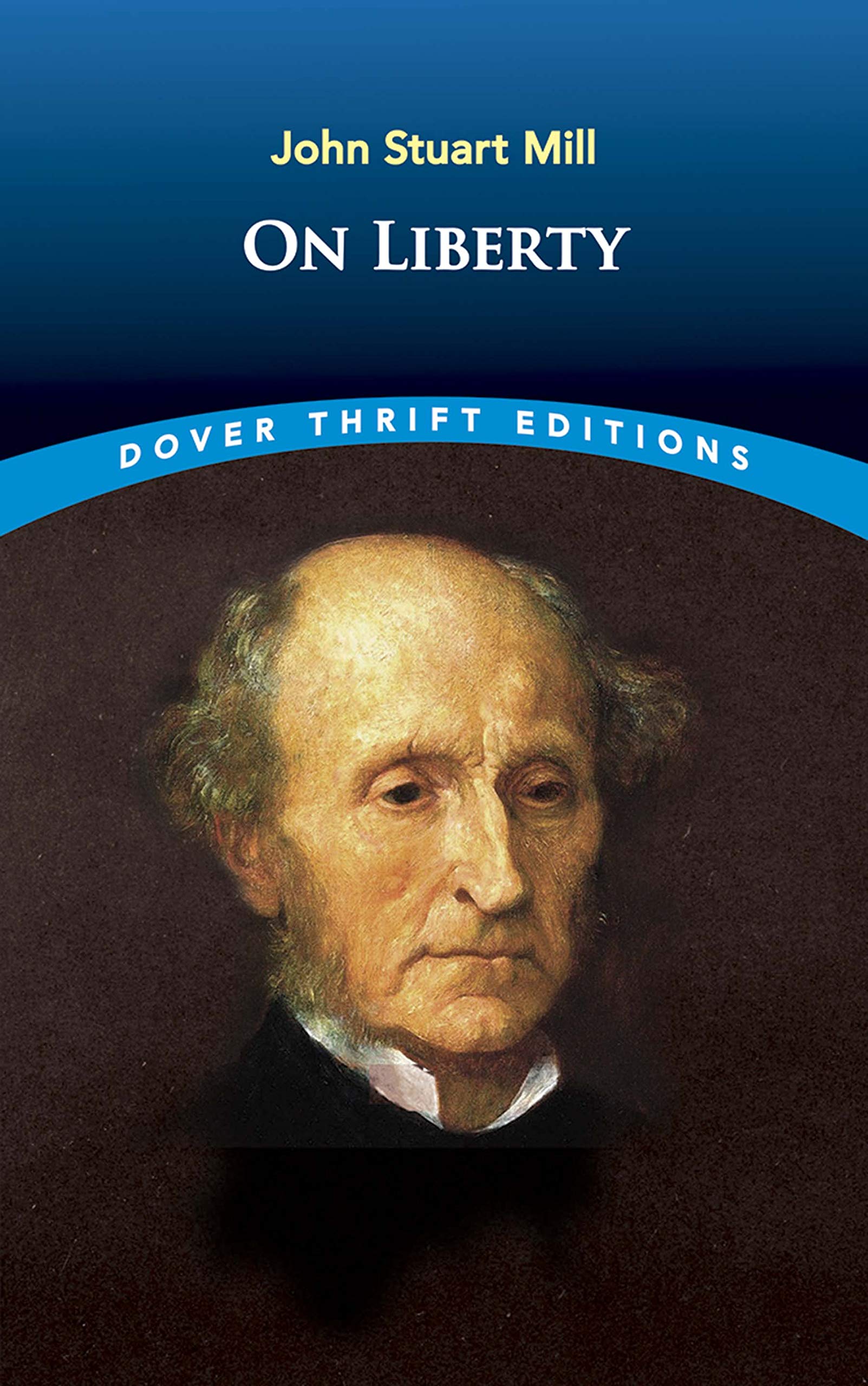
On Liberty: Chapter II
In this influential essay, Mill examines the nature of liberty as it applies to the individual and society as a whole. Read the full text here.
Here are links to our lists for the text: Chapter I, Chapter II, Chapter III, Chapter IV, Chapter V
40 words
49 learners
Learn words with Flashcards and other activities
Definition First

Other learning activities
Full list of words from this list:
-
posterity
all future generationsBut the peculiar evil of silencing the expression of an opinion is, that it is robbing the human race; posterity as well as the existing generation; those who dissent from the opinion, still more than those who hold it.
-
repose
put or place something (e.g., trust) in or onPeople more happily situated, who sometimes hear their opinions disputed, and are not wholly unused to be set right when they are wrong, place the same unbounded reliance only on such of their opinions as are shared by all who surround them, or to whom they habitually defer: for in proportion to a man's want of confidence in his own solitary judgment, does he usually repose, with implicit trust, on the infallibility of "the world" in general.
-
propagation
the spreading of something into new regionsThere is no greater assumption of infallibility in forbidding the propagation of error, than in any other thing which is done by public authority on its own judgment and responsibility.
-
incumbent
necessary as a duty or responsibility; morally bindingTo prohibit what they think pernicious, is not claiming exemption from error, but fulfilling the duty incumbent on them, although fallible, of acting on their conscientious conviction.
-
pernicious
exceedingly harmfulWe may, and must, assume our opinion to be true for the guidance of our own conduct: and it is assuming no more when we forbid bad men to pervert society by the propagation of opinions which we regard as false and pernicious.
-
preponderance
a superiority in numbers or amountWhy is it, then, that there is on the whole a preponderance among mankind of rational opinions and rational conduct?
-
corrigible
capable of being corrected or set rightIf there really is this preponderance—which there must be, unless human affairs are, and have always been, in an almost desperate state—it is owing to a quality of the human mind, the source of everything respectable in man either as an intellectual or as a moral being, namely, that his errors are corrigible.
-
destitute
completely wanting or lackingIn the present age—which has been described as "destitute of faith, but terrified at scepticism"—in which people feel sure, not so much that their opinions are true, as that they should not know what to do without them—the claims of an opinion to be protected from public attack are rested not so much on its truth, as on its importance to society.
-
impugn
attack as false or wrongLet the opinions impugned be the belief in a God and in a future state, or any of the commonly received doctrines of morality.
-
judicious
marked by the exercise of common sense in practical mattersBorn in an age and country abounding in individual greatness, this man has been handed down to us by those who best knew both him and the age, as the most virtuous man in it; while we know him as the head and prototype of all subsequent teachers of virtue, the source equally of the lofty inspiration of Plato and the judicious utilitarianism of Aristotle...
-
impiety
unrighteousness by virtue of lacking respect for a godThis acknowledged master of all the eminent thinkers who have since lived—whose fame, still growing after more than two thousand years, all but outweighs the whole remainder of the names which make his native city illustrious—was put to death by his countrymen, after a judicial conviction, for impiety and immorality.
-
iniquity
an unjust actTo pass from this to the only other instance of judicial iniquity, the mention of which, after the condemnation of Socrates, would not be an anticlimax: the event which took place on Calvary rather more than eighteen hundred years ago.
-
ignominiously
in a dishonorable manner or to a dishonorable degreeThe man who left on the memory of those who witnessed his life and conversation, such an impression of his moral grandeur, that eighteen subsequent centuries have done homage to him as the Almighty in person, was ignominiously put to death, as what? As a blasphemer.
-
promulgation
the formal act of proclaiming; giving public noticeUnless any one who approves of punishment for the promulgation of opinions, flatters himself that he is a wiser and better man than Marcus Aurelius—more deeply versed in the wisdom of his time, more elevated in his intellect above it—more earnest in his search for truth, or more single-minded in his devotion to it when found;—let him abstain from that assumption of the joint infallibility of himself and the multitude, which the great Antoninus made with so unfortunate a result.
-
extirpate
destroy completely, as if down to the rootsIt is true we no longer put heretics to death; and the amount of penal infliction which modern feeling would probably tolerate, even against the most obnoxious opinions, is not sufficient to extirpate them.
-
redress
act of correcting an error or a fault or an evilThis refusal of redress took place in virtue of the legal doctrine, that no person can be allowed to give evidence in a court of justice, who does not profess belief in a God (any god is sufficient) and in a future state; which is equivalent to declaring such persons to be outlaws, excluded from the protection of the tribunals...
-
obloquy
state of disgrace resulting from public abuseUnder pretence that atheists must be liars, it admits the testimony of all atheists who are willing to lie, and rejects only those who brave the obloquy of publicly confessing a detested creed rather than affirm a falsehood.
-
leaven
an influence working subtly to lighten or modify somethingWhat is boasted of at the present time as the revival of religion, is always, in narrow and uncultivated minds, at least as much the revival of bigotry; and where there is the strong permanent leaven of intolerance in the feelings of a people, which at all times abides in the middle classes of this country, it needs but little to provoke them into actively persecuting those whom they have never ceased to think proper objects of persecution.
-
interdict
command againstAnd thus is kept up a state of things very satisfactory to some minds, because, without the unpleasant process of fining or imprisoning anybody, it maintains all prevailing opinions outwardly undisturbed, while it does not absolutely interdict the exercise of reason by dissentients afflicted with the malady of thought.
-
reticence
the trait of being uncommunicativeThose in whose eyes this reticence on the part of heretics is no evil, should consider in the first place, that in consequence of it there is never any fair and thorough discussion of heretical opinions; and that such of them as could not stand such a discussion, though they may be prevented from spreading, do not disappear.
-
tenable
based on sound reasoning or evidenceThere is a class of persons (happily not quite so numerous as formerly) who think it enough if a person assents undoubtingly to what they think true, though he has no knowledge whatever of the grounds of the opinion, and could not make a tenable defence of it against the most superficial objections.
-
inculcate
teach and impress by frequent repetitions or admonitionsThat simple minds, having been taught the obvious grounds of the truths inculcated on them, may trust to authority for the rest, and being aware that they have neither knowledge nor talent to resolve every difficulty which can be raised, may repose in the assurance that all those which have been raised have been or can be answered, by those who are specially trained to the task.
-
apprehension
the cognitive condition of someone who understandsWe often hear the teachers of all creeds lamenting the difficulty of keeping up in the minds of believers a lively apprehension of the truth which they nominally recognise, so that it may penetrate the feelings, and acquire a real mastery over the conduct.
-
imbue
fill or soak totally...in that period of every creed's existence, not a few persons may be found, who have realised its fundamental principles in all the forms of thought, have weighed and considered them in all their important bearings, and have experienced the full effect on the character, which belief in that creed ought to produce in a mind thoroughly imbued with it.
-
maxim
a saying that is widely accepted on its own meritsHe has thus, on the one hand, a collection of ethical maxims, which he believes to have been vouchsafed to him by infallible wisdom as rules for his government; and on the other, a set of every-day judgments and practices, which go a certain length with some of those maxims, not so great a length with others, stand in direct opposition to some, and are, on the whole, a compromise between the Christian creed and the interests and suggestions of worldly life.
-
consummate
having or revealing supreme mastery or skillThey were essentially a negative discussion of the great questions of philosophy and life, directed with consummate skill to the purpose of convincing any one who had merely adopted the commonplaces of received opinion, that he did not understand the subject—that he as yet attached no definite meaning to the doctrines he professed...
-
palpable
capable of being perceivedPopular opinions, on subjects not palpable to sense, are often true, but seldom or never the whole truth.
-
enervating
causing weakness or debilitationThe superior worth of simplicity of life, the enervating and demoralising effect of the trammels and hypocrisies of artificial society, are ideas which have never been entirely absent from cultivated minds since Rousseau wrote; and they will in time produce their due effect, though at present needing to be asserted as much as ever, and to be asserted by deeds, for words, on this subject, have nearly exhausted their power.
-
trammel
a restraint that confines or restricts freedomThe superior worth of simplicity of life, the enervating and demoralising effect of the trammels and hypocrisies of artificial society, are ideas which have never been entirely absent from cultivated minds since Rousseau wrote; and they will in time produce their due effect, though at present needing to be asserted as much as ever, and to be asserted by deeds, for words, on this subject, have nearly exhausted their power.
-
precept
a doctrine that is taughtChristian morality (so called) has all the characters of a reaction; it is, in great part, a protest against Paganism. Its ideal is negative rather than positive; passive rather than active; Innocence rather than Nobleness; Abstinence from Evil, rather than energetic Pursuit of Good: in its precepts (as has been well said) "thou shalt not" predominates unduly over "thou shalt."
-
magnanimity
nobility and generosity of spiritWhat little recognition the idea of obligation to the public obtains in modern morality, is derived from Greek and Roman sources, not from Christian; as, even in the morality of private life, whatever exists of magnanimity, high-mindedness, personal dignity, even the sense of honour, is derived from the purely human, not the religious part of our education, and never could have grown out of a standard of ethics in which the only worth, professedly recognised, is that of obedience.
-
secular
not concerned with or devoted to religionI much fear that by attempting to form the mind and feelings on an exclusively religious type, and discarding those secular standards (as for want of a better name they may be called) which heretofore co-existed with and supplemented the Christian ethics, receiving some of its spirit, and infusing into it some of theirs, there will result, and is even now resulting, a low, abject, servile type of character...
-
abject
showing humiliation or submissivenessI much fear that by attempting to form the mind and feelings on an exclusively religious type, and discarding those secular standards (as for want of a better name they may be called) which heretofore co-existed with and supplemented the Christian ethics, receiving some of its spirit, and infusing into it some of theirs, there will result, and is even now resulting, a low, abject, servile type of character...
-
partisan
an enthusiastic supporter of some person or activityBut it is not on the impassioned partisan, it is on the calmer and more disinterested bystander, that this collision of opinions works its salutary effect.
-
censure
harsh criticism or disapprovalUndoubtedly the manner of asserting an opinion, even though it be a true one, may be very objectionable, and may justly incur severe censure.
-
invective
abusive language used to express blame or censureWith regard to what is commonly meant by intemperate discussion, namely invective, sarcasm, personality, and the like, the denunciation of these weapons would deserve more sympathy if it were ever proposed to interdict them equally to both sides...
-
polemic
a verbal or written attack, especially of a belief or dogmaThe worst offence of this kind which can be committed by a polemic, is to stigmatise those who hold the contrary opinion as bad and immoral men.
-
calumny
an abusive attack on a person's character or good nameTo calumny of this sort, those who hold any unpopular opinion are peculiarly exposed, because they are in general few and uninfluential, and nobody but themselves feel much interest in seeing justice done them; but this weapon is, from the nature of the case, denied to those who attack a prevailing opinion: they can neither use it with safety to themselves, nor, if they could, would it do anything but recoil on their own cause.
-
vituperation
abusive or venomous language to express blame or censureIn general, opinions contrary to those commonly received can only obtain a hearing by studied moderation of language, and the most cautious avoidance of unnecessary offence, from which they hardly ever deviate even in a slight degree without losing ground: while unmeasured vituperation employed on the side of the prevailing opinion, really does deter people from professing contrary opinions, and from listening to those who profess them.
-
charlatan
a flamboyant deceiverThe ravings of fanatics or charlatans from the pulpit may be unworthy of notice...
Created on Wed Jul 14 13:46:35 EDT 2021
(updated Wed Jul 21 14:37:17 EDT 2021)
Sign up now (it’s free!)
Whether you’re a teacher or a learner,
Vocabulary.com can put you or your class
on the path to systematic vocabulary improvement.