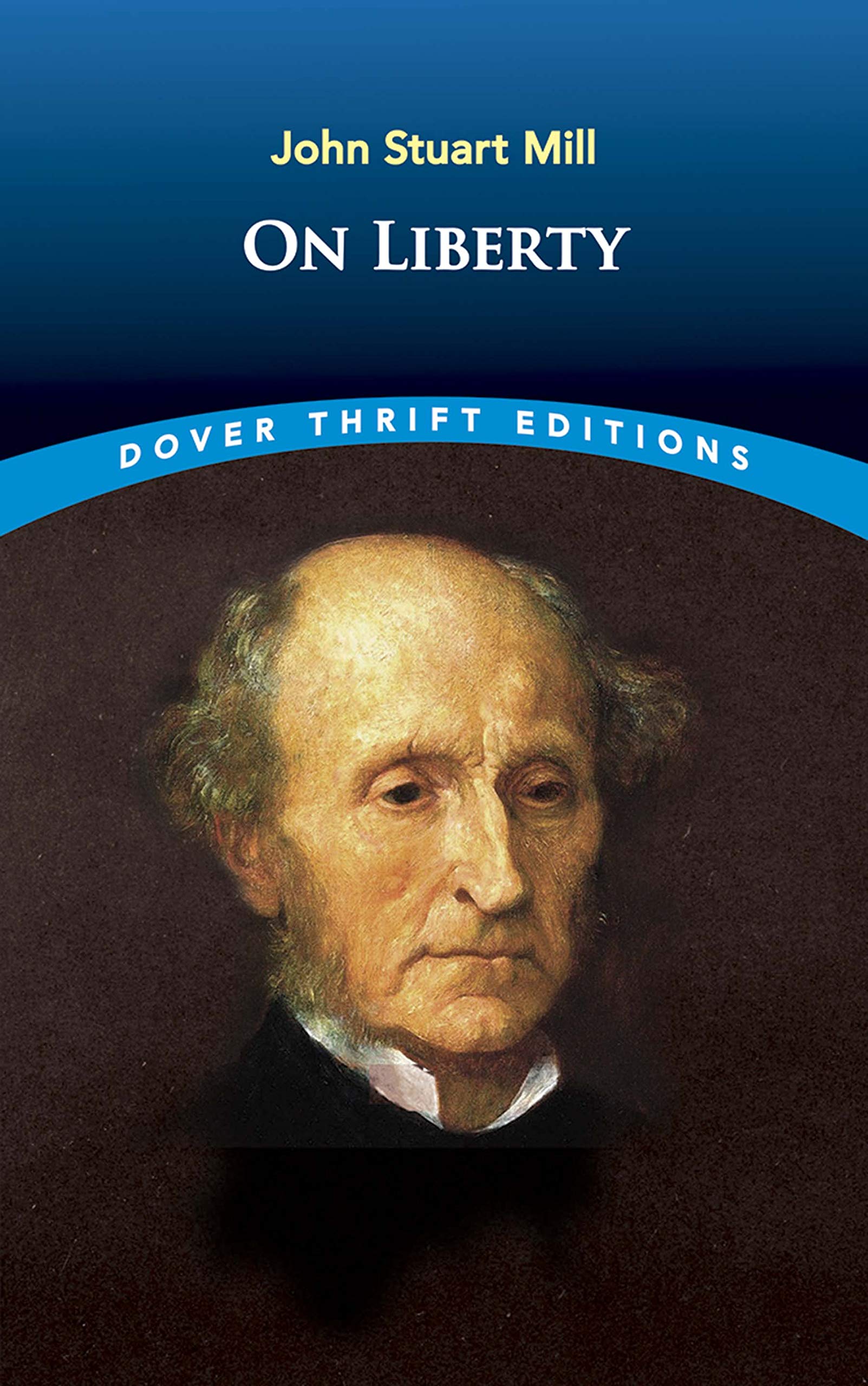
On Liberty: Chapter I
In this influential essay, Mill examines the nature of liberty as it applies to the individual and society as a whole. Read the full text here.
Here are links to our lists for the text: Chapter I, Chapter II, Chapter III, Chapter IV, Chapter V
40 words
364 learners
Learn words with Flashcards and other activities
Definition First

Other learning activities
Full list of words from this list:
-
conspicuous
obvious to the eye or mindThe struggle between Liberty and Authority is the most conspicuous feature in the portions of history with which we are earliest familiar, particularly in that of Greece, Rome, and England.
-
expedient
a means to an endA second, and generally a later expedient, was the establishment of constitutional checks; by which the consent of the community, or of a body of some sort, supposed to represent its interests, was made a necessary condition to some of the more important acts of the governing power.
-
efficacious
giving the power to produce an intended resultAnd so long as mankind were content to combat one enemy by another, and to be ruled by a master, on condition of being guaranteed more or less efficaciously against his tyranny, they did not carry their aspirations beyond this point.
-
axiomatic
evident without proof or argumentThe notion, that the people have no need to limit their power over themselves, might seem axiomatic, when popular government was a thing only dreamed about, or read of as having existed at some distant period of the past.
-
aberration
a state or condition markedly different from the normNeither was that notion necessarily disturbed by such temporary aberrations as those of the French Revolution, the worst of which were the work of a usurping few, and which, in any case, belonged, not to the permanent working of popular institutions, but to a sudden and convulsive outbreak against monarchical and aristocratic despotism.
-
speculation
continuous contemplation on a subject of a deep natureThis view of things, recommending itself equally to the intelligence of thinkers and to the inclination of those important classes in European society to whose real or supposed interests democracy is adverse, has had no difficulty in establishing itself; and in political speculations "the tyranny of the majority" is now generally included among the evils against which society requires to be on its guard.
-
prevailing
most frequent or commonProtection, therefore, against the tyranny of the magistrate is not enough: there needs protection also against the tyranny of the prevailing opinion and feeling; against the tendency of society to impose, by other means than civil penalties, its own ideas and practices as rules of conduct on those who dissent from them...
-
misgiving
uneasiness about the fitness of an actionThe effect of custom, in preventing any misgiving respecting the rules of conduct which mankind impose on one another, is all the more complete because the subject is one on which it is not generally considered necessary that reasons should be given, either by one person to others, or by each to himself.
-
render
cause to becomePeople are accustomed to believe, and have been encouraged in the belief by some who aspire to the character of philosophers, that their feelings, on subjects of this nature, are better than reasons, and render reasons unnecessary.
-
propriety
correct behaviorTo an ordinary man, however, his own preference, thus supported, is not only a perfectly satisfactory reason, but the only one he generally has for any of his notions of morality, taste, or propriety, which are not expressly written in his religious creed; and his chief guide in the interpretation even of that.
-
laudable
worthy of high praiseMen's opinions, accordingly, on what is laudable or blamable, are affected by all the multifarious causes which influence their wishes in regard to the conduct of others, and which are as numerous as those which determine their wishes on any other subject.
-
ascendancy
the state when one person or group has power over anotherWhere, on the other hand, a class, formerly ascendant, has lost its ascendancy, or where its ascendancy is unpopular, the prevailing moral sentiments frequently bear the impress of an impatient dislike of superiority.
-
aversion
a feeling of intense dislikeAnother grand determining principle of the rules of conduct, both in act and forbearance, which have been enforced by law or opinion, has been the servility of mankind towards the supposed preferences or aversions of their temporal masters, or of their gods.
-
servile
submissive or fawning in attitude or behaviorThis servility, though essentially selfish, is not hypocrisy; it gives rise to perfectly genuine sentiments of abhorrence; it made men burn magicians and heretics.
-
antipathy
a feeling of intense dislike...the general and obvious interests of society have of course had a share, and a large one, in the direction of the moral sentiments: less, however, as a matter of reason, and on their own account, than as a consequence of the sympathies and antipathies which grew out of them: and sympathies and antipathies which had little or nothing to do with the interests of society, have made themselves felt in the establishment of moralities with quite as great force.
-
heretical
departing from accepted beliefs or standardsThey preferred endeavouring to alter the feelings of mankind on the particular points on which they were themselves heretical, rather than make common cause in defence of freedom, with heretics generally.
-
fallibility
the quality or likelihood of making errorsThe only case in which the higher ground has been taken on principle and maintained with consistency, by any but an individual here and there, is that of religious belief: a case instructive in many ways, and not least so as forming a most striking instance of the fallibility of what is called the moral sense: for the odium theologicum, in a sincere bigot, is one of the most unequivocal cases of moral feeling.
-
unequivocal
admitting of no doubt or misunderstandingThe only case in which the higher ground has been taken on principle and maintained with consistency, by any but an individual here and there, is that of religious belief: a case instructive in many ways, and not least so as forming a most striking instance of the fallibility of what is called the moral sense: for the odium theologicum, in a sincere bigot, is one of the most unequivocal cases of moral feeling.
-
yoke
an oppressive powerThose who first broke the yoke of what called itself the Universal Church, were in general as little willing to permit difference of religious opinion as that church itself.
-
tacit
implied by or inferred from actions or statementsIn the minds of almost all religious persons, even in the most tolerant countries, the duty of toleration is admitted with tacit reserves.
-
abate
make less active or intenseWherever the sentiment of the majority is still genuine and intense, it is found to have abated little of its claim to be obeyed.
-
salutary
tending to promote physical well-being; beneficial to health...there is a considerable amount of feeling ready to be called forth against any attempt of the law to control individuals in things in which they have not hitherto been accustomed to be controlled by it; and this with very little discrimination as to whether the matter is, or is not, within the legitimate sphere of legal control; insomuch that the feeling, highly salutary on the whole, is perhaps quite as often misplaced as well grounded in the particular instances of its application.
-
amenable
liable to answer to a higher authoritySome, whenever they see any good to be done, or evil to be remedied, would willingly instigate the government to undertake the business; while others prefer to bear almost any amount of social evil, rather than add one to the departments of human interests amenable to governmental control.
-
coercion
the act of compelling by force of authorityThe object of this Essay is to assert one very simple principle, as entitled to govern absolutely the dealings of society with the individual in the way of compulsion and control, whether the means used be physical force in the form of legal penalties, or the moral coercion of public opinion.
-
forbear
refrain from doingHe cannot rightfully be compelled to do or forbear because it will be better for him to do so, because it will make him happier, because, in the opinions of others, to do so would be wise, or even right.
-
remonstrate
argue in protest or oppositionThese are good reasons for remonstrating with him, or reasoning with him, or persuading him, or entreating him, but not for compelling him, or visiting him with any evil in case he do otherwise.
-
despotism
a form of government in which the ruler is unconstrainedDespotism is a legitimate mode of government in dealing with barbarians, provided the end be their improvement, and the means justified by actually effecting that end.
-
anterior
earlier in timeLiberty, as a principle, has no application to any state of things anterior to the time when mankind have become capable of being improved by free and equal discussion.
-
implicit
being without doubt or reserveUntil then, there is nothing for them but implicit obedience to an Akbar or a Charlemagne, if they are so fortunate as to find one.
-
utility
a measure to be maximized in a situation involving choiceI regard utility as the ultimate appeal on all ethical questions; but it must be utility in the largest sense, grounded on the permanent interests of man as a progressive being.
-
subjection
forced submission to control by othersThose interests, I contend, authorise the subjection of individual spontaneity to external control, only in respect to those actions of each, which concern the interest of other people.
-
disapprobation
an expression of strong disapprovalIf any one does an act hurtful to others, there is a primâ facie case for punishing him, by law, or, where legal penalties are not safely applicable, by general disapprobation.
-
interpose
get involved, so as to alter or hinder an actionThere are also many positive acts for the benefit of others, which he may rightfully be compelled to perform; such as, to give evidence in a court of justice..., saving a fellow-creature's life, or interposing to protect the defenceless against ill-usage, things which whenever it is obviously a man's duty to do, he may rightfully be made responsible to society for not doing.
-
discretion
freedom to act or judge on one's ownThere are often good reasons for not holding him to the responsibility; but these reasons must arise from the special expediencies of the case: either because it is a kind of case in which he is on the whole likely to act better, when left to his own discretion, than when controlled in any way in which society have it in their power to control him; or because the attempt to exercise control would produce other evils, greater than those which it would prevent.
-
unqualified
not limited or restrictedNo society in which these liberties are not, on the whole, respected, is free, whatever may be its form of government; and none is completely free in which they do not exist absolute and unqualified.
-
countenance
consent to, give permissionThe ancient commonwealths thought themselves entitled to practise, and the ancient philosophers countenanced, the regulation of every part of private conduct by public authority, on the ground that the State had a deep interest in the whole bodily and mental discipline of every one of its citizens...
-
subvert
undermine or hinder normal operations...the State had a deep interest in the whole bodily and mental discipline of every one of its citizens; a mode of thinking which may have been admissible in small republics surrounded by powerful enemies, in constant peril of being subverted by foreign attack or internal commotion, and to which even a short interval of relaxed energy and self-command might so easily be fatal, that they could not afford to wait for the salutary permanent effects of freedom.
-
tenet
a basic principle or belief that is accepted as trueApart from the peculiar tenets of individual thinkers, there is also in the world at large an increasing inclination to stretch unduly the powers of society over the individual, both by the force of opinion and even by that of legislation...
-
disposition
an attitude of mind that favors one alternative over othersThe disposition of mankind, whether as rulers or as fellow-citizens to impose their own opinions and inclinations as a rule of conduct on others, is so energetically supported by some of the best and by some of the worst feelings incident to human nature, that it is hardly ever kept under restraint by anything but want of power...
-
cognate
related in natureThis one branch is the Liberty of Thought: from which it is impossible to separate the cognate liberty of speaking and of writing.
Created on Wed Jul 14 13:46:00 EDT 2021
(updated Wed Jul 21 14:36:06 EDT 2021)
Sign up now (it’s free!)
Whether you’re a teacher or a learner,
Vocabulary.com can put you or your class
on the path to systematic vocabulary improvement.