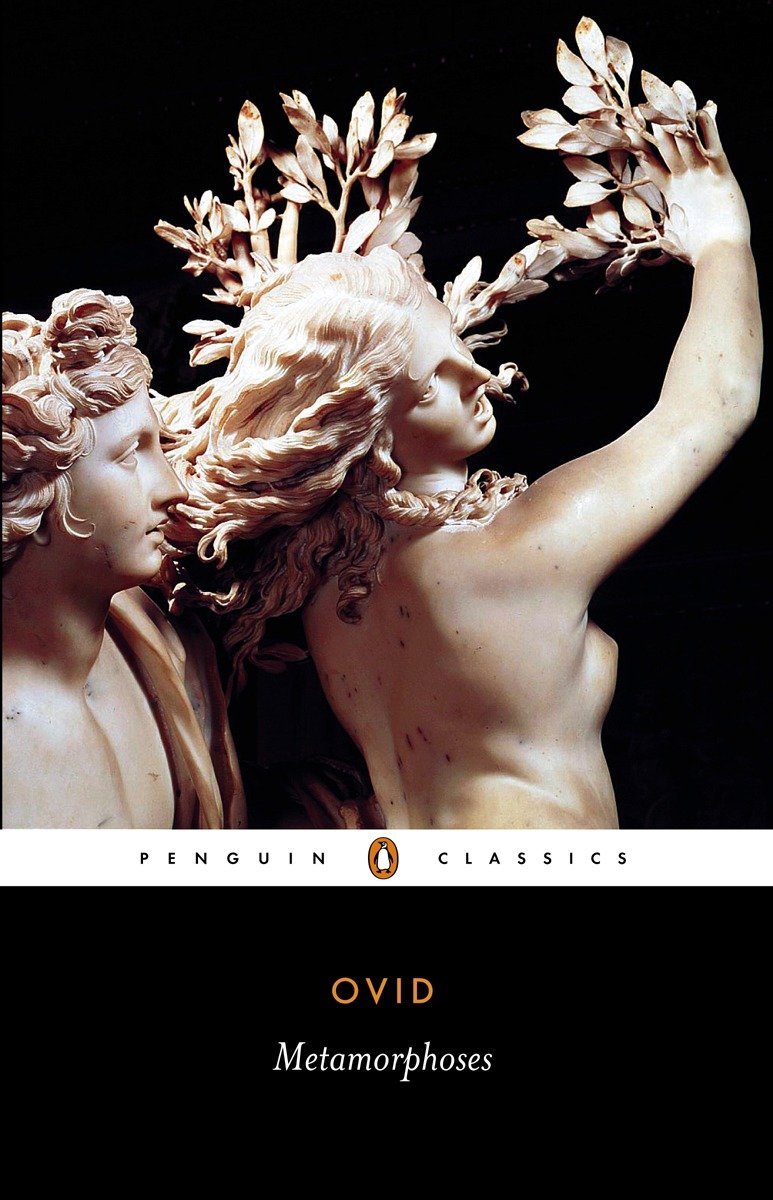
Metamorphoses: Book 13
Ovid's Metamorphoses features myths and stories of change, mutation, and transformation. Learn these words from the translation by John Dryden here.
Here are links to our lists for the book: Book 1, Book 2, Book 3, Book 4, Book 5, Book 6, Book 7, Book 8, Book 9, Book 10, Book 11, Book 12, Book 13, Book 14
25 words
135 learners
Learn words with Flashcards and other activities
Definition First

Other learning activities
Full list of words from this list:
-
kindle
cause to start burningThe chiefs were set; the soldiers crown'd the field:
To these the master of the seven-fold shield
Upstarted fierce: and kindled with disdain.
Eager to speak, unable to contain
His boiling rage,"Kindle" also means "call forth, as an emotion, feeling, or response"--although Ajax is trying to kindle disdain for Ulysses, so that the chiefs would reward him with the armor of the fallen Achilles, he is already burning with disdain and rage that Ulysses, who once fled from the battlefield, should even be considered. -
abject
of the most contemptible kindGreat is the prize demanded, I confess,
But such an abject rival makes it less; -
elocution
an expert manner of speaking involving control of voiceNo wonder, if he roar'd that all might hear;
His elocution was increas'd by fear:
I heard, I ran, I found him out of breath,
Pale, trembling, and half dead with fear of death. -
opprobrious
deserving or bringing disgrace or shameLet him return to that opprobrious field;
Again creep under my protecting shield:
Let him lie wounded, let the foe be near,
And let his quiv'ring heart confess his fear; -
sleight
adroitness in using the handsWill he compare my courage with his sleight?
As well he may compare the day with night.
Night is indeed the province of his reign:
Yet all his dark exploits no more contain
Than a spy taken, and a sleeper slain;"Sleight" also means "a clever or skillful trick or deception"--this would be a more insulting attack on Ulysses as a warrior. "Sleight" is also a homonym of "slight" which as an adjective means "lacking substance or significance" or "being of delicate or slender build," as a verb means "pay no attention to; disrespect" and as a noun means "a deliberate discourteous act"--all of which add to the insult. -
parricide
the murder of your own father or motherMy sire Laertes was Arcesius' heir,
Arcesius was the son of Jupiter:
No parricide, no banish'd man, is known
In all my line: let him excuse his own.
Hermes ennobles too my mother's side,
By both my parents to the Gods allied. -
circumvent
beat through cleverness and wit'Tis harder yet to move the mother's mind,
And to this heavy task was I design'd:
Reasons against her love I knew were vain;
I circumvented whom I could not gain:
Had Ajax been employ'd, our slacken'd sails
Had still at Aulis waited happy gales. -
aspersion
an abusive attack on a person's character or good nameNor need I wonder, that on me he threw
Such foul aspersions, when he spares not you: -
mollify
cause to be more favorably inclinedSend Ajax there, with his persuasive sense,
To mollify the man, and draw him thence:
But Xanthus shall run backward; Ida stand
A leafless mountain; and the Grecian band
Shall fight for Troy; if, when my councils fail,
The wit of heavy Ajax can prevail. -
tutelary
providing protective supervisionEnter the town, I then unbarr'd the gates,
When I remov'd their tutelary Fates.
By all our common hopes, if hopes they be
Which I have now reduc'd to certainty;
By falling Troy, by yonder tott'ring tow'rs,
And by their taken Gods, which now are ours;The Fates that are represented as three old women spinning the thread of life are not tutelary; since they measure out death for everyone, they do not have favorite humans or cities. The word "Fates" seems to be used here to complete the rhyme, but the Fates' actual role was revealing that Troy would not fall unless its tutelary statue of Minerva (the goddess of war) was removed. -
dauntless
invulnerable to fear or intimidationIf yet some desp'rate action rests behind,
That asks high conduct, and a dauntless mind;
If ought be wanting to the Trojan doom,
Which none but I can manage, and o'ercome,
Award, those arms I ask, by your decree: -
deplore
regret stronglyO cou'd I but conceal this dire event
From my sad mother, I should die content.
Yet should she not with tears my death deplore,
Since her own wretched life demands them more. -
specious
plausible but falseSo Hecuba with mingled grief, and rage
Pursues the king, regardless of her age.
She greets the murd'rer with dissembled joy
Of secret treasure hoarded for her boy.
The specious tale th' unwary king betray'd.The "unwary" king was not suspicious of the specious tale of Hecuba, and this led to his death. He had murdered Hecuba's son, who had been sent to him, with treasure, for safekeeping. And when Hecuba came to him speciously talking about more treasure, he was too greedy to suspect that she would take that opportunity to vengefully tear out his eyeballs. -
invective
abusive language used to express blame or censureShe snarls, and growls, nor in a human tone;
Then bites impatient at the bounding stone;
Extends her jaws, as she her voice would raise
To keen invectives in her wonted phrase;
But barks, and thence the yelping brute betrays. -
mitigate
lessen or to try to lessen the seriousness or extent ofThe happy father of so large a train;
Behold me now (such turns of chance befall
The race of man!), almost bereft of all.
For (ah!) what comfort can my son bestow,
What help afford, to mitigate my woe! -
ruffian
a cruel and brutal fellowWith force superior, and a ruffian crew,
From these weak arms, the helpless virgins drew:
And sternly bade them use the grant divine,
To keep the fleet in corn, and oil, and wine."Ruffian" is a sound symbolic (onomatopoeic) word that sounds as "rough" as it means. To Anius, Agamemnon's crew were ruffians not only because they destroyed Troy, but also because they took his four daughters and forced them to use their green thumbs to feed the troops. -
munificence
liberality in bestowing giftsAttending to the sea, the gen'rous prince
Dismiss'd his guests with rich munificence, -
noxious
injurious to physical or mental healthNow hoisting sail, to Crete the Trojans stood,
Themselves rememb'ring sprung from Teucer's blood;
But Heav'n forbids, and pestilential Jove
From noxious skies, the wand'ring navy drove. -
aversion
a feeling of intense dislikeAsk not which passion in my soul was high'r,
My last aversion, or my first desire:
Nor this the greater was, nor that the less;
Both were alike, for both were in excess. -
scythe
an edge tool for cutting grassAssum'd the softness of a lover's air;
And comb'd, with teeth of rakes, his rugged hair.
Now with a crooked scythe his beard he sleeks;
And mows the stubborn stubble of his cheeks:Death, personified, usually carries a scythe--although the Cyclops Polyphemus does not personify death, he often "made his bloody feasts on mangled members of his butcher'd guests." But in the example sentence, Polyphemus is in love, and he is using the scythe to shave his beard. -
burly
muscular and heavily builtA pine so burly, and of length so vast,
That sailing ships requir'd it for a mast,
He wielded for a staff, his steps to guide: -
fallacious
intended to deceiveYet, Galatea, harder to be broke
Than bullocks, unreclaim'd, to bear the yoke,
And far more stubborn, than the knotted oak:
Like sliding streams, impossible to hold;
Like them, fallacious, like their fountains, cold. -
stature
the height of a standing personCome, Galatea, come, and view my face;
I late beheld it, in the wat'ry glass;
And found it lovelier, than I fear'd it was.
Survey my tow'ring stature, and my size:
Not Jove, the Jove you dream, that rules the skies,
Bears such a bulk, or is so largely spread: -
lineage
the kinship relation between an individual and progenitorsThe mighty fragment was enough alone,
To crush all Acis; 'twas too late to save,
But what the Fates allow'd to give, I gave:
That Acis to his lineage should return; -
adorn
make more attractive, as by adding ornament or colorWhen (wond'rous to behold), full in the flood,
Up starts a youth, and navel high he stood.
Horns from his temples rise; and either horn
Thick wreaths of reeds (his native growth) adorn.
Were not his stature taller than before,
His bulk augmented, and his beauty more,
His colour blue; for Acis he might pass:
And Acis chang'd into a stream he was,
Created on Tue Jun 18 16:54:30 EDT 2013
(updated Mon Apr 08 17:16:41 EDT 2019)
Sign up now (it’s free!)
Whether you’re a teacher or a learner,
Vocabulary.com can put you or your class
on the path to systematic vocabulary improvement.