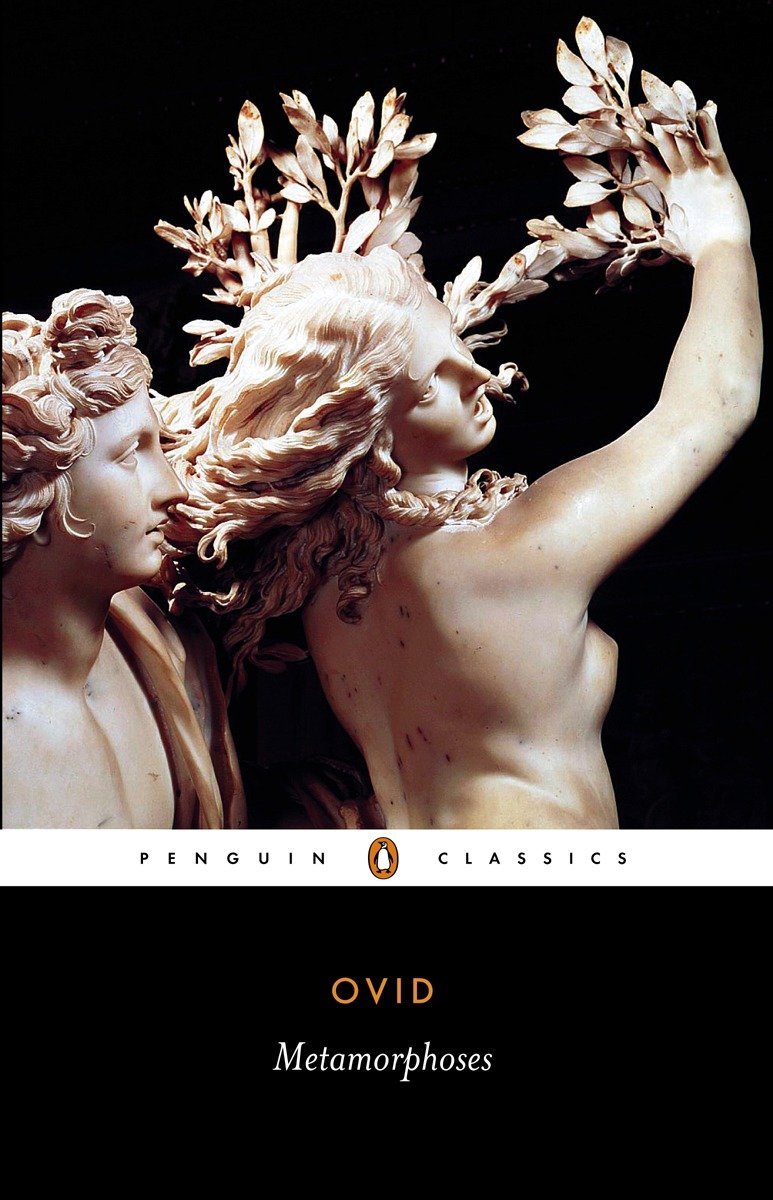
Metamorphoses: Book 9
Ovid's Metamorphoses features myths and stories of change, mutation, and transformation. Learn these words from the translation by John Dryden here.
Here are links to our lists for the book: Book 1, Book 2, Book 3, Book 4, Book 5, Book 6, Book 7, Book 8, Book 9, Book 10, Book 11, Book 12, Book 13, Book 14
30 words
43 learners
Learn words with Flashcards and other activities
Definition First

Other learning activities
Full list of words from this list:
-
maim
injure or wound seriously and leave permanent disfigurationTheseus requests the God to tell his woes,
Whence his maim'd brow, and whence his groans arose -
defy
resist or confront with resistanceSafe in my bulk, immovable I stand.
So when loud storms break high, and foam and roar
Against some mole that stretches from the shore;
The firm foundation lasting tempests braves,
Defies the warring winds, and driving waves. -
extol
praise, glorify, or honorBelieve my tale; nor do I, boastful, aim
By feign'd narration to extol my fame. -
augmented
added to or made greater in amount or number or strengthArt thou proportion'd to the Hydra's length,
Who by his wounds receiv'd augmented strength?
He rais'd a hundred hissing heads in air;
When one I lopt, up-sprung a dreadful pair. -
quell
suppress or crush completelyBy his wounds fertile, and with slaughter strong,
Singly I quell'd him, and stretch'd dead along. -
precarious
not secure; beset with difficultiesWhat canst thou do, a form precarious, prone,
To rouse my rage with terrors not thy own?Hercules insults Achelous/Neptune with the adjective "precarious"--although Neptune tries to scare him by transforming into a snake, Hercules smiles because not only did he kill snakes as a baby but he also recently killed the Hydra. So Neptune tries changing into a bull, but this form is more precarious ("fraught with danger") for him, because Hercules manages to grab hold of his neck and break off his horn. -
fortitude
strength of mind that enables one to endure adversitythe rising flame
Sudden dissolves the subtle pois'nous juice,
Which taints his blood, and all his nerves bedews.
With wonted fortitude he bore the smart,
And not a groan confess'd his burning heart.The description is of Hercules, so the "wonted fortitude" is not just the strength of his mind but also the more commonly used strength of his body. But even Hercules' fortitude does not last for long against the poisonous blood of the Hydra. -
livid
discolored by coagulation of blood beneath the skinAs the red iron hisses in the flood,
So boils the venom in his curdling blood.
Now with the greedy flame his entrails glow,
And livid sweats down all his body flow;
The cracking nerves burnt up are burst in twain,
The lurking venom melts his swimming brain. -
rancor
a feeling of deep and bitter anger and ill-willThen, lifting both his hands aloft, he cries,
Glut thy revenge, dread Empress of the skies;
Sate with my death the rancour of thy heart,
Look down with pleasure, and enjoy my smart.The irony is that, unlike what Hercules believes here, his suffering is not caused by Juno's rancor, but by his wife's love. Upon hearing a rumor that Hercules was in love with another woman, Deianira sends him Nessus's vest, because the centaur, right before he died from Hercules' arrow, rancorously lied about the vest having magical powers that could "rouse declining love." -
valiant
having or showing heroism or courageThe female partner of the Thunderer's reign
Fatigu'd, at length suspends her harsh commands,
Yet no fatigue hath slack'd these valiant hands.Despite being in extreme pain, Hercules recites all the valiant feats of his life, including slaying the horses that fed on human flesh and driving away the birds that ate men and beasts. Although some of his acts were less about being a hero than about fulfilling the desires of a greedy king, Hercules indefatigably completes them, which makes him seem stronger than Juno, who got tired of simply commanding others to harass Hercules. -
incessant
uninterrupted in time and indefinitely long continuingSeven days and nights amidst incessant throes,
Fatigu'd with ills I lay, nor knew repose;
When lifting high my hands, in shrieks I pray'd,
Implor'd the Gods, and call'd Lucina's aid. -
vex
disturb, especially by minor irritationsGalanthis' laughter vex'd the Pow'r deceiv'd.
Fame says, the Goddess dragg'd the laughing maid
Fast by the hair; in vain her force essay'd
Her grov'ling body from the ground to rear;
Chang'd to fore-feet her shrinking arms appear: -
encroach
advance beyond the usual limitHer stiff'ning feet were rooted to the ground:
In vain to free her fasten'd feet she strove,
And as she struggles only moves above;
She feels th' encroaching bark around her grow,
By slow degrees, and cover all below: -
hapless
unfortunate and deserving pityTeach him, when first his infant voice shall frame
Imperfect words, and lisp his mother's name,
To hail this tree, and say with weeping eyes,
Within this plant my hapless parent lies; -
prescient
perceiving the significance of events before they occurWhen Themis thus with prescient voice had spoke,
Among the Gods a various murmur broke;
Dissension rose in each immortal breast,
That one should grant, what was denied the rest. -
dismal
causing dejectionLet the sad fate of wretched Byblis prove
A dismal warning to unlawful love;
One birth gave being to the hapless pair,
But more was Caunus than a sister's care;"Dismal" and "sad" are synonyms, and so are "wretched" and "hapless"--all four adjectives in the example sentence set the mood for a story about an unrequited incestuous love that forces an ashamed brother to run away and a weeping sister to transform into a fountain. -
depraved
deviating from what is considered moral or right or properBut love (too soon from piety declin'd)
Insensibly depraved her yielding mind.
Dress'd she appears, with nicest art adorn'd,
And ev'ry youth, but her lov'd brother, scorn'd; -
prerogative
a right reserved exclusively by a person or groupHear me, ye Gods! I must have friends in Heav'n,
For Jove himself was to a sister giv'n:
But what are their prerogatives above,
To the short liberties of human love? -
afflicted
grievously affected especially by diseaseYet cruel Caunus might himself deny,
No pity take of an afflicted maid
(For love's sweet game must be by couples play'd). -
sprightly
full of spirit and vitalityWhere Nature kindly summons let us go,
Our sprightly years no bounds in love shou'd know,
Shou'd feel no check of guilt, and fear no ill;
Lovers, and Gods act all things at their will: -
divulge
make known to the public information previously kept secretHence, hence, he cried, thou pander to her lust,
Bear hence the triumph of thy impious trust:
Thy instant death will but divulge her shame,
Or thy life's blood shou'd quench the guilty flame. -
irksome
tedious or irritatingPerhaps, my careless page might be in fault,
And in a luckless hour the fatal message brought;
Business, and worldly thoughts might fill his breast,
Sometimes ev'n love itself may be an irksome guest: -
vouchsafe
grant in a condescending mannerIf Heav'n, said Lygdus, will vouchsafe to hear,
I have but two petitions to prefer;
Short pains for thee, for me a son and heir. -
pule
cry weakly or softlyWeak puling things, unable to sustain
Their share of labour, and their bread to gain.
If, therefore, thou a creature shalt produce,
Of so great charges, and so little use
(Bear witness, Heav'n, with what reluctancy),
Her hapless innocence I doom to die. -
persist
refuse to stopYet Telethusa still persists, to find
Fit arguments to move a father's mind;
T' extend his wishes to a larger scope,
And in one vessel not confine his hope. -
repose
put or confide something in a person or thingDelude with art thy husband's dire decree:
When danger calls, repose thy trust on me:
And know thou hast not serv'd a thankless deity. -
defraud
deprive of by deceitWhy com'st thou, Juno, to these barren rites,
To bless a bed defrauded of delights?
But why shou'd Hymen lift his torch on high,
To see two brides in cold embraces lie?Hymen is a god who presides over weddings, and Juno is the goddess associated with marriage, fertility, and childbirth. Thus, two women in love would not please these gods, because they cannot marry, would be "barren" ("not bearing offspring"), and their bed would be defrauded of the delights that a heterosexual union could produce. -
recourse
something or someone turned to for assistance or securityThen Telethusa had recourse to pray'r,
She, and her daughter with dishevel'd hair;
Trembling with fear, great Isis they ador'd,
Embrac'd her altar, and her aid implor'd. -
latent
potentially existing but not presently evident or realizedHer sparkling eyes with manly vigour shone,
Big was her voice, audacious was her tone.
The latent parts, at length reveal'd, began
To shoot, and spread, and burnish into man. -
votive
dedicated in fulfillment of a vowTheir gifts the parents to the temple bear:
The votive tables this inscription wear;
Iphis the man, has to the Goddess paid
The vows, that Iphis offer'd when a maid.
Created on Tue Jun 18 13:29:16 EDT 2013
(updated Mon Apr 08 17:15:35 EDT 2019)
Sign up now (it’s free!)
Whether you’re a teacher or a learner,
Vocabulary.com can put you or your class
on the path to systematic vocabulary improvement.