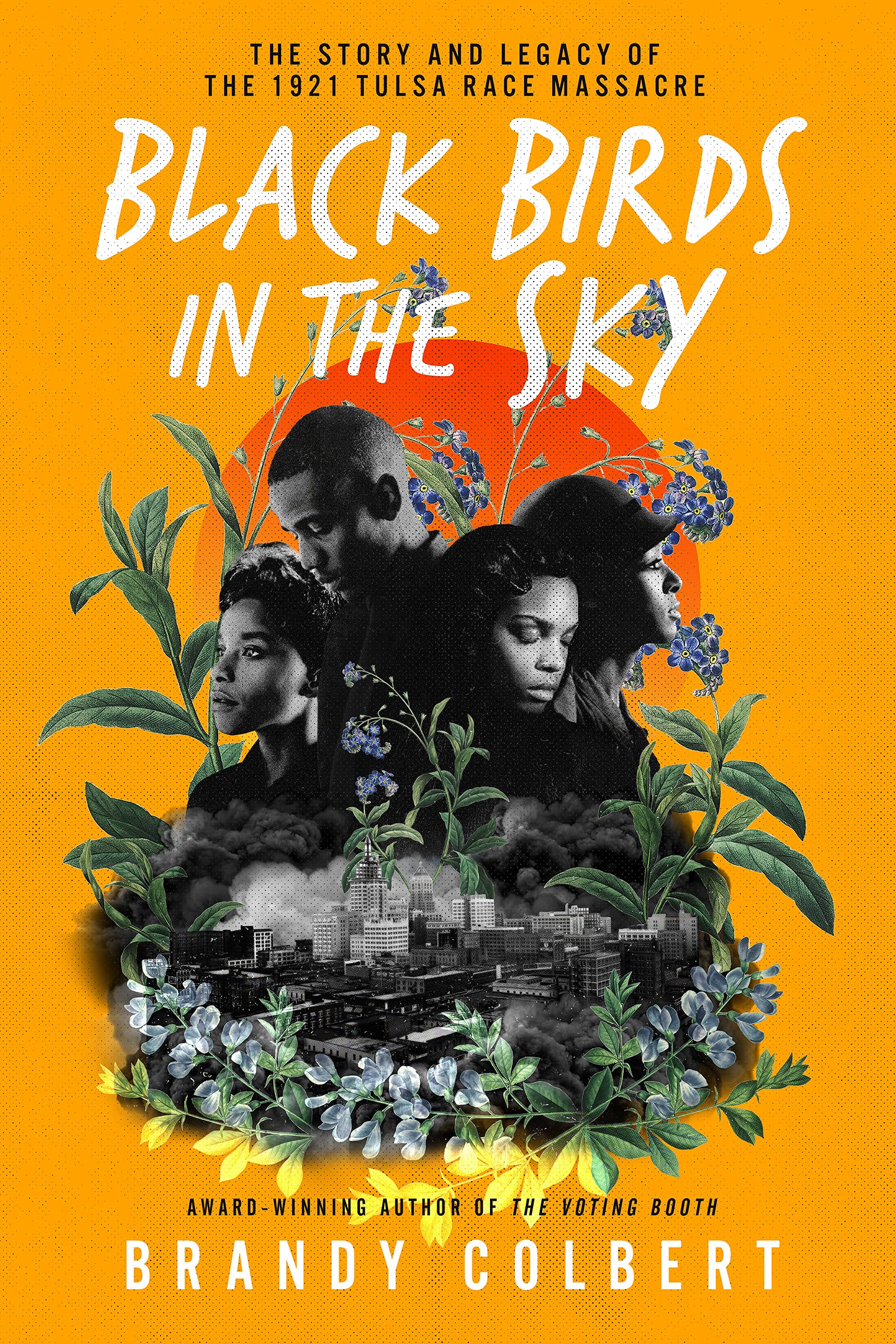
Black Birds in the Sky: June 1, 1921–Chapters 6–7
This nonfiction work delves into the history and legacy of the Tulsa Massacre — one of American history's deadliest acts of racial violence that took place in Oklahoma in 1921.
This list covers June 1, 1921–Chapters 6–7.
Here are links to our lists for the book: List 1, List 2, List 3, List 4
40 words
19 learners
Learn words with Flashcards and other activities
Definition First

Other learning activities
Full list of words from this list:
-
adjutant
an officer who acts as an assistant to a more senior officerAt 10:14 p.m., Major Byron Kirkpatrick of the Tulsa National Guard had called Adjutant General Charles F. Barrett of the state National Guard in Oklahoma City to tell him things were getting bad, but he didn’t receive word that they were sending anyone.
-
devolve
grow worseEven as the city was quickly devolving into chaos, proper procedures had to be followed to get the state troops into Tulsa.
-
impartial
free from undue bias or preconceived opinionsHowever, the Tulsa National Guard, though tasked with protecting all residents, was not impartial. Many members of the all-white unit also believed the trouble had started due to a “Negro uprising,” and almost immediately, they began patrolling the Greenwood District, rounding up Black people and turning them over to the police, even as the Black community was clearly under attack.
-
turmoil
violent agitationMajor Kirkpatrick had been working to get the signatures for authorization to send the state troops, but the task was proving difficult among all the turmoil—especially when it came to Sheriff McCullough, who was still protecting Dick Rowland at the courthouse.
-
lurid
shining with an unnatural red glowLurid flames roared and belched and licked their forked tongues in the air.
-
internment
the act of confining someone in a prisonThey ignored the arsonists setting fire to Black businesses and homes, and instead worked to round up the Black community, taking them to internment camps where they were imprisoned solely because they were Black (though officials later claimed this was for their own safety).
-
plume
anything that resembles a feather in shape or lightnessFirefighters were threatened by armed white people when they attempted to put out the fires in Greenwood, despite the fact that the plumes of black smoke rising in the sky over the African American neighborhood could be seen from miles away.
-
futile
unproductive of successIn the end, their efforts to save the church were futile.
-
ruffian
a cruel and brutal fellowThree “very rough-looking middle-aged white men” were standing on the stoop, trying to get at the porter.
“I was so angry I could have torn those ruffians apart,” she said. -
accord
allow to haveMary Elizabeth Jones Parrish said, “Every Negro was accorded the same treatment, regardless of his education or other advantages. A Negro was a Negro on that day.”
-
cornerstone
the basic or fundamental part on which something dependsThat damage included many businesses that had become the cornerstone of the Greenwood District. Mabel Little had lost her beauty shop. The Tulsa Star offices were gone. The brand-new Mount Zion Baptist Church building had been torched, as had the Black public library.
-
precipitate
bring about abruptlyThere was no mob spirit among the whites, no talk of lynching and no arms. The assembly was quiet until the arrival of armed Negroes, which precipitated and was the direct cause of the entire affair.
-
conversely
with the terms of the relation reversedConversely, no white people were ever imprisoned for the murders and property destruction over the eighteen hours they terrorized Greenwood.
-
negligent
characterized by undue lack of attention or concernOne person was held accountable for his actions that day, however: The negligent police chief John Gustafson, who abandoned the courthouse as the mob steadily assembled the evening of May 31, was found guilty of “dereliction of duty” and fired from his job.
-
dereliction
willful negligenceOne person was held accountable for his actions that day, however: The negligent police chief John Gustafson, who abandoned the courthouse as the mob steadily assembled the evening of May 31, was found guilty of “dereliction of duty” and fired from his job.
-
resilient
recovering readily from adversity, depression, or the likeAlthough Black Tulsans had witnessed friends and family members being murdered or dragged away, never to be seen again, and lost their homes, businesses, and valuables, they were resilient.
-
thwart
hinder or prevent, as an effort, plan, or desireMany of them tried to rebuild soon after the dust settled, but their efforts were thwarted by the Tulsa City Commission, which passed a new fire code that stated all property in the Greenwood District must be rebuilt with fireproof materials.
-
abound
exist in large quantitiesRumors abounded, including that Page and Rowland were in fact romantically linked and had met up in Kansas City before parting ways.
-
speculation
a message expressing an opinion based on incomplete evidenceHowever, there is no proof that happened, nor is there any documentation that Rowland died in the Pacific Northwest, one common line of speculation.
-
ravage
cause extensive destruction or ruin utterlyWith the judicial system and public officials unwilling to take responsibility for the violence, murder, and destruction of property that had ravaged Black Wall Street, the residents of Greenwood had no choice but to look forward for hope and healing.
-
revamp
patch up or renovate; repair or restoreMore than seventeen hundred members of the revamped Ku Klux Klan continued to terrorize Black Tulsans over the course of the following year.
-
conspicuous
obvious to the eye or mindWhile the paper had been so eager to report on Dick Rowland’s alleged “assault,” the subject of the ensuing massacre was conspicuously absent from future issues commemorating past events.
-
rehash
discuss again; go back overWhile one could assume that the Tribune believed it was too soon to rehash the massacre, ten years later, in June 1946, the newspaper once again ignored the subject in its “Twenty-Five Years Ago” feature.
-
stoutly
in a resolute mannerAccording to Feldman, several of them “stoutly denied it and questioned my facts.”
-
harrowing
causing extreme distressPerhaps some of them—close descendants of enslaved people, and some maybe even formerly enslaved themselves—didn’t want to burden their children with such a harrowing tale about what had happened in their own town, and not that long ago.
-
reductive
characterizing something in an overly simplistic wayAlthough his paper is considered by historians to be somewhat reductive and inaccurate in its conclusions, Gill’s efforts to record the truth of what happened in 1921 have been commended.
-
facade
the front of a buildingNow known as a magnet school, Booker T. Washington has changed locations twice since 1921, but the facade of the original building was transported and used in construction of the current building on East Zion Street “for its historical significance.”
-
plaque
a tablet that commemorates a person or achievementDozens of street plaques commemorating the people and businesses of the Greenwood District, the first of which was installed in the early 1990s, line Greenwood Avenue, due to the efforts of Black Tulsa native Michael Reed.
-
homage
respectful deference“It was a way to pay homage to the story of Greenwood,” Gant said.
-
venue
the scene of any event or actionIn 1995, the city spent $3 million on the Greenwood Cultural Center, a nonprofit organization at 322 North Greenwood Avenue that houses an event venue, a photo gallery, and space to host youth and community programs and classes.
-
reparation
compensation for an insult or injuryThe Oklahoma Commission to Study the Tulsa Race Riot of 1921 released a 178-page report in February 2001 that strongly recommended a series of reparations initiatives, including direct payment of reparations to survivors and descendants of the massacre, the creation of a scholarship fund for students affected by the massacre, the establishment of an economic development enterprise zone in the historic Greenwood District, and more.
-
forensics
the use of scientific techniques in criminal investigationsIn October 2020, however, a forensics team “unearthed eleven coffins” while searching in another area of the cemetery, according to the New York Times.
-
painstaking
characterized by extreme care and great effortAs the paper reported, “The mass grave was discovered in an area of the city’s Oaklawn Cemetery where records and research suggested that as many as 18 victims would be found. Painstaking work will be required to identify whether the remains are from victims of the massacre.”
-
amends
something done or paid to make up for a wrongThe city of Tulsa sought to make further amends in 2007 when Tulsa County district attorney Tim Harris dismissed all the indictments that were issued to Greenwood residents in 1921—including the indictment of Tulsa Star newspaper publisher A. J. Smitherman.
-
poignant
arousing powerful emotions, especially pity or sadnessAnother HBO series, Lovecraft Country, delves into the Tulsa Race Massacre; the main character, Atticus, is the descendant of massacre survivors, and a poignant flashback episode depicts scenes with younger versions of his father and uncle on the evening of May 31, 1921.
-
punitive
inflicting punishmentThe lawsuit seeks to gain unspecified punitive damages, but also focuses on reparations in the form of scholarships, as well as awarding city contracts to Black-owned businesses.
-
repose
a disposition free from stress or emotionThe attorneys representing the survivors and victims are hoping the court will rule that the massacre was a “public nuisance,” which is “unlawfully doing an act” that “endangers the comfort, repose, health, or safety of others”—an overdue designation that the erasure of history has long prevented.
-
formative
capable of molding or fashioningIn essence, white supremacy and the myth of American exceptionalism are often the culprits, as is so with many injustices in the past and present narrative of this country. And that erasure starts in our formative years.
-
reconciliation
getting two things to correspondJulian Hayter, a historian and associate professor at the University of Richmond in Virginia, told NBC News that school curriculum “was never designed to be anything other than white supremacist, and it has been very difficult to convince people that other versions of history are not only worth telling. They’re absolutely essential for us as a country to move closer to something that might reflect reconciliation but even more importantly, the truth.”
-
overarching
including, affecting, or dominating everythingReally, the overarching theme is, ‘Yes, we made mistakes, but we overcame because we are the United States of America.’
Created on Mon Dec 27 12:06:18 EST 2021
(updated Thu Jan 06 16:03:47 EST 2022)
Sign up now (it’s free!)
Whether you’re a teacher or a learner,
Vocabulary.com can put you or your class
on the path to systematic vocabulary improvement.