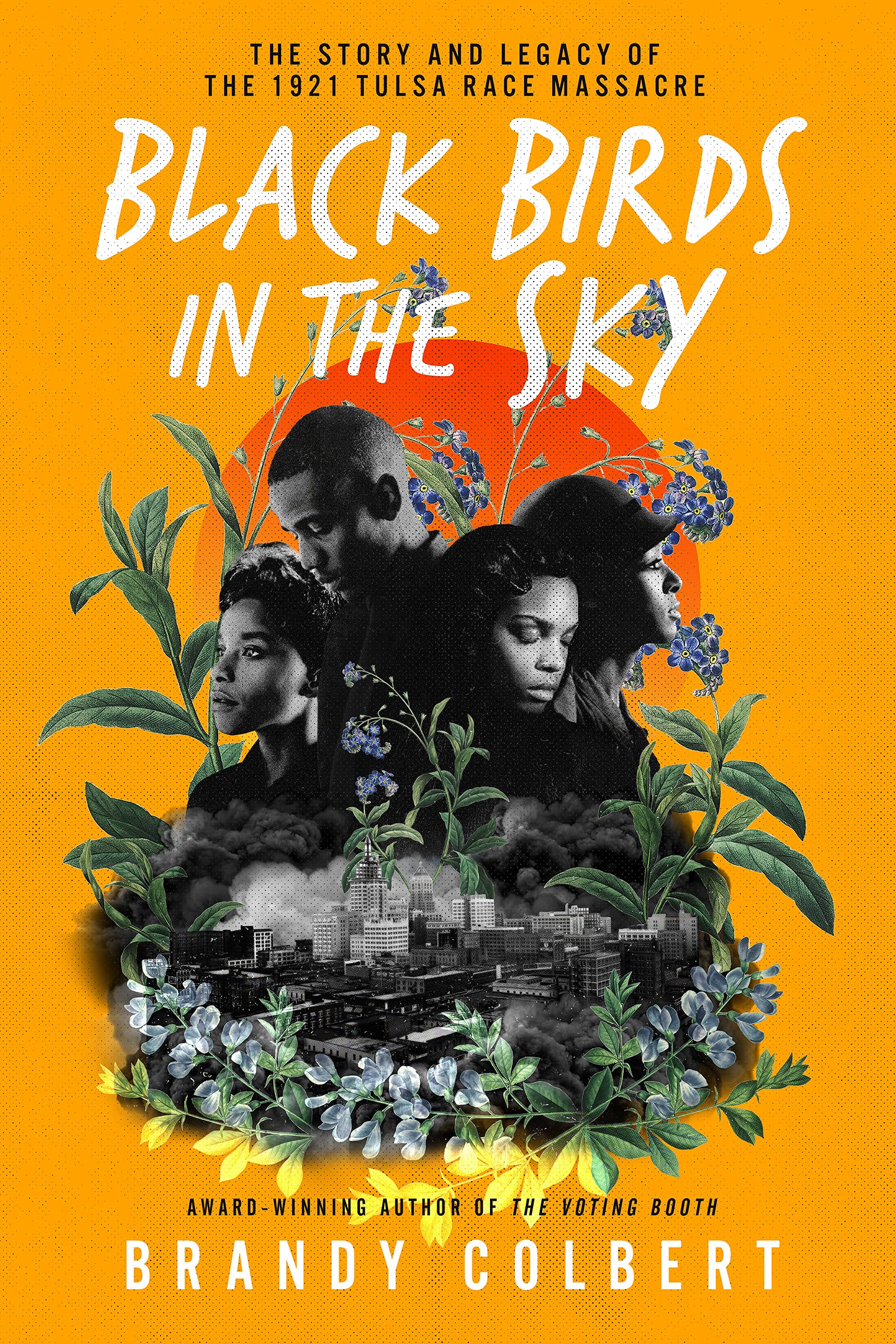
Black Birds in the Sky: Chapters 2–3
This nonfiction work delves into the history and legacy of the Tulsa Massacre — one of American history's deadliest acts of racial violence that took place in Oklahoma in 1921.
This list covers Chapters 2–3.
Here are links to our lists for the book: List 1, List 2, List 3, List 4
40 words
37 learners
Learn words with Flashcards and other activities
Definition First

Other learning activities
Full list of words from this list:
-
paramount
most important or impactfulMy paramount object in this struggle is to save the Union, and is not either to save or to destroy slavery.
-
amnesty
a warrant granting release from punishment for an offenseThe Proclamation of Amnesty and Reconstruction, also known as the Ten Percent Plan, was issued in December 1863 and allowed any Confederate state with 10 percent of voters who swore allegiance to the Union to build new state governments and revise their state constitutions.
-
secession
formal separation from an alliance or federationIt also protected the physical property (excluding enslaved Black people) of former plantation owners and pardoned all Southerners, except for top-level Confederate officials and military leaders, for secession from the Union.
-
aversion
a feeling of intense dislike“The first expression which came to his face, and which I think was the true index of his heart, was one of bitter contempt and aversion.”
-
vagrant
a wanderer with no established residence or means of supportThe act was in part a response to the “Black codes,” racist laws in Southern states that limited the freedom and job opportunities of Black Americans in the post-Civil War nation, while also punishing them for falsified crimes such as “vagrancy” if they were unemployed.
-
curtail
terminate or abbreviate before its intended or proper endJohnson, who believed in states’ rights, did nothing to curtail the discriminatory laws, forcing Congress to take action.
-
unprecedented
novel; having no earlier occurrenceBy 1877, around two thousand African Americans held positions in local, state, and federal office in the rebel states, just twelve years after the end of the Civil War. These unprecedented numbers of Black leaders are largely credited for the dismantling of the Black codes.
-
enfranchise
grant voting rightsThis enraged proslavery white Southerners, who were furious that the source of their labor and wealth had been set free and were now enfranchised.
-
perpetuate
cause to continue or prevailThey believed the racist notions that had allowed slavery to thrive for centuries: that Africans and African Americans were unintelligent, wild, incapable of leadership, and fit only for hard manual labor and domestic work. Or, if they didn’t truly believe this in their hearts, they behaved as if they did, perpetuating the system of white supremacy the United States had been built upon.
-
inception
an event that is a beginningSome were so disillusioned that they began to associate with freed Black people; in reality, poor Southern white people often had more in common with Black Americans at the time than either of them did with the well-off white men who’d held the vast majority of political and economic power in the country since its inception.
-
undermine
weaken or impair, especially graduallyPresident Andrew Johnson is surely a mascot for the failure of Reconstruction; his racism and refusal to hold states accountable only served to undermine the tireless efforts of Congress.
-
constituent
a citizen who is represented in a government by officialsBut instead of seeing this as much-needed progress in the decades after Reconstruction, white politicians and constituents remained threatened by Black Americans gaining even an ounce of political power.
-
discretion
freedom to act or judge on one's ownTherefore, the law excluded many Black Oklahomans from voting, as Black Americans had historically been lawfully prevented from learning to read and write or forced to attend inadequate, woefully underfunded schools. This crooked legislation also allowed voting registrars to turn away Black voters at their discretion, without ever giving them the test.
-
emblematic
serving as a visible symbol for something abstractWhatever the reason, violence and terrorism inflicted on Black Americans increased greatly in the years after Reconstruction—and no single organization was more responsible for or emblematic of this white supremacist resurgence than the Ku Klux Klan.
-
appease
cause to be more favorably inclined; gain the good will ofSo powerful was its influence that The Birth of a Nation was the first movie to ever be screened at the White House, during President Woodrow Wilson’s first term. Wilson, who segregated federal government offices to appease Southern conservatives, supposedly said about the film: “It’s like writing history with lightning. And my only regret is that it is all terribly true.”
-
regalia
especially fine or decorative clothingThe Klan also has law enforcement roots in Anaheim, California, where in the early 1920s, residents elected four Klansmen to the five-member city council, which allowed its members who were also police officers to parade around in full KKK regalia during their shifts.
-
manifest
reveal its presence or make an appearanceLynching, a term for any murder committed to punish an alleged crime without administering a fair trial, was a common form of vigilante justice in the late 1800s and early 1900s; it manifested primarily as death by hanging (often preceded by torture and burning).
-
fleeting
lasting for a markedly brief timeThe accusations were often born out of a completely innocent interaction, such as a fleeting look or accidental touch; this is what many believe happened between Dick Rowland and Sarah Page in that Tulsa elevator in 1921.
-
comprehensive
broad in scopeShe briefly remained in New York, writing a comprehensive report on lynching for the Black newspaper the New York Age, before moving to Chicago.
-
suffrage
a legal right to voteWells founded the Alpha Suffrage Club in 1913 in Chicago and defied racist white suffragettes from the South when she marched beside them—rather than behind them—at that year's Woman Suffrage Parade.
-
prevalent
most frequent or commonAnd while the number was decreasing, when Oklahoma entered the Roaring Twenties, vigilante justice and mob violence were still prevalent.
-
succumb
be fatally overwhelmedWhen Nida succumbed to his injuries and Belton pleaded not guilty, a mob a thousand people strong stormed the jail with guns.
-
condone
excuse, overlook, or make allowances forChief Gustafson expressed regret about the murder, claiming he did “not condone mob law” and that he was “absolutely opposed to it,” but in the same breath stated, “It is my honest opinion that the lynching of Belton will prove of real benefit to Tulsa and [the] vicinity. It was an object lesson to the hijackers and auto thieves, and I believe it will be taken as such.”
-
ensue
take place or happen afterward or as a resultA shootout had ensued, and Chandler’s father died, as did one of the officers.
-
blatant
without any attempt at concealment; completely obviousWhen Black people fought back to defend themselves, the story was often twisted and called a riot, rather than the blatant attacks that they were.
-
exodus
a journey by a large group to escape from a hostile environmentKnown as the Great Migration, an estimated six million Black Americans left Southern states between 1915 and 1970 to start new lives. Before this mass exodus, 90 percent of Black Americans lived in the Southern states in which they or their ancestors had been enslaved; now they headed to cities like Chicago, New York, Detroit, and Philadelphia, which were facing labor shortages in manufacturing and industrial jobs.
-
bigotry
intolerance and prejudiceThey may have escaped the Jim Crow laws that kept everything from restaurants to water fountains to schools “separate but equal,” but Northern cities were not free of bigotry. White people weren’t always eager to see Black people in their neighborhoods or working beside them, and they didn’t hide it.
-
hypocritical
professing feelings or virtues one does not haveNot everyone believed in the cause; some found it hypocritical that a country that didn’t treat Black Americans equally would ask them to fight on its behalf.
-
concise
expressing much in few wordsProtest signs have long been a clever, concise, and effective way to call for desired social change.
-
facetious
cleverly amusing in toneThe protest sign, then, can be seen as a facetious take on the situation, or perhaps a sincere call to be magnanimous and show compassion for the women who, though often portrayed as passive or submissive, were just as guilty as their white male counterparts.
-
incite
provoke or stir upThe white mob was furious that they wouldn’t get their chance with the prisoners—and in response, they incited a riot.
-
animosity
a feeling of ill will arousing active hostilityThere was a great deal of animosity toward any well-established Negro who owned his house and had a good job.
-
acquiesce
agree or express agreementAbout the film, NAACP national secretary May Childs Nerney, who was white, wrote: “If it goes unchallenged it will take years to overcome the harm it is doing. The entire country will acquiesce in the Southern program of segregation, disenfranchisement, and lynching.”
-
uppity
arrogant or self-importantWhite people were also concerned that Black veterans, who’d been treated as valued members of their country while fighting in the war, would become “uppity” and start demanding the sort of rights and respect they’d been fighting for abroad.
-
perpetrate
perform an act, usually with a negative connotationAnd as the white people who perpetrated these crimes faced no consequences, the violence continued into the next century.
-
don
put on clothesWe return from the slavery of uniform which the world’s madness demanded us to don to the freedom of civil garb.
-
garb
clothing of a distinctive style or for a particular occasionWe return from the slavery of uniform which the world’s madness demanded us to don to the freedom of civil garb.
-
accost
approach and speak to someone aggressively or insistentlyOn July 19, a nineteen-year-old white woman had been walking home from her job at the Bureau of Engraving and Printing when, she claimed, she was accosted by two Black men.
-
insurrection
organized opposition to authorityOn October 7, the troops were withdrawn and many Black people were jailed for allegedly planning the “insurrection”; on October 31, 122 of them were indicted for a variety of charges, including murder.
-
indict
accuse formally of a crimeOn October 7, the troops were withdrawn and many Black people were jailed for allegedly planning the “insurrection”; on October 31, 122 of them were indicted for a variety of charges, including murder.
Created on Mon Dec 27 12:03:36 EST 2021
(updated Thu Jan 06 16:03:22 EST 2022)
Sign up now (it’s free!)
Whether you’re a teacher or a learner,
Vocabulary.com can put you or your class
on the path to systematic vocabulary improvement.