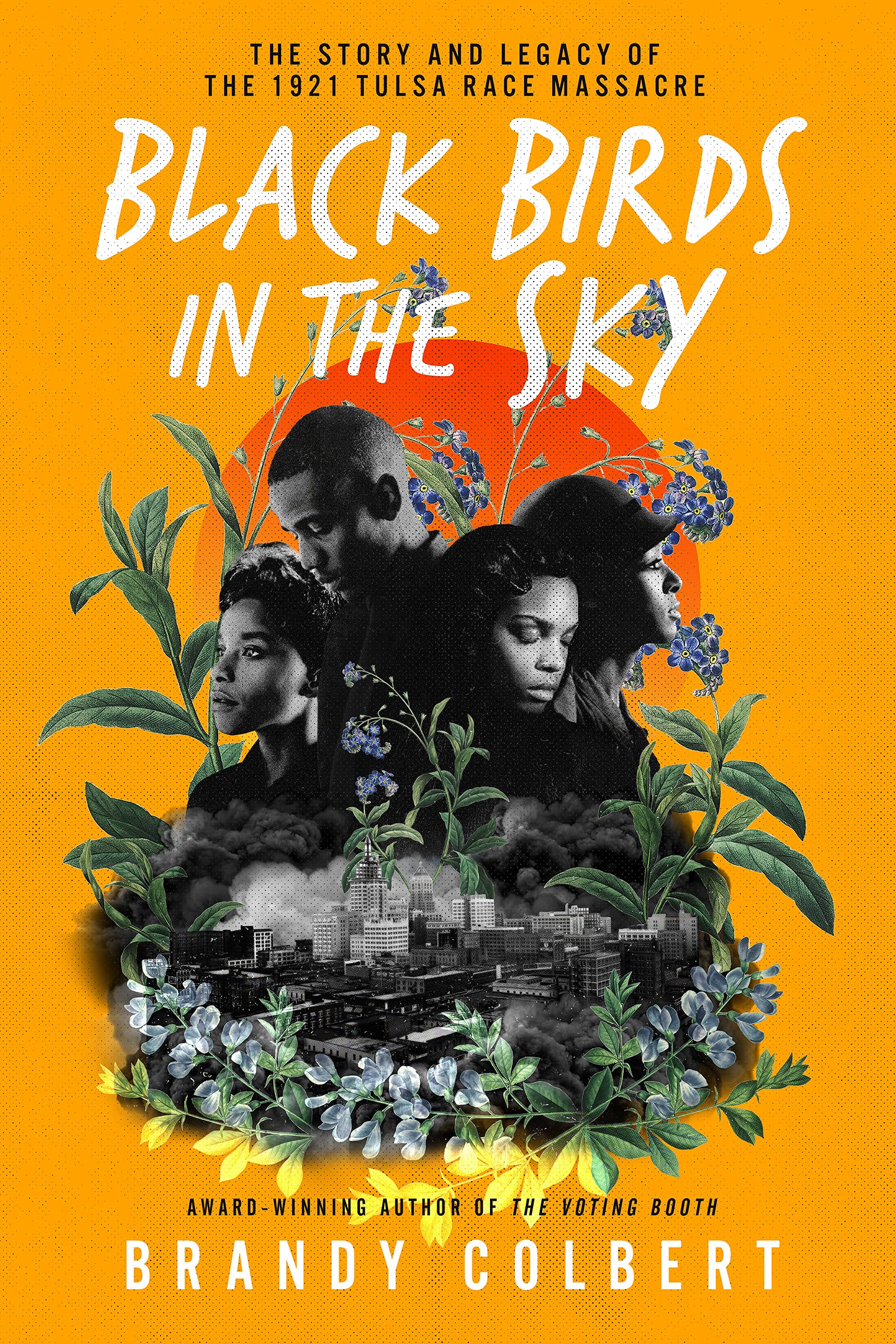
Black Birds in the Sky: May 30, 1921–Chapter 1
This nonfiction work delves into the history and legacy of the Tulsa Massacre — one of American history's deadliest acts of racial violence that took place in Oklahoma in 1921.
This list covers May 30, 1921–Chapter 1.
Here are links to our lists for the book: List 1, List 2, List 3, List 4
35 words
252 learners
Learn words with Flashcards and other activities
Definition First

Other learning activities
Full list of words from this list:
-
thriving
very lively and profitableFord moved to the Greenwood District, a thriving Black community in Tulsa across the train tracks from where most of the white homes and businesses were located.
-
accommodation
living quarters provided for public convenienceThe landmark 1896 US Supreme Court case Plessy v. Ferguson, which established the legality of Jim Crow legislation, stated spaces and accommodations segregated by race were legal as long as they were comparable; this is where the standard of “separate but equal” was born.
-
fruition
the attainment or fulfillment of a plan or objectiveThe “equal” part rarely came to fruition with Black spaces and accommodations; Greenwood, however, was something of an anomaly in this respect. By 1914, the neighborhood boasted all kinds of Black professionals, from doctors and lawyers to business owners, educators, and newspaper publishers—and they kept their wealth within the community, continually supporting the businesses of what became known nationwide as Black Wall Street.
-
anomaly
deviation from the normal or common order, form, or ruleThe “equal” part rarely came to fruition with Black spaces and accommodations; Greenwood, however, was something of an anomaly in this respect. By 1914, the neighborhood boasted all kinds of Black professionals, from doctors and lawyers to business owners, educators, and newspaper publishers—and they kept their wealth within the community, continually supporting the businesses of what became known nationwide as Black Wall Street.
-
wane
become smallerAs a young kid, Rowland was a good student, but his interest in academics waned the older he got.
-
taboo
a ban resulting from social custom or emotional aversionBut it was also said by some, including Rowland’s Aunt Dame, that they had, perhaps, been romantically involved—and one of the biggest taboos in early-twentieth-century America was a relationship between a Black man and a white woman.
-
acquire
come into the possession of something concrete or abstractFrench military dictator Napoleon Bonaparte had acquired the Louisiana Territory from Spain in 1800—with plans to use the land as a granary for his proposed sugar empire—and this had made Americans nervous; the French, who were more powerful, now controlled New Orleans, which was significant because it served as a port for Americans to trade goods.
-
comprise
include or containToday, Indigenous people and Alaska Natives comprise 17.4 percent of Oklahoma’s population—second only to Alaska, where Indigenous people encompass 27.9 percent of the population.
-
encompass
include in scopeToday, Indigenous people and Alaska Natives comprise 17.4 percent of Oklahoma’s population—second only to Alaska, where Indigenous people encompass 27.9 percent of the population.
-
tenure
the term during which some position is heldJackson was born into poverty but grew his wealth through slave labor: he enslaved about 150 people, some of whom were forced to serve him even during his tenure at the White House.
-
paternalism
attitude that people should be controlled in a fatherly wayJackson didn’t see Indigenous people as fully human, much less American; he believed they were uncivilized simply because they had different ways of life than white people, and he referred to them with paternalistic ethnic slurs to justify his anti-Native views.
-
hail
be a native ofThe Five Tribes of Oklahoma, previously referred to as the Five Civilized Tribes, hail from the southeastern United States and include the Cherokee, Chickasaw, Choctaw, Muscogee (Creek), and Seminole Nations.
-
assimilation
the process of absorbing one cultural group into anotherThe term Five Civilized Tribes was primarily assigned to these Native Nations because of their perceived assimilation into white US culture.
-
encroachment
entry to another's property without right or permissionWhile some leaders within these Native Nations saw adopting parts of Anglo customs as necessary to avoid removal and stop the encroachment of whites taking their land, they were mistaken.
-
garner
assemble or get togetherThey sent young representatives around the country to speak out on the issue; circulated a petition that garnered thousands of signatures of Cherokee people protesting the removal; started a newspaper to broadcast their opinions; and tried to appeal to Congress, even going as far as the US Supreme Court, which ruled in their favor.
-
plight
a situation from which extrication is difficultA Choctaw leader called this brutal and often deadly migration that forced Indigenous people from their land “a trail of tears and death,” and it has been known as the Trail of Tears ever since. The National Park Service has commemorated the plight of the Cherokee people with the Trail of Tears National Historic Trail, which encompasses 5,043 miles across nine states.
-
denote
be a sign or indication ofThe Council Oak Tree is a historic landmark that denotes the site where the Muscogee (Creek) citizens settled, marking present-day Tulsa.
-
derive
come fromLike those of many cities and towns in the United States, its name was derived from an Indigenous language. According to some historians, Tulsa comes from the word Tullahassee, which was a Muscogee (Creek) town in present-day Alabama. Still, others believe it was derived from the Mvskoke word Tallasi, a shortened version of Tullahassee or Tallahassee, which means “old town.”
-
allotment
distribution according to a planIn 1887, the Dawes Act—also known as the General Allotment Act—was passed by Congress, which allowed the federal government to parcel out tribal lands into individual plots.
-
parcel
divide into partsIn 1887, the Dawes Act—also known as the General Allotment Act—was passed by Congress, which allowed the federal government to parcel out tribal lands into individual plots.
-
homestead
land acquired by living on and cultivating itIn March 1889, President Harrison announced that 1.9 million acres of Indian Territory would be ready for the taking at noon sharp on April 22. People traveled from all over the United States to lay claim to the land, and per the Homestead Act of 1862, passed during the American Civil War, anyone who remained on the land for five years, had “never borne arms against the United States government,” and “improved” the land would be the owner.
-
implement
apply in a manner consistent with its purpose or designThroughout these six years and seven events, the government implemented a lottery system to assign the claims.
-
renowned
widely known and esteemedPerhaps the two most famous Bartlesville residents who earned their riches from oil are J. Paul Getty, who secured his first million from oil investment at the age of twenty-three and went on to build the J. Paul Getty Museum, which is part of the renowned Getty Center in Los Angeles; and Frank Phillips, founder of Phillips Petroleum Company, which was based in Bartlesville from 1917 until it merged with Conoco in the early 2000s.
-
piecemeal
one thing at a timeAnd, finally, some residents were in favor of piecemeal absorption, which meant Oklahoma Territory would gain statehood immediately, and Native Nations throughout Indian Territory could be added individually.
-
defunct
no longer in force or use; inactiveWhile some believed Indian Territory should form its own state called Sequoyah, this hope was eventually squashed by the Curtis Act, which abolished tribal courts. This meant enforcing laws and court rulings of the Five Tribes of Oklahoma was defunct, and residents of Indian Territory were now held to federal law.
-
initiative
a new strategy or plan to solve a problem or improve a situationBack in the late 1800s, Republicans primarily controlled states in the North and were the party responsible for helping implement state universities, a national currency, and the transcontinental railroad, among other initiatives.
-
offset
compensate for or counterbalanceThis all began to change in the 1930s, with the presidency of Democrat Franklin D. Roosevelt, who passed the New Deal to offset the detrimental effects of the Great Depression.
-
overt
open and observable; not secret or hiddenOver the next decade, white Southerners began to support the Republican Party in greater numbers, particularly in the wake of Richard Nixon's 1968 presidential campaign, wherein Republicans implemented the "Southern strategy," using overtly racist and faith-based appeals to win over white voters in the South who were appalled by the dismantling of Jim Crow laws.
-
subjugate
put down by force or intimidationOriginating in the South after the Civil War, Jim Crow laws, and the “Black codes” that preceded them, were a collection of various state and local legislation that enforced segregation in nearly all aspects of American life. They were used to subjugate Black Americans, who had recently gained their freedom from slavery, and forced them to live as second-class citizens.
-
comply
act in accordance with someone's rules, commands, or wishesFines for violating the law were steep, running as high as $1,000 for businesses that did not comply, $25 for passengers who did not sit in their assigned cars, and $500 for conductors who did not enforce segregation.
-
intolerant
unwilling to tolerate difference of opinionThrough this legislation, Oklahoma developed a culture that was intolerant of the mere existence of Black Americans.
-
oppress
come down on or keep down by unjust use of one's authorityBlack Americans first made their way to Oklahoma with the forced migration of the Five Tribes. Several of the tribes, though they themselves were oppressed by white colonizers, also enslaved Black people and brought them to Oklahoma along the Trail of Tears.
-
chattel
personal property, as opposed to real estateThe Cherokee Nation held the most enslaved people among the Five Tribes; by 1860, they reportedly owned 4,600 Black people. While this form of chattel slavery was similar to that practiced by white people, meaning the enslaved were forced to work long, difficult days tending to farmland, or in house jobs as servants and maids, the Cherokee used them in other ways, too.
-
indenture
bind by a contract for work, as an apprentice or servantAlthough some historians claim that the Indigenous people who enslaved Black people treated them more as indentured servants—a fixed term of slavery in which the enslaved often retained some rights—enslavement is enslavement.
-
patronize
be a regular customer or client ofIn all-Black towns, they were safe from the violence and prejudice they were used to enduring from white people, and they could support one another by patronizing businesses owned and operated by other Black people.
Created on Mon Dec 27 12:03:01 EST 2021
(updated Thu Jan 06 16:02:55 EST 2022)
Sign up now (it’s free!)
Whether you’re a teacher or a learner,
Vocabulary.com can put you or your class
on the path to systematic vocabulary improvement.