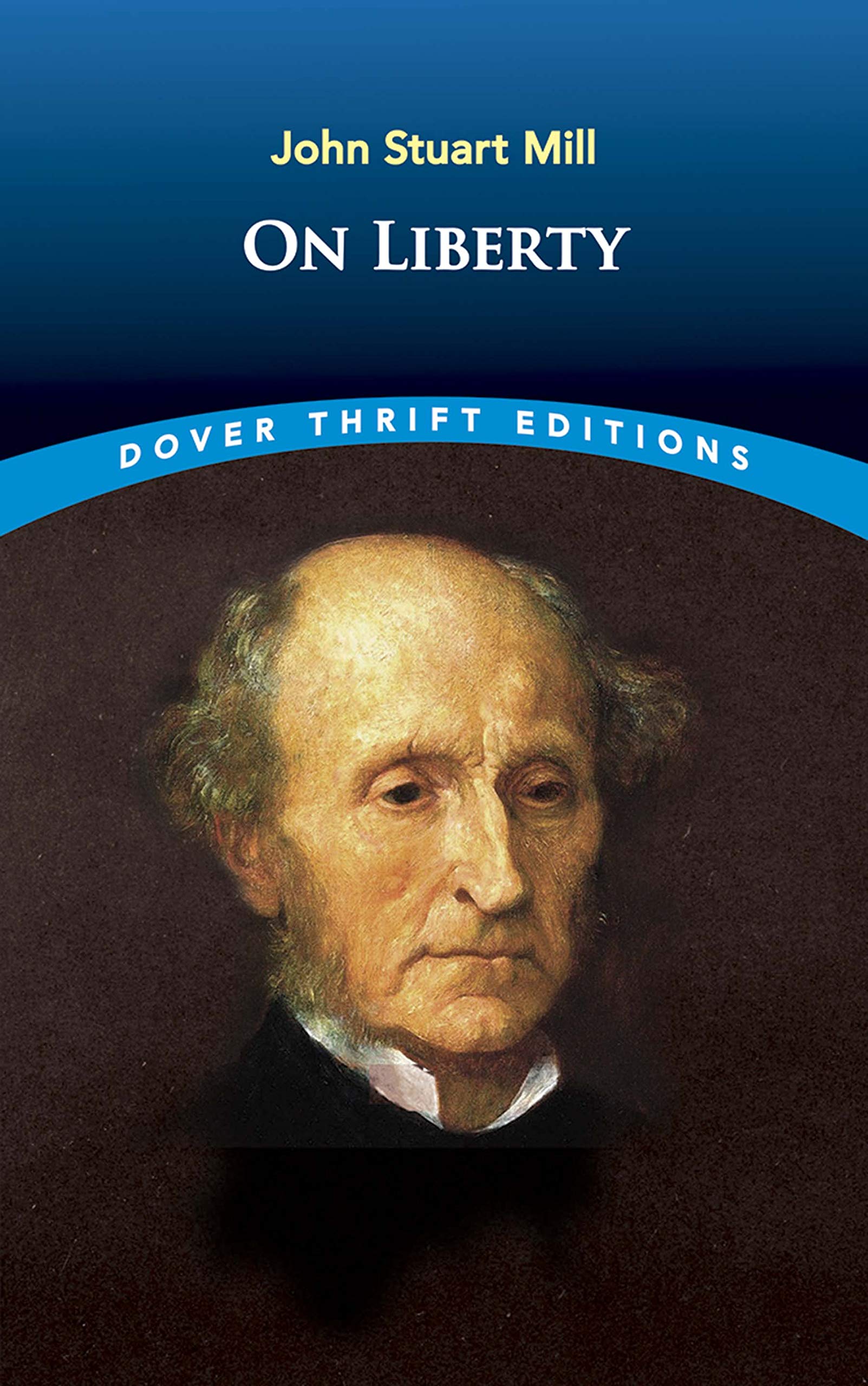
On Liberty: Chapter IV
In this influential essay, Mill examines the nature of liberty as it applies to the individual and society as a whole. Read the full text here.
Here are links to our lists for the text: Chapter I, Chapter II, Chapter III, Chapter IV, Chapter V
35 words
22 learners
Learn words with Flashcards and other activities
Definition First

Other learning activities
Full list of words from this list:
-
equitable
fair to all parties as dictated by reason and conscienceThis conduct consists, first, in not injuring the interests of one another; or rather certain interests which, either by express legal provision or by tacit understanding, ought to be considered as rights; and secondly, in each person's bearing his share (to be fixed on some equitable principle) of the labours and sacrifices incurred for defending the society or its members from injury and molestation.
-
jurisdiction
the right and power to interpret and apply the lawAs soon as any part of a person's conduct affects prejudicially the interests of others, society has jurisdiction over it, and the question whether the general welfare will or will not be promoted by interfering with it, becomes open to discussion.
-
scourge
a whip used to inflict punishmentBut disinterested benevolence can find other instruments to persuade people to their good, than whips and scourges, either of the literal or the metaphorical sort.
-
exhortation
a communication intended to urge or persuade to take actionConsiderations to aid his judgment, exhortations to strengthen his will, may be offered to him, even obtruded on him, by others; but he himself is the final judge.
-
constrain
restrictAll errors which he is likely to commit against advice and warning, are far outweighed by the evil of allowing others to constrain him to what they deem his good.
-
conducive
tending to bring about; being partly responsible forIf he is eminent in any of the qualities which conduce to his own good, he is, so far, a proper object of admiration.
-
obstinacy
resolute adherence to your own ideas or desiresA person who shows rashness, obstinacy, self-conceit—who cannot live within moderate means—who cannot restrain himself from hurtful indulgences—who pursues animal pleasures at the expense of those of feeling and intellect—must expect to be lowered in the opinion of others...
-
duplicity
the act of deceiving or acting in bad faithEncroachment on their rights; infliction on them of any loss or damage not justified by his own rights; falsehood or duplicity in dealing with them; unfair or ungenerous use of advantages over them; even selfish abstinence from defending them against injury—these are fit objects of moral reprobation, and, in grave cases, of moral retribution and punishment.
-
reprobation
severe disapprovalEncroachment on their rights; infliction on them of any loss or damage not justified by his own rights; falsehood or duplicity in dealing with them; unfair or ungenerous use of advantages over them; even selfish abstinence from defending them against injury—these are fit objects of moral reprobation, and, in grave cases, of moral retribution and punishment.
-
dissimulation
the act of deceivingCruelty of disposition; malice and ill-nature; that most anti-social and odious of all passions, envy; dissimulation and insincerity; irascibility on insufficient cause, and resentment disproportioned to the provocation; the love of domineering over others; the desire to engross more than one's share of advantages...
-
irascible
quickly aroused to angerCruelty of disposition; malice and ill-nature; that most anti-social and odious of all passions, envy; dissimulation and insincerity; irascibility on insufficient cause, and resentment disproportioned to the provocation; the love of domineering over others; the desire to engross more than one's share of advantages...
-
abasement
depriving one of self-esteem...the pride which derives gratification from the abasement of others; the egotism which thinks self and its concerns more important than everything else, and decides all doubtful questions in its own favour;—these are moral vices, and constitute a bad and odious moral character...
-
odious
extremely repulsive or unpleasant...the pride which derives gratification from the abasement of others; the egotism which thinks self and its concerns more important than everything else, and decides all doubtful questions in its own favour;—these are moral vices, and constitute a bad and odious moral character...
-
incontinent
lacking restraint or self-controlIf gambling, or drunkenness, or incontinence, or idleness, or uncleanliness, are as injurious to happiness, and as great a hindrance to improvement, as many or most of the acts prohibited by law, why (it may be asked) should not law, so far as is consistent with practicability and social convenience, endeavour to repress these also?
-
precipice
the brink of a dangerous or potentially disastrous situationThere must be some length of time and amount of experience, after which a moral or prudential truth may be regarded as established: and it is merely desired to prevent generation after generation from falling over the same precipice which has been fatal to their predecessors.
-
intemperance
excess in action and immoderate indulgence of appetitesIf, for example, a man, through intemperance or extravagance, becomes unable to pay his debts, or, having undertaken the moral responsibility of a family, becomes from the same cause incapable of supporting or educating them, he is deservedly reprobated, and might be justly punished; but it is for the breach of duty to his family or creditors, not for the extravagance.
-
extravagance
excessive spendingIf, for example, a man, through intemperance or extravagance, becomes unable to pay his debts, or, having undertaken the moral responsibility of a family, becomes from the same cause incapable of supporting or educating them, he is deservedly reprobated, and might be justly punished; but it is for the breach of duty to his family or creditors, not for the extravagance.
-
contingent
possible but not certain to occurBut with regard to the merely contingent, or, as it may be called, constructive injury which a person causes to society, by conduct which neither violates any specific duty to the public, nor occasions perceptible hurt to any assignable individual except himself; the inconvenience is one which society can afford to bear, for the sake of the greater good of human freedom.
-
ostentation
pretentious or showy or vulgar displayNo such person will ever feel that others have a right to control him in his concerns, such as they have to prevent him from injuring them in theirs; and it easily comes to be considered a mark of spirit and courage to fly in the face of such usurped authority, and do with ostentation the exact opposite of what it enjoins; as in the fashion of grossness which succeeded, in the time of Charles II., to the fanatical moral intolerance of the Puritans.
-
enjoin
give instructions to or direct somebody to do somethingNo such person will ever feel that others have a right to control him in his concerns, such as they have to prevent him from injuring them in theirs; and it easily comes to be considered a mark of spirit and courage to fly in the face of such usurped authority, and do with ostentation the exact opposite of what it enjoins; as in the fashion of grossness which succeeded, in the time of Charles II., to the fanatical moral intolerance of the Puritans.
-
parity
functional equalityBut there is no parity between the feeling of a person for his own opinion, and the feeling of another who is offended at his holding it; no more than between the desire of a thief to take a purse, and the desire of the right owner to keep it.
-
propensity
a natural inclinationAnd it is not difficult to show, by abundant instances, that to extend the bounds of what may be called moral police, until it encroaches on the most unquestionably legitimate liberty of the individual, is one of the most universal of all human propensities.
-
scrupulously
with careful attention and effort to do something correctlyTheir aversion to the flesh of the "unclean beast" is, on the contrary, of that peculiar character, resembling an instinctive antipathy, which the idea of uncleanness, when once it thoroughly sinks into the feelings, seems always to excite even in those whose personal habits are anything but scrupulously cleanly, and of which the sentiment of religious impurity, so intense in the Hindoos, is a remarkable example.
-
chaste
morally pureThe people of all Southern Europe look upon a married clergy as not only irreligious, but unchaste, indecent, gross, disgusting.
-
peremptory
putting an end to all debate or actionWould they not, with considerable peremptoriness, desire these intrusively pious members of society to mind their own business?
-
sumptuary
regulating or controlling expenditure or personal behavior...the feeling of the majority, to whom any appearance of a more showy or costly style of living than they can hope to rival is disagreeable, operates as a tolerably effectual sumptuary law, and that in many parts of the Union it is really difficult for a person possessing a very large income, to find any mode of spending it, which will not incur popular disapprobation.
-
remuneration
paying for goods or services or to recompense for lossesAnd they employ a moral police, which occasionally becomes a physical one, to deter skilful workmen from receiving, and employers from giving, a larger remuneration for a more useful service.
-
grievance
an allegation that something denies some legal rightA theory of "social rights," the like of which probably never before found its way into distinct language—being nothing short of this—that it is the absolute social right of every individual, that every other individual shall act in every respect exactly as he ought; that whosoever fails thereof in the smallest particular, violates my social right, and entitles me to demand from the legislature the removal of the grievance.
-
exigency
a pressing or urgent situationWithout doubt, abstinence on one day in the week, so far as the exigencies of life permit, from the usual daily occupation, though in no respect religiously binding on any except Jews, is a highly beneficial custom.
-
emolument
compensation received by virtue of holding an officeThe operatives are perfectly right in thinking that if all worked on Sunday, seven days' work would have to be given for six days' wages: but so long as the great mass of employments are suspended, the small number who for the enjoyment of others must still work, obtain a proportional increase of earnings; and they are not obliged to follow those occupations, if they prefer leisure to emolument.
-
abominate
find repugnantIt is a belief that God not only abominates the act of the misbeliever, but will not hold us guiltless if we leave him unmolested.
-
animosity
a feeling of ill will arousing active hostilityThe article of the Mormonite doctrine which is the chief provocative to the antipathy which thus breaks through the ordinary restraints of religious tolerance, is its sanction of polygamy; which, though permitted to Mahomedans, and Hindoos, and Chinese, seems to excite unquenchable animosity when practised by persons who speak English, and profess to be a kind of Christians.
-
reciprocity
a relation of mutual dependence or action or influenceNo one has a deeper disapprobation than I have of this Mormon institution; both for other reasons, and because, far from being in any way countenanced by the principle of liberty, it is a direct infraction of that principle, being a mere riveting of the chains of one half of the community, and an emancipation of the other from reciprocity of obligation towards them.
-
retrograde
going from better to worseA recent writer, in some respects of considerable merit, proposes (to use his own words), not a crusade, but a civilizade, against this polygamous community, to put an end to what seems to him a retrograde step in civilisation.
-
vanquish
defeat in a competition, race, or conflictA civilisation that can thus succumb to its vanquished enemy, must first have become so degenerate, that neither its appointed priests and teachers, nor anybody else, has the capacity, or will take the trouble, to stand up for it.
Created on Wed Jul 14 13:47:12 EDT 2021
(updated Wed Jul 21 14:40:11 EDT 2021)
Sign up now (it’s free!)
Whether you’re a teacher or a learner,
Vocabulary.com can put you or your class
on the path to systematic vocabulary improvement.