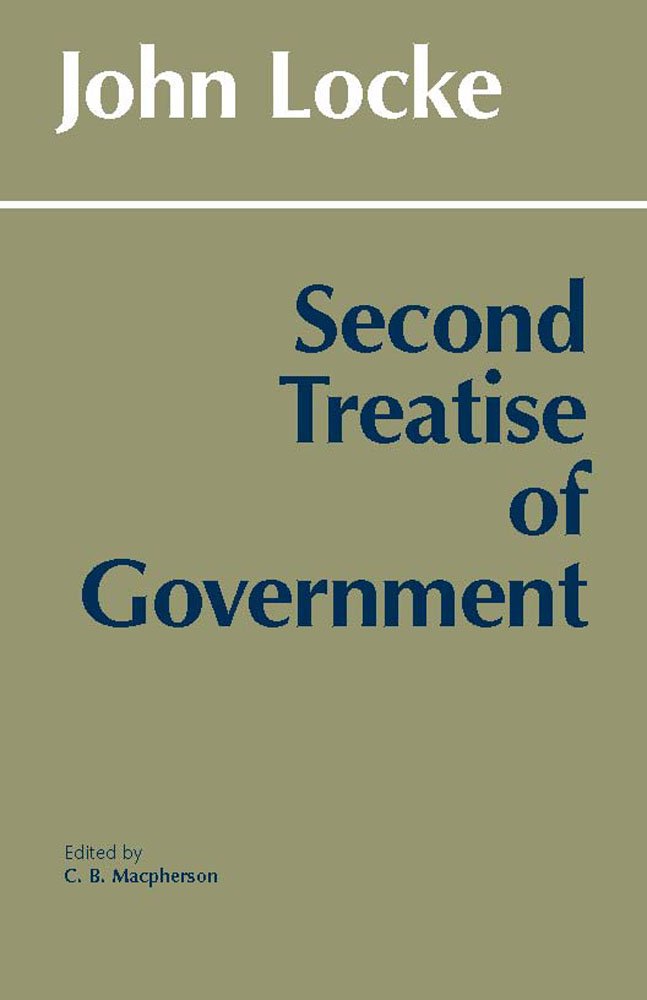
Second Treatise of Government: Chapters 1–3
In this 17th-century treatise, Locke argues that governments are only legitimate when leaders rule with the consent of those who are governed. Read the full text here.
Here are links to our lists for the text: Chapters 1–3, Chapters 4–6, Chapters 7–10, Chapters 11–16, Chapters 17–19
35 words
293 learners
Learn words with Flashcards and other activities
Definition First

Other learning activities
Full list of words from this list:
-
posterity
all future generationsThat if even that had been determined, yet the knowledge of which is the eldest line of Adam's posterity, being so long since utterly lost, that in the races of mankind and families of the world, there remains not to one above another, the least pretence to be the eldest house, and to have the right of inheritance...
-
jurisdiction
the territory within which power can be exercisedAll these premises having, as I think, been clearly made out, it is impossible that the rulers now on earth should make any benefit, or derive any the least shadow of authority from that, which is held to be the fountain of all power, Adam's private dominion and paternal jurisdiction...
-
tumult
a state of commotion and noise and confusion...so that he that will not give just occasion to think that all government in the world is the product only of force and violence, and that men live together by no other rules but that of beasts, where the strongest carries it, and so lay a foundation for perpetual disorder and mischief, tumult, sedition and rebellion, (things that the followers of that hypothesis so loudly cry out against) must of necessity find out another rise of government, another original of political power...
-
sedition
an illegal action inciting resistance to lawful authority...so that he that will not give just occasion to think that all government in the world is the product only of force and violence, and that men live together by no other rules but that of beasts, where the strongest carries it, and so lay a foundation for perpetual disorder and mischief, tumult, sedition and rebellion, (things that the followers of that hypothesis so loudly cry out against) must of necessity find out another rise of government, another original of political power...
-
amiss
in an improper or mistaken mannerTo this purpose, I think it may not be amiss, to set down what I take to be political power; that the power of a MAGISTRATE over a subject may be distinguished from that of a FATHER over his children, a MASTER over his servant, a HUSBAND over his wife, and a LORD over his slave.
-
commonwealth
a politically organized body of people under a governmentPOLITICAL POWER, then, I take to be a RIGHT of making laws with penalties of death, and consequently all less penalties, for the regulating and preserving of property, and of employing the force of the community, in the execution of such laws, and in the defence of the commonwealth from foreign injury; and all this only for the public good.
-
promiscuous
not selective of a single class or personA state also of equality, wherein all the power and jurisdiction is reciprocal, no one having more than another; there being nothing more evident, than that creatures of the same species and rank, promiscuously born to all the same advantages of nature, and the use of the same faculties, should also be equal one amongst another without subordination or subjection...
-
subordination
the state of being lower in rank to somethingA state also of equality, wherein all the power and jurisdiction is reciprocal, no one having more than another; there being nothing more evident, than that creatures of the same species and rank, promiscuously born to all the same advantages of nature, and the use of the same faculties, should also be equal one amongst another without subordination or subjection...
-
manifest
clearly revealed to the mind or the senses or judgment...the use of the same faculties, should also be equal one amongst another without subordination or subjection, unless the lord and master of them all should, by any manifest declaration of his will, set one above another, and confer on him, by an evident and clear appointment, an undoubted right to dominion and sovereignty.
-
judicious
marked by the exercise of common sense in practical mattersThis equality of men by nature, the judicious Hooker looks upon as so evident in itself, and beyond all question, that he makes it the foundation of that obligation to mutual love amongst men, on which he builds the duties they owe one another, and from whence he derives the great maxims of justice and charity.
-
maxim
a saying that is widely accepted on its own meritsThis equality of men by nature, the judicious Hooker looks upon as so evident in itself, and beyond all question, that he makes it the foundation of that obligation to mutual love amongst men, on which he builds the duties they owe one another, and from whence he derives the great maxims of justice and charity.
-
inducement
a positive motivational influenceThe like natural inducement hath brought men to know that it is no less their duty, to love others than themselves; for seeing those things which are equal, must needs all have one measure; if I cannot but wish to receive good, even as much at every man's hands, as any man can wish unto his own soul, how should I look to have any part of my desire herein satisfied, unless myself be careful to satisfy the like desire, which is undoubtedly in other men, being of one and the same nature?
-
canon
a body of rules established as valid and fundamental...my desire therefore to be loved of my equals in nature as much as possible may be, imposeth upon me a natural duty of bearing to them-ward fully the like affection; from which relation of equality between ourselves and them that are as ourselves, what several rules and canons natural reason hath drawn, for direction of life, no man is ignorant...
-
sovereign
greatest in status or authority or power...for men being all the workmanship of one omnipotent, and infinitely wise maker; all the servants of one sovereign master, sent into the world by his order, and about his business; they are his property, whose workmanship they are, made to last during his, not one another's pleasure: and being furnished with like faculties, sharing all in one community of nature, there cannot be supposed any such subordination among us, that may authorize us to destroy one another...
-
arbitrary
based on or subject to individual discretion or preferenceAnd thus, in the state of nature, one man comes by a power over another; but yet no absolute or arbitrary power, to use a criminal, when he has got him in his hands, according to the passionate heats, or boundless extravagancy of his own will...
-
extravagance
the quality of exceeding appropriate limitsAnd thus, in the state of nature, one man comes by a power over another; but yet no absolute or arbitrary power, to use a criminal, when he has got him in his hands, according to the passionate heats, or boundless extravagancy of his own will...
-
transgress
act in disregard of laws, rules, contracts, or promisesIn transgressing the law of nature, the offender declares himself to live by another rule than that of reason and common equity, which is that measure God has set to the actions of men, for their mutual security; and so he becomes dangerous to mankind, the tye, which is to secure them from injury and violence, being slighted and broken by him.
-
noxious
injurious to physical or mental healthWhich being a trespass against the whole species, and the peace and safety of it, provided for by the law of nature, every man upon this score, by the right he hath to preserve mankind in general, may restrain, or where it is necessary, destroy things noxious to them, and so may bring such evil on any one, who hath transgressed that law, as may make him repent the doing of it, and thereby deter him, and by his example others, from doing the like mischief.
-
sanction
official permission or approvalIt is certain their laws, by virtue of any sanction they receive from the promulgated will of the legislative, reach not a stranger: they speak not to him, nor, if they did, is he bound to hearken to them.
-
promulgated
formally made publicIt is certain their laws, by virtue of any sanction they receive from the promulgated will of the legislative, reach not a stranger: they speak not to him, nor, if they did, is he bound to hearken to them.
-
appropriate
take possession of by forceThat, he who has suffered the damage has a right to demand in his own name, and he alone can remit: the damnified person has this power of appropriating to himself the goods or service of the offender, by right of self-preservation, as every man has a power to punish the crime, to prevent its being committed again, by the right he has of preserving all mankind, and doing all reasonable things he can in order to that end...
-
renounce
turn away from; give up...every man, in the state of nature, has a power to kill a murderer, both to deter others from doing the like injury, which no reparation can compensate, by the example of the punishment that attends it from every body, and also to secure men from the attempts of a criminal, who having renounced reason, the common rule and measure God hath given to mankind, hath, by the unjust violence and slaughter he hath committed upon one, declared war against all mankind...
-
breach
a failure to perform some promised act or obligationBy the same reason may a man in the state of nature punish the lesser breaches of that law.
-
contrivance
an elaborate or deceitful scheme to deceive or evade...as much as reason is easier to be understood, than the fancies and intricate contrivances of men, following contrary and hidden interests put into words; for so truly are a great part of the municipal laws of countries, which are only so far right, as they are founded on the law of nature, by which they are to be regulated and interpreted.
-
partiality
an inclination to favor one group or view over alternatives...it is unreasonable for men to be judges in their own cases, that self-love will make men partial to themselves and their friends: and on the other side, that ill nature, passion and revenge will carry them too far in punishing others; and hence nothing but confusion and disorder will follow, and that therefore God hath certainly appointed government to restrain the partiality and violence of men.
-
solemn
characterized by a firm belief in your opinionsThe laws which have been hitherto mentioned, i.e. the laws of nature, do bind men absolutely, even as they are men, although they have never any settled fellowship, never any solemn agreement amongst themselves what to do, or not to do...
-
discourse
an extended communication dealing with some particular topicBut I moreover affirm, that all men are naturally in that state, and remain so, till by their own consents they make themselves members of some politic society; and I doubt not in the sequel of this discourse, to make it very clear.
-
enmity
a state of deep-seated ill-willThe state of war is a state of enmity and destruction: and therefore declaring by word or action, not a passionate and hasty, but a sedate settled design upon another man's life, puts him in a state of war with him against whom he has declared such an intention, and so has exposed his life to the other's power to be taken away by him, or any one that joins with him in his defence, and espouses his quarrel...
-
espouse
take up the cause of someone and use it as one's ownThe state of war is a state of enmity and destruction: and therefore declaring by word or action, not a passionate and hasty, but a sedate settled design upon another man's life, puts him in a state of war with him against whom he has declared such an intention, and so has exposed his life to the other's power to be taken away by him, or any one that joins with him in his defence, and espouses his quarrel...
-
confound
mistake one thing for anotherAnd here we have the plain difference between the state of nature and the state of war, which however some men have confounded, are as far distant, as a state of peace, good will, mutual assistance and preservation, and a state of enmity, malice, violence and mutual destruction, are one from another.
-
interpose
get involved, so as to alter or hinder an action...the law, which was made for my preservation, where it cannot interpose to secure my life from present force, which, if lost, is capable of no reparation, permits me my own defence, and the right of war, a liberty to kill the aggressor, because the aggressor allows not time to appeal to our common judge, nor the decision of the law, for remedy in a case where the mischief may be irreparable.
-
barefaced
not held back by conventional ideas of behavior...where an appeal to the law, and constituted judges, lies open, but the remedy is denied by a manifest perverting of justice, and a barefaced wresting of the laws to protect or indemnify the violence or injuries of some men, or party of men, there it is hard to imagine any thing but a state of war...
-
indemnify
secure against future loss, damage, or liability...where an appeal to the law, and constituted judges, lies open, but the remedy is denied by a manifest perverting of justice, and a barefaced wresting of the laws to protect or indemnify the violence or injuries of some men, or party of men, there it is hard to imagine any thing but a state of war...
-
redress
make reparations or amends for...for wherever violence is used, and injury done, though by hands appointed to administer justice, it is still violence and injury, however coloured with the name, pretences, or forms of law, the end whereof being to protect and redress the innocent, by an unbiassed application of it, to all who are under it...
-
apt
naturally disposed towardTo avoid this state of war (wherein there is no appeal but to heaven, and wherein every the least difference is apt to end, where there is no authority to decide between the contenders) is one great reason of men's putting themselves into society, and quitting the state of nature: for where there is an authority, a power on earth, from which relief can be had by appeal, there the continuance of the state of war is excluded, and the controversy is decided by that power.
Created on Tue Jul 13 09:23:13 EDT 2021
(updated Tue Jul 20 10:08:05 EDT 2021)
Sign up now (it’s free!)
Whether you’re a teacher or a learner,
Vocabulary.com can put you or your class
on the path to systematic vocabulary improvement.