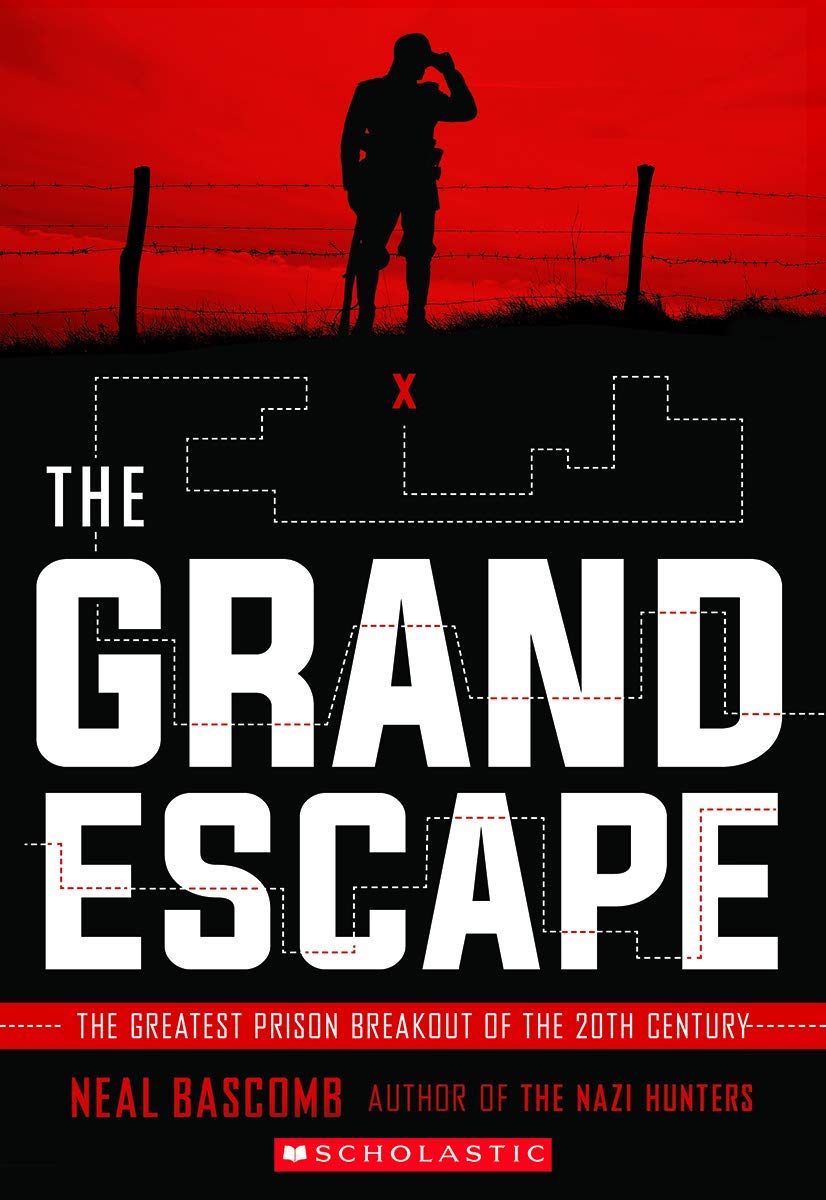
The Grand Escape: Chapters 7–10
This riveting book tells the true story of a group of prisoners of war who escaped from Germany during World War I.
Here are links to our lists for the book: Chapter 1, Chapters 2–6, Chapters 7–10, Chapters 11–16, Chapters 17–30
40 words
33 learners
Learn words with Flashcards and other activities
Definition First

Other learning activities
Full list of words from this list:
-
dour
harshly uninviting or formidable in manner or appearanceThey did not know whether this was true, but the very possibility fostered great debate, both dour and hopeful.
-
visage
the human faceBroad-shouldered and thickset, Rathborne had soft features and a welcome smile. One likened his visage to “the face of an archbishop.” Whatever his look, it belied the grit and ambition underneath.
-
belie
be in contradiction withBroad-shouldered and thickset, Rathborne had soft features and a welcome smile. One likened his visage to “the face of an archbishop.” Whatever his look, it belied the grit and ambition underneath.
-
rakish
marked by up-to-dateness in dress and mannersNiemeyer was tall and stout, like an upright rectangle. Except for his muttonchops and brows, his bowling ball of a head was pasty white and cleanly shaved. He wore a military cap, perched at a rakish angle.
-
ominously
in a manner suggesting something bad will happenAlthough they were desperately hungry, the guards offered no food and the doors clanged ominously shut when they left.
-
titular
existing in name onlyBeside Niemeyer stood the titular head of the camp, Habrecht.
-
doddering
mentally or physically infirm with ageAn elderly man, he had the look of a doddering old fool and merely stood by and watched as his camp officer addressed the new arrivals.
-
tepid
moderately warmThey hurried to the dining hall on the second floor of their block, only to be served some tepid imitation coffee made from acorns.
-
impertinent
improperly forward or boldNo slight from a prisoner—a weak salute, a roll of the eyes, an impertinent remark—passed unnoticed or unpunished.
-
cad
someone who is morally reprehensibleHe was a “cad,” “a low-bred ruffian,” “the personification of hate,” “a bloated, pompous, crawling individual,” “a man of unbridled ferocity and bravado,” “a cheat,” “a plausible rogue,” and “a coward with all the attributes of one: he deceives, he is cruel, he blusters, he is dishonest, he cringes.”
-
bravado
a swaggering show of courageHe was a “cad,” “a low-bred ruffian,” “the personification of hate,” “a bloated, pompous, crawling individual,” “a man of unbridled ferocity and bravado,” “a cheat,” “a plausible rogue,” and “a coward with all the attributes of one: he deceives, he is cruel, he blusters, he is dishonest, he cringes.”
-
apoplectic
marked by extreme angerProne to apoplectic fits of rage, typically while brandishing a revolver or his walking cane, Niemeyer ran down and threatened prisoners with a zeal that left him redfaced and panting for breath.
-
brandish
exhibit aggressivelyProne to apoplectic fits of rage, typically while brandishing a revolver or his walking cane, Niemeyer ran down and threatened prisoners with a zeal that left him redfaced and panting for breath.
-
zeal
excessive fervor to do something or accomplish some endProne to apoplectic fits of rage, typically while brandishing a revolver or his walking cane, Niemeyer ran down and threatened prisoners with a zeal that left him redfaced and panting for breath.
-
propensity
a natural inclinationThe root of his grievances was unclear, and, given his propensity to tell lies, his background was murky.
-
spartan
marked by simplicity, frugality, or self-denialIf this was a prisoner’s Mecca, it was a spartan one, the epitome of disorganization.
-
epitome
a standard or typical exampleIf this was a prisoner’s Mecca, it was a spartan one, the epitome of disorganization.
-
subterfuge
something intended to misrepresent the nature of an activityNot wishing to risk further subterfuge, a British officer who had helped prepare the escape stood forward. In a calm voice, he announced that Thorn “had left the evening before on a journey to Holland.”
-
modicum
a small or moderate or token amountBack in his office, Habrecht gently suggested to Hänisch that the British major, and the prisoners overall, deserved some modicum of respect.
-
paroxysm
a sudden uncontrollable attack“You are very clever? Yes? Well, I make a special study of this escaping. You will not escape from here. You think I, the commandant, know nothing. You are wrong. I know damn all.” Paroxysms of laughter followed his mistaken admission of being a know-nothing.
-
paltry
contemptibly small in amount or sizeThey waited for a paltry breakfast of bitter coffee and hard biscuits.
-
inoculation
taking a vaccine as a precaution against a diseaseThey waited to use a stove, of which there were too few, to cook their lunch. They waited for yet another round of inoculations. They waited to use the lavatory.
-
errant
moving in an uncontrolled, irregular, or unpredictable wayThey tried to create a cricket pitch and soccer field in this limited space, but Niemeyer prohibited most games, telling them that one of the arc lamps had been broken by an errant ball.
-
extort
obtain by coercion or intimidationNiemeyer also extorted charges for such necessities as food, hot water, and fuel for the kitchens. As well as turning a blind eye to outright theft, he also set the tone of abuse at the camp—and reveled in it.
-
revel
take delight inNiemeyer also extorted charges for such necessities as food, hot water, and fuel for the kitchens. As well as turning a blind eye to outright theft, he also set the tone of abuse at the camp—and reveled in it.
-
dolorous
showing sorrowHis voice could change from a soft dolorous coo at one moment to a harsh rasp the next.
-
listless
marked by low spirits; showing no enthusiasmSome had lost a great deal of weight, others went listless, and one or two were spiraling into madness.
-
monotony
the quality of wearisome constancy and lack of variety“The wearisome sameness of the days, the monotony of the faces, the unchanged landscape, the intolerable talk about the war, all these tended to produce the effect of complete and utter depression,” one prisoner wrote.
-
impervious
not admitting of passage or capable of being affectedThe Holzminden inmates were clearly jailbreakers of the first order, and not only did he intend to make the prison impervious to their schemes, he would crush their spirits while he was at it.
-
squalor
sordid dirtinessCash managed to survive the maggot-infested squalor and rough attention accorded many wounded Allied prisoners and spent the next couple months at a hospital in Hamelin.
-
menial
relating to unskilled work, especially domestic workThe Germans then typically assigned the orderlies to some menial task around the camp such as bundling up paper or hauling firewood.
-
gangly
tall, thin, and awkwardEven though Colquhoun was tall and gangly, nobody paid him—nor Ellis—any mind.
-
affray
a noisy fightWhile the carpenter watched the affray, one of the officers slipped behind him and nicked almost everything apart from the toolbox itself, including a fine-toothed, thin-bladed saw.
-
melee
a noisy riotous fightAfter the melee had ended and the officers cleared away, they waited to see if there would be a search for the missing tools.
-
exorbitant
greatly exceeding bounds of reason or moderationOn charging for boiling water: The men were not “compelled to pay this sum.” On the exorbitant prices at the canteen: “Most of the articles were sold at a loss.”
-
charade
an imitation that humorously misrepresents somethingThe whole inspection was a charade. When Römer’s report was released, it stated that there was little cause for concern.
-
obviate
prevent the occurrence of; prevent from happeningThe officers’ complaints were minor in nature and “could be obviated with a little mutual goodwill.”
-
amenable
readily reacting to suggestions and influencesInformants suspected that he had compromising connections with German high officials, and, according to Römer’s former colleagues, he was “professionally incapable,” “amenable to bribery,” and “a pathological liar.”
-
pathological
caused by or evidencing a mentally disturbed conditionInformants suspected that he had compromising connections with German high officials, and, according to Römer’s former colleagues, he was “professionally incapable,” “amenable to bribery,” and “a pathological liar.”
-
malevolence
the quality of threatening evilOther prisoners, who had been sent away from Holzminden only to escape from their next camp, recounted much the same. One said that Hänisch ran his camps with “organized malevolence.” Another that “Holzminden was an inferno.”
Created on Mon Apr 05 16:48:16 EDT 2021
(updated Tue Apr 13 12:46:46 EDT 2021)
Sign up now (it’s free!)
Whether you’re a teacher or a learner,
Vocabulary.com can put you or your class
on the path to systematic vocabulary improvement.