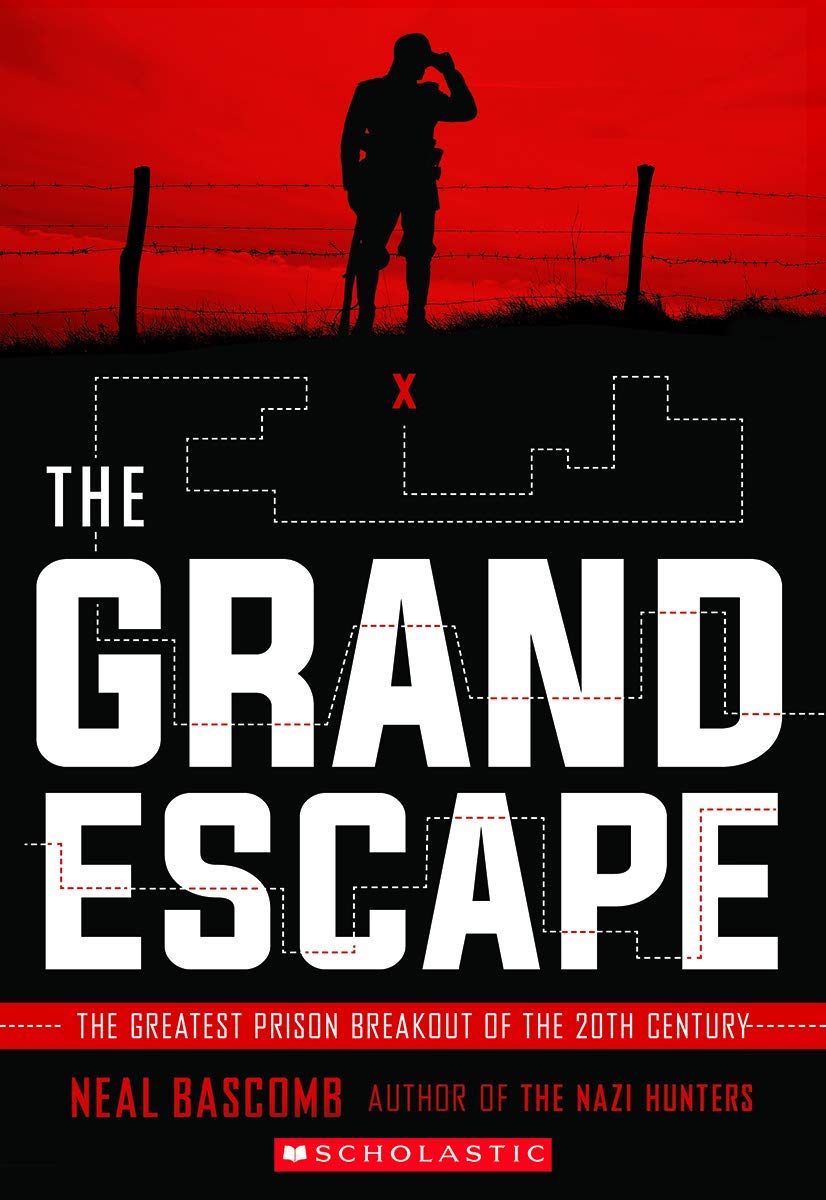
The Grand Escape: Chapter 1
This riveting book tells the true story of a group of prisoners of war who escaped from Germany during World War I.
Here are links to our lists for the book: Chapter 1, Chapters 2–6, Chapters 7–10, Chapters 11–16, Chapters 17–30
40 words
382 learners
Learn words with Flashcards and other activities
Definition First

Other learning activities
Full list of words from this list:
-
hapless
unfortunate and deserving pityAlthough the murder lit the fuse of war, any number of acts could have stamped out the spark before the explosion, but hapless diplomats, and the leaders they served, failed to do so.
-
ossify
make rigid and set into a conventional patternHastening the disaster was an assembly of ossified empires, tangled alliances, inflexible war plans, massive standing armies, and the views of Germany, most prominently those of Kaiser Wilhelm II, that their country must choose “world power or downfall.”
-
attrition
a wearing down to weaken or destroyNow the struggle became what some predicted it always would be—a war of attrition and annihilation that enveloped countries around the globe.
-
vanquish
defeat in a competition, race, or conflict“Those vanquished in war are held to belong to the victor,” stated Aristotle, and, indeed, for most of the history of warfare, death or enslavement awaited anyone captured on the battlefield. Often their families suffered the same, their towns razed too.
-
raze
tear down so as to make flat with the ground“Those vanquished in war are held to belong to the victor,” stated Aristotle, and, indeed, for most of the history of warfare, death or enslavement awaited anyone captured on the battlefield. Often their families suffered the same, their towns razed too.
-
internment
confinement during wartimeWith the rise of professional armies in the eighteenth century, though, internment and POW (prisoner of war) exchanges became more standard.
-
moor
secure in or as if in a berth or dockNonetheless, the British and French, particularly during the Napoleonic age, ran a race to the bottom in their handling of the captured, many of whom were interned in the dark, sodden underbellies of moored ships, or “hulks.”
-
codify
organize into a system, such as a body of lawAbraham Lincoln made a marked leap forward by codifying some principles of prisoner treatment in an army field manual, not the least of which stated that POWs should be given the basic needs of shelter, food, clothing, and medical attention.
-
stipulation
a restriction insisted upon as a condition for an agreementBeyond stipulations on diplomacy, naval warfare, and restrictions over the use of poisonous gases and hollow-point bullets, the two international conferences set out clear rules about the treatment of prisoners.
-
diplomacy
negotiation between nationsBeyond stipulations on diplomacy, naval warfare, and restrictions over the use of poisonous gases and hollow-point bullets, the two international conferences set out clear rules about the treatment of prisoners.
-
halcyon
idyllically calm and peaceful; suggesting happy tranquilityThe laundry list of dos and don’ts was so long and so comprehensive that a British international lawyer stated in 1911 that the future POW could expect “a halcyon time to be nursed fondly in memory, a kind of inexpensive rest-cure after the wearisome turmoil of fighting.”
-
wearisome
so lacking in interest as to cause mental fatigueThe laundry list of dos and don’ts was so long and so comprehensive that a British international lawyer stated in 1911 that the future POW could expect “a halcyon time to be nursed fondly in memory, a kind of inexpensive rest-cure after the wearisome turmoil of fighting.”
-
ebb
fall away or declineCombatant nations struggled to confine and maintain this tide of men, and there was no sign that it would ebb any time soon.
-
quarry
a surface excavation for extracting stone or slateThey dug in the salt and coal mines, plowed fields, cut peat, split rocks in quarries, laid railroads, emptied barges, and worked in factories.
-
vestige
an indication that something has been presentIf an officer swore not to escape, he was also allowed to take parole, or temporary leave—typically for walks outside the camp. Such was the currency of a gentleman’s word being his bond and the vestiges of the old class system that once dominated all of Europe.
-
connive
form intrigues (for) in an underhand mannerStill, imprisoned officers and rank-and-file men alike were subject to a German high command that connived against the Hague Conventions.
-
reprisal
a retaliatory action against an enemyThe German army issued a handbook to its troops that called attention to the Hague pledges but included amendments about how prisoners could be put to death for insubordination, for attempting to escape, in reprisal for similar measures by the enemy, and the very broad “in case of overwhelming necessity.”
-
fend
try to manage without helpTheir rights under the Hague Conventions ignored or abused, prisoners in Germany were abandoned to fend for themselves against commandants who had a largely free hand in how they treated prisoners, regardless of their rank.
-
bellows
a mechanical device that blows a strong current of airFar behind him, at the mouth of the tunnel underneath a narrow paneled staircase, David Gray, the number-two man, muscled the bellows and pumped air down to Kennard.
-
din
a loud, harsh, or strident noiseThe sky lightened from gray to pink as the 70th Squadron of the Royal Flying Corps (RFC) prepared to take off from their base. Already the din of shelling sounded in the distance.
-
aft
near or toward the stern of a ship or tail of an airplaneSeated in the aft cockpit behind Blain was Charles Griffiths, the observer, whose various tasks included radio communication, aerial reconnaissance, and manning the guns.
-
reconnaissance
the act of scouting, especially to gain informationSeated in the aft cockpit behind Blain was Charles Griffiths, the observer, whose various tasks included radio communication, aerial reconnaissance, and manning the guns.
-
balaclava
a tight knit cap that covers the entire head and neckHis face was slathered with whale oil and covered by a balaclava and goggles.
-
fuselage
the central body of an airplane holding crew and passengersIts red, white, and blue roundels struck in sharp relief against the mud-green fuselage.
-
ramshackle
in poor or broken-down conditionBanking eastward, they soon left behind the bundle of ramshackle cottages and simple church that made up the village of Fienvillers.
-
emblazon
decorate, adorn, or inscribe with a designOnce assembled in a V-shaped formation, the five Sopwiths set off eastward, the sky emblazoned bright orange ahead.
-
zeppelin
a large airship designed to carry passengers or bombsTheir mission was reconnaissance of Maubeuge, deep behind German enemy lines, to locate some munitions factories and investigate whether an airship base was housing Zeppelins.
-
delineated
represented accurately or preciselyCompared to their maps—main roads clearly delineated in red, railways in black, forests in green—the French countryside was an endless patchwork of colored fields threaded with gray lines and shadowed by clouds.
-
precipitous
extremely steepA direct hit would crumple a plane in an instant, sending it in a precipitous drop from the sky, like a bird downed by a shotgun.
-
barrage
the heavy fire of artillery to saturate an areaEverything looked okay. He glanced back at Griffiths, and they shared a thumbs-up. As quickly as the barrage began, it ended. They flew on toward Maubeuge to continue their reconnaissance.
-
besiege
surround so as to force to give upThe ancient city had been besieged and sacked many times over the centuries, handed between French, Spanish, and Austrian dukes and counts almost too many times to count.
-
acrid
strong and sharp, as a taste or smellHe turned westward, pushing to maintain altitude. Any attempt to alter the carburetor mix or to clear the stuck valve failed. The acrid stench of hot metal soon overwhelmed, and the Sopwith bobbed slightly up and down in the airstream as it slowed.
-
stave off
prevent the occurrence of; prevent from happeningSoon after fighting began, however, many credited the RFC’s bird’s-eye role tracking troop movements with staving off the German envelopment of British troops and an early knockout blow in the war.
-
resilience
the ability to recover readily from adversity or changeIn his pilots, Hugh Trenchard, the RFC commander in France, looked for “High spirits and resilience of youth...under twenty-five, and unmarried. Athletic, alert, cheerful, even happy-go-lucky, the paragon would also reveal initiative and a sense of humour. The greatest strength was an incurable optimism.”
-
paragon
model of excellence or perfection of a kindIn his pilots, Hugh Trenchard, the RFC commander in France, looked for “High spirits and resilience of youth...under twenty-five, and unmarried. Athletic, alert, cheerful, even happy-go-lucky, the paragon would also reveal initiative and a sense of humour. The greatest strength was an incurable optimism.”
-
petrol
gasolineThey overturned in the air and spiraled out of control. There were midair collisions. Engines died. Petrol ran out. Wings became untethered. Rudders stuck.
-
incredulous
not disposed or willing to believe; unbelievingThey sailed over a French village, low enough to see its inhabitants looking up at them with incredulous faces.
-
stifling
characterized by oppressive heat and humidityThe Germans brought the two men to the nearby town of Cambrai and put them in a sliver of a cell in the old stone fortress. First they noticed the stifling heat, then the foul smell.
-
threadbare
thin and tattered with ageWhen they tried to sleep, on two straw mattresses that filled the tiny space, they found their threadbare, soiled blankets were alive with lice.
-
fetid
offensively malodorousA wounded soldier lay on a stone floor, his upper arm a fetid gob of open flesh, dried blood, dirt, and straw.
Created on Mon Apr 05 15:51:01 EDT 2021
(updated Tue Apr 13 12:33:02 EDT 2021)
Sign up now (it’s free!)
Whether you’re a teacher or a learner,
Vocabulary.com can put you or your class
on the path to systematic vocabulary improvement.