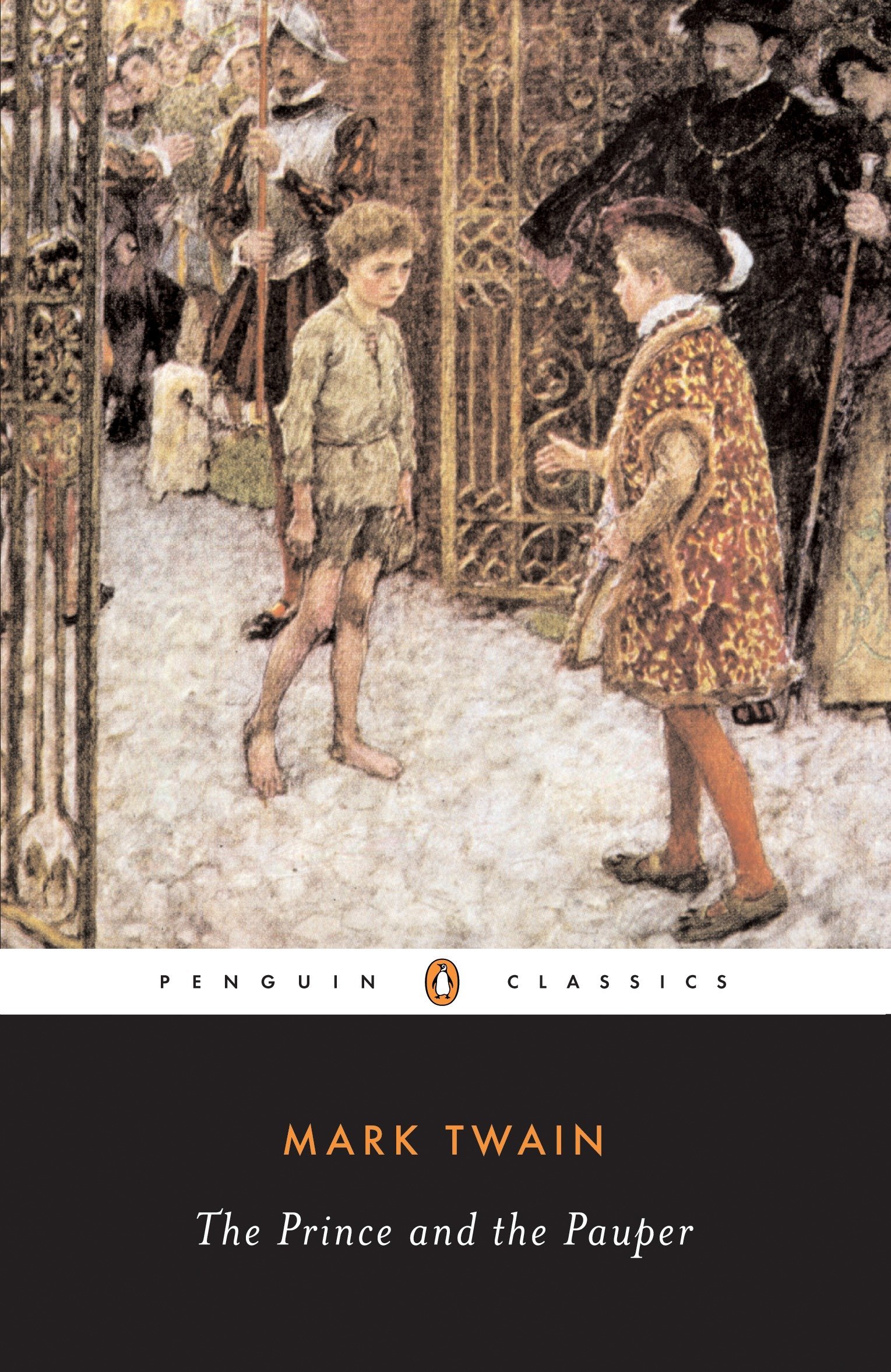
The Prince and The Pauper: Chapters 1-7
A young prince and a poor commoner look almost exactly alike, so they decide to switch places to discover how the other lives. Read the full text here.
Here are links to our lists for the novel: Chapters 1-7, Chapters 8-14, Chapters 15-21, Chapters 22-30, Chapter 31-Notes
Here are links to our lists for other works by Mark Twain: The Adventures of Tom Sawyer, The Adventures of Huckleberry Finn, Life on the Mississippi, A Story Without an End, The Celebrated Jumping Frog of Calaveras County
35 words
788 learners
Learn words with Flashcards and other activities
Definition First

Other learning activities
Full list of words from this list:
-
stringent
demanding strict attention to rules and proceduresHe only begged just enough to save himself, for the laws against mendicancy were stringent, and the penalties heavy; so he put in a good deal of his time listening to good Father Andrew's charming old tales and legends about giants and fairies, dwarfs and genii, and enchanted castles, and gorgeous kings and princes.
-
scant
less than the correct or legal or full amountHis head grew to be full of these wonderful things, and many a night as he lay in the dark on his scant and offensive straw, tired, hungry, and smarting from a thrashing, he unleashed his imagination and soon forgot his aches and pains in delicious picturings to himself of the charmed life of a petted prince in a regal palace.
-
lament
express grief verballyHis dream-people were so fine that he grew to lament his shabby clothing and his dirt, and to wish to be clean and better clad.
-
astonished
filled with the emotional impact of overwhelming surpriseFull-grown people brought their perplexities to Tom for solution, and were often astonished at the wit and wisdom of his decisions.Perplexity and astonishment are both states of mind that can be overwhelming, but in being astonished, one understands how something is amazing, while in being perplexed, one is struggling to understand. The full-grown people of Offal Court are used to "drunkenness, riot and brawling" so they are often perplexed by their lives and astonished by the wit and wisdom young Tom has learned from the priest's stories, books and explanations.
-
mimic
constituting an imitationDaily the mock prince was received with elaborate ceremonials borrowed by Tom from his romantic readings; daily the great affairs of the mimic kingdom were discussed in the royal council, and daily his mimic highness issued decrees to his imaginary armies, navies, and viceroyalties."Mimic" and "mock" are used as synonymous adjectives here to describe how Tom is not a real prince and is just copying behaviors and speeches he'd read about. As verbs, "mock" and "mimic" can have negative tones that disrespectfully make fun of the things being copied. But that is not the case here, since Tom wishes he were a prince and his friends look up to him "with a sort of wondering awe, as a superior being."
-
grandeur
the quality of being magnificent or splendidAfter which, he would go forth in his rags and beg a few farthings, eat his poor crust, take his customary cuffs and abuse, and then stretch himself upon his handful of foul straw, and resume his empty grandeurs in his dreams.
-
obeisance
bending the head or body in reverence or submissionAll night long the glories of his royal estate shone upon him; he moved among great lords and ladies, in a blaze of light, breathing perfumes, drinking in delicious music, and answering the reverent obeisances of the glittering throng as it parted to make way for him, with here a smile, and there a nod of his princely head.
-
wretchedness
the quality of being poor and inferior and sorryAnd when he awoke in the morning and looked upon the wretchedness about him, his dream had had its usual effect--it had intensified the sordidness of his surroundings a thousandfold."Wretchedness" and "sordidness" are synonymous nouns here that describe the state of Tom's house, which is small, dirty, decayed, rickety and disorganized. But as the example sentence suggests, "sordidness" is often seen as worse because it carries a sense of moral dirtiness, while "wretchedness" can be pitied because it connects to misery that is often a result of misfortunes.
-
repast
the food served and eaten at one timeBy his command a repast was brought such as Tom had never encountered before except in books.
-
revel
take delight inIf that I could but clothe me in raiment like to thine, and strip my feet, and revel in the mud once, just once, with none to rebuke me or forbid, meseemeth I could forego the crown!
-
stature
the height of a standing personThou hast the same hair, the same eyes, the same voice and manner, the same form and stature, the same face and countenance that I bear."Stature" also means "high level of respect gained by impressive achievement." This is not how Edward Tudor, the prince, uses the word here. Although Tom enjoys some stature among the people of Offal Court, he does not currently have the same stature as Edward in the royal court.
-
buffet
strike, beat repeatedlyThen followed such a thing as England had never seen before--the sacred person of the heir to the throne rudely buffeted by plebeian hands, and set upon and torn by dogs.
-
bewildered
extremely confused and uncertain what to doHe wandered on and on, and grew more and more bewildered, and so tired and faint he could hardly drag one foot after the other.
-
cease
put an end to a state or an activityHe had ceased to ask questions of anyone, since they brought him only insult instead of information.
-
squalid
foul and run-down and repulsiveThe houseless prince, the homeless heir to the throne of England, still moved on, drifting deeper into the maze of squalid alleys where the swarming hives of poverty and misery were massed together."Squalid" and "sordid" are synonymous adjectives that describe conditions that are so foul and run-down that they can be repulsive. However, the temporarily homeless heir to the throne of England is not repulsed by the poverty he sees. Instead, he vows, "When I am king, they shall not have bread and shelter only, but also teachings out of books; for a full belly is little worth where the mind is starved, and the heart."
-
stupefied
as if struck dumb with astonishment and surpriseThe man stared down, stupefied, upon the lad, then shook his head and muttered--"Gone stark mad as any Tom o' Bedlam!""Stupefied" and "stupid" come from the same Latin root "stupere" which means "to be stunned." But "stupefy" also has the Latin root "facere" which means "to make." So a person who is stupefied might not start off stupid but is made stupid by either a physical or emotional blow (compare with "astonished" in this list). Here, John Canty is stupefied that the boy he thinks is his son is claiming to be the Prince of Wales.
-
sumptuous
rich and superior in qualityTom played with the jewelled dagger that hung upon his thigh; he examined the costly and exquisite ornaments of the room; he tried each of the sumptuous chairs, and thought how proud he would be if the Offal Court herd could only peep in and see him in his grandeur.
-
cozen
cheat or trick"How now, my lord Edward, my prince? Hast been minded to cozen me, the good King thy father, who loveth thee, and kindly useth thee, with a sorry jest?"
-
blanch
turn pale, as if in fearPoor Tom was listening, as well as his dazed faculties would let him, to the beginning of this speech; but when the words 'me, the good King' fell upon his ear, his face blanched, and he dropped as instantly upon his knees as if a shot had brought him there.
-
disproportion
imbalance among the parts of something"Alack, I had believed the rumour disproportioned to the truth; but I fear me 'tis not so."
-
diffident
lacking self-confidenceTom stood silent a moment, embarrassed by having so many eyes centred upon him, then said diffidently--"I have no knowledge of this tongue, so please your majesty."
-
dreary
lacking in liveliness or charm or surpriseHis old dreams had been so pleasant; but this reality was so dreary!
-
infirmity
the state of being weak in health or bodyHis majesty commandeth, that for due and weighty reasons of state, the prince's grace shall hide his infirmity in all ways that be within his power, till it be passed and he be as he was before.
-
semblance
the outward or apparent appearance or form of somethinghe shall strive with diligence to bring unto his memory again those faces which he was wont to know--and where he faileth he shall hold his peace, neither betraying by semblance of surprise or other sign that he hath forgot
-
delicate
difficult to handle; requiring great tactTom hesitated, looked distressed, and was about to stammer out something at hazard, when Lord St. John took the word and answered for him with the easy grace of a courtier accustomed to encounter delicate difficulties and to be ready for them
-
serene
not agitatedThe Princess Elizabeth's quick eye saw by the serene blankness of the target's front that the shaft was overshot; so she tranquilly delivered a return volley of sounding Greek on Tom's behalf, and then straightway changed the talk to other matters."Serene" and "tranquil" are synonymous adjectives, but here, they are not used in the same way. The scene is filled with tension, which is developed in this example sentence with a metaphor that compares the conversation to the shooting of arrows. Tom looks serene because he's not aware that Lady Jane had fired something Greek at him. Princess Elizabeth is tranquil because she understood the Greek phrase and can calmly protect Tom by answering for him.
-
forestall
keep from happening or arising; make impossibleHe made two or three further efforts to help himself, but being promptly forestalled each time, he finally gave up, with a sigh of resignation and a murmured "Beshrew me, but I marvel they do not require to breathe for me also!"
-
muse
reflect deeply on a subjectThey mused a while, with much head-shaking and walking the floor, then Lord St. John said--"Plainly, what dost thou think?"
-
lineament
the characteristic parts of a person's faceSeemeth it not strange that madness should filch from his memory his father's very lineaments
-
assail
attack someone physically or emotionallyAfter some further talk, in which the Lord St. John covered up his mistake as well as he could by repeated protests that his faith was thoroughly grounded now, and could not be assailed by doubts again, the Lord Hertford relieved his fellow-keeper, and sat down to keep watch and ward alone.
-
exaltation
the elevation of a person, as to the status of a godBut lived ever an impostor yet, who, being called prince by the king, prince by the court, prince by all, denied his dignity and pleaded against his exaltation?
-
vagary
an unexpected and inexplicable change in somethingAll those that were present had been well drilled within the hour to remember that the prince was temporarily out of his head, and to be careful to show no surprise at his vagaries.
-
tribulation
an annoying or frustrating or catastrophic eventNone smiled; but all were sore perplexed, and looked one to the other in deep tribulation for counsel.
-
eccentricity
strange and unconventional behaviorThis new eccentricity of the prince's ruined mind made all the hearts about him ache; but the sad sight moved none to merriment.
-
hereditary
passed on by established rules of descentTom put on the greaves, the gauntlets, the plumed helmet, and such other pieces as he could don without assistance, and for a while was minded to call for help and complete the matter, but bethought him of the nuts he had brought away from dinner, and the joy it would be to eat them with no crowd to eye him, and no Grand Hereditaries to pester him with undesired servicesThe given definition is for an adjective, but the example sentence uses the word as a proper noun to refer to the prince's servants, who inherited their positions from their ancestors, which is similar to how the prince would inherit the throne.
Created on Wed Aug 06 20:14:43 EDT 2014
(updated Mon Jul 02 15:18:12 EDT 2018)
Sign up now (it’s free!)
Whether you’re a teacher or a learner,
Vocabulary.com can put you or your class
on the path to systematic vocabulary improvement.