The Prince and The Pauper: Chapter 31-Notes
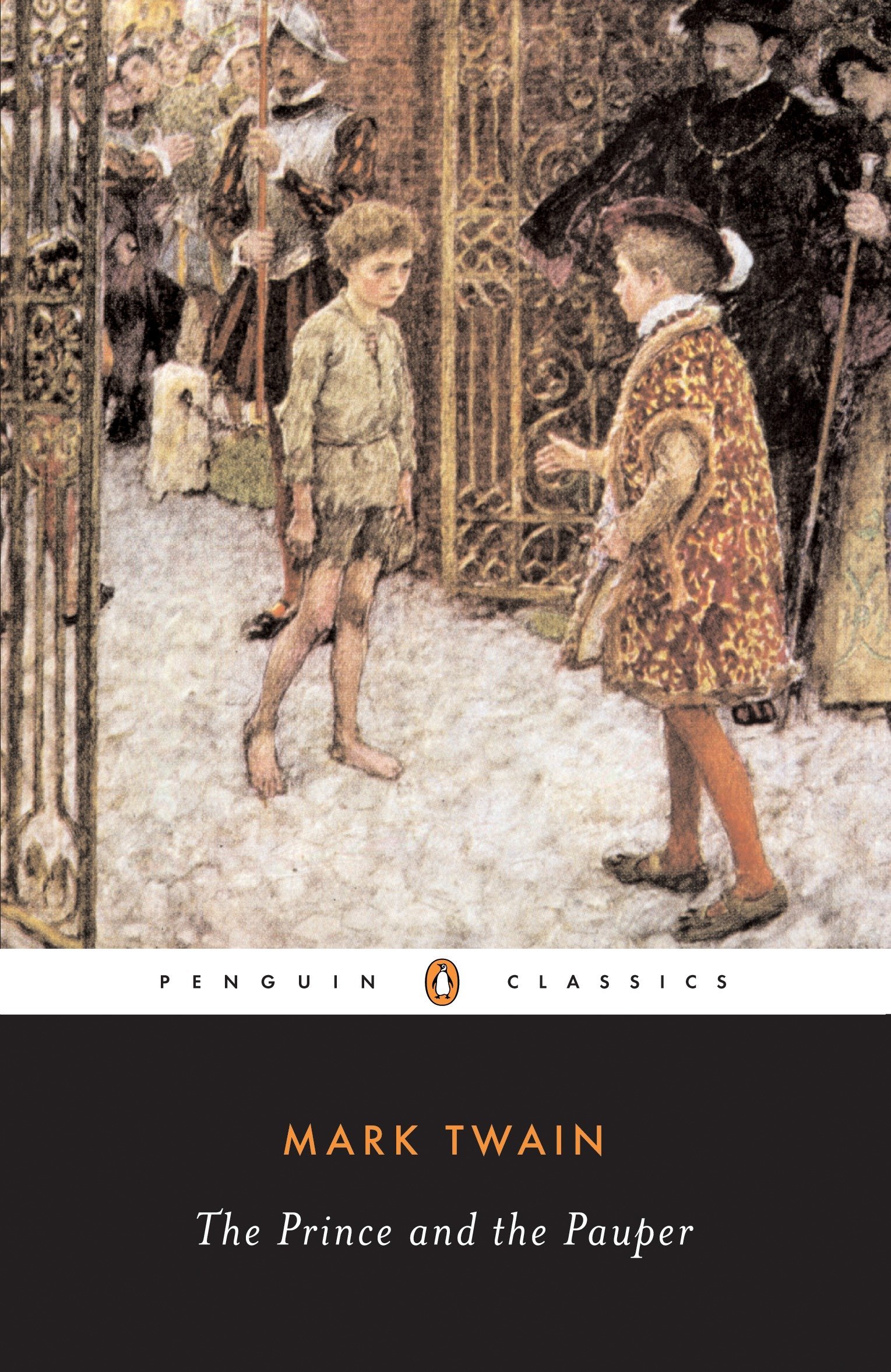
A young prince and a poor commoner look almost exactly alike, so they decide to switch places to discover how the other lives. Read the full text here.
Here are links to our lists for the novel: Chapters 1-7, Chapters 8-14, Chapters 15-21, Chapters 22-30, Chapter 31-Notes
Here are links to our lists for other works by Mark Twain: The Adventures of Tom Sawyer, The Adventures of Huckleberry Finn, Life on the Mississippi, A Story Without an End, The Celebrated Jumping Frog of Calaveras County
35 words
89 learners
Learn words with Flashcards and other activities
Definition First

Other learning activities
Full list of words from this list:
-
illustrious
having or conferring gloryWhat unspeakable glory it would be, if they could recognise him, and realise that the derided mock king of the slums and back alleys was become a real King, with illustrious dukes and princes for his humble menials, and the English world at his feet!
-
adulation
exaggerated flattery or praiseBut he had to deny himself, and choke down his desire, for such a recognition might cost more than it would come to: so he turned away his head, and left the two soiled lads to go on with their shoutings and glad adulations, unsuspicious of whom it was they were lavishing them upon.
-
eulogistic
formally expressing praiseThis quaint and gaudy spectacle so wrought upon the rejoicing people, that their acclamations utterly smothered the small voice of the child whose business it was to explain the thing in eulogistic rhymes."Eulogistic," "adulation," and "acclamation" all connect to praise. As this example sentence suggests, the tone of an acclamation ("enthusiastic shout of approval") is different from that of a eulogy (which is often high praise for someone at a funeral and not a coronation). The given definition for "adulation" has a negative tone that suggests the falseness of the praise, especially for someone who is not really the King, and whom some believe is mad.
-
effigy
a representation of a personWhithersoever Tom turned his happy young face, the people recognised the exactness of his effigy's likeness to himself, the flesh and blood counterpart; and new whirlwinds of applause burst forth.As the definition and example sentence suggests, the effigy of the King is meant to honor him. But an effigy is also a "crude image of a hated person" that is often defaced, destroyed, or otherwise dishonored.
-
perpetuate
cause to continue or prevailA sickening consternation struck through him; he recognised his mother! and up flew his hand, palm outward, before his eyes--that old involuntary gesture, born of a forgotten episode, and perpetuated by habit.
-
conscience
a feeling of shame when you do something immoralHe heard it only as one hears the thunder of the surf when it is blown to the ear out of a great distance, for it was smothered under another sound which was still nearer, in his own breast, in his accusing conscience--a voice which kept repeating those shameful words, "I do not know you, woman!"
-
solicitude
a feeling of excessive concernBy-and-by the gladness in the faces of the populace changed a little, and became touched with a something like solicitude or anxiety: an abatement in the volume of the applause was observable too.
-
ensue
take place or happen afterward or as a resultThe entire multitude rose, and the ceremony of the Recognition ensued.
-
poise
cause to be balanced or suspendedIn the same instant a rainbow-radiance flashed along the spacious transept; for with one impulse every individual in the great concourse of nobles lifted a coronet and poised it over his or her head--and paused in that attitude.
-
apparition
a ghostly appearing figureAt this impressive moment, a startling apparition intruded upon the scene--an apparition observed by none in the absorbed multitude, until it suddenly appeared, moving up the great central aisle.
-
comport
behave in a certain mannerHe raised his hand with a solemnity which ill comported with his soiled and sorry aspect, and delivered this note of warning--"I forbid you to set the crown of England upon that forfeited head. I am the King!""Comport" also means "to be appropriate; harmonize"--this is how the example sentence uses the verb to contrast Edward's dignified behavior with his dirty appearance.
-
fealty
the loyalty that one owes to a country, sovereign, or lord"Oh, my lord the King, let poor Tom Canty be first to swear fealty to thee, and say, 'Put on thy crown and enter into thine own again!'"
-
imposter
a person who makes deceitful pretensesYes, none but the true prince could dissolve the stubborn mystery of the vanished Great Seal--this forlorn little impostor had been taught his lesson well, but here his teachings must fail, for his teacher himself could not answer that questionCompare the spelling of the word above to its use in the example sentence. Both are acceptable, but "imposter" could be seen as an impostor, because the Latin root is "impostor" which comes from "imponere" which means "place upon, impose upon, deceive." The -er spelling could have come from the English rule of adding the suffix to turn a verb into a noun, or it could be a variation of the Middle French "imposteur."
-
apparent
clearly revealed to the mind or the senses or judgmentAll the company wondered at this speech, and wondered still more to see the little mendicant pick out this peer without hesitancy or apparent fear of mistake, and call him by name with such a placidly convincing air of having known him all his life.Compare with "manifest" in the list for Chapters 8-14. As used in their example sentences, the adjectives are synonyms that describe something that is clear and convincing. But "apparent" also has a definition that leaves room for doubt: appearing as such, but not necessarily so.
-
noncommittal
refusing to bind oneself to a particular course of actionThe Lord St. John made a deep obeisance--and it was observed that it was a significantly cautious and non-committal one, it not being delivered at either of the kings, but at the neutral ground about half-way between the two--and took his leave.
-
conspicuous
obvious to the eye or mindSo at last Tom Canty, in his royal robes and jewels, stood wholly alone and isolated from the world, a conspicuous figure, occupying an eloquent vacancy.
-
scornful
expressing extreme contemptIn a moment he stood all alone, without friend or supporter, a target upon which was concentrated a bitter fire of scornful and angry looks.
-
paltry
not worth considering"Cast the beggar into the street, and scourge him through the town--the paltry knave is worth no more consideration!"
-
elusive
difficult to detect or grasp by the mind or analyzeA silence ensued, undisturbed by a movement or a whisper, and all eyes were fixed upon the new-comer, who stood, with bent head and corrugated brow, groping in his memory among a thronging multitude of valueless recollections for one single little elusive fact, which, found, would seat him upon a throne--unfound, would leave him as he was, for good and all--a pauper and an outcast.
-
furnish
give something useful or necessary toHe paused, then looked up, and said with gentle dignity, "My lords and gentlemen, if ye will rob your rightful sovereign of his own for lack of this evidence which he is not able to furnish, I may not stay ye, being powerless.
-
conjunction
the state of being joined togetherAs Tom checked off his details, and the other boy nodded his head in recognition of them, the great audience and the officials stared in puzzled wonderment; the tale sounded like true history, yet how could this impossible conjunction between a prince and a beggar-boy have come about?
-
appurtenance
equipment consisting of miscellaneous articlesBut if a doubt remained in any mind that Tom Canty was not the King of England and familiar with the august appurtenances of royalty, this reply disposed of it utterly.
-
anoint
choose by or as if by divine interventionThen the coronation ceremonies were resumed; the true King was anointed and the crown set upon his head, whilst cannon thundered the news to the city, and all London seemed to rock with applause.
-
veritable
not counterfeit or copiedHe stared at the King again and thought, "Is it a dream . . . or is he the veritable Sovereign of England, and not the friendless poor Tom o' Bedlam I took him for--who shall solve me this riddle?"
-
ordain
order by virtue of superior authority; decreethe privilege which he hath just exercised is his by royal grant; for we have ordained that the chiefs of his line shall have and hold the right to sit in the presence of the Majesty of England henceforth, age after age, so long as the crown shall endure.
-
torpid
slow and apatheticTwo persons, who, through delay, had only arrived from the country during this morning, and had now been in this room only five minutes, stood listening to these words and looking at the King, then at the scarecrow, then at the King again, in a sort of torpid bewilderment.
-
bounty
the property of being richly abundant or plentifulKnow, all ye that hear my voice, that from this day, they that abide in the shelter of Christ's Hospital and share the King's bounty shall have their minds and hearts fed, as well as their baser parts
-
salutation
an act of honor or courteous recognitionAnd for that he hath been a king, it is meet that other than common observance shall be his due; wherefore note this his dress of state, for by it he shall be known, and none shall copy it; and wheresoever he shall come, it shall remind the people that he hath been royal, in his time, and none shall deny him his due of reverence or fail to give him salutation.
-
esteem
an attitude of admirationHe showed favour to the justice who had pitied him when he was supposed to have stolen a pig, and he had the gratification of seeing him grow in the public esteem and become a great and honoured man.
-
replenish
fill something that had previously been emptiedHe said that the frequent rehearsing of the precious lesson kept him strong in his purpose to make its teachings yield benefits to his people; and so, whilst his life was spared he should continue to tell the story, and thus keep its sorrowful spectacles fresh in his memory and the springs of pity replenished in his heart.
-
benignant
characterized by kindness and warm courtesyTom Canty lived to be a very old man, a handsome, white-haired old fellow, of grave and benignant aspect.Compare with "malignant" in the list for Chapters 8-14. The adjectives are antonyms, and they emphasize how different Tom is from his grandmother. Despite having spent many childhood years under her evil influence and physical abuse, Tom grows into a healthy and kind old man--partly due to the support and friendship of the King, but Edward died at a young age and Tom continued to live an honorable life.
-
probity
complete and confirmed integrityThe young King discovered an extreme attachment to his uncle, who was, in the main, a man of moderation and probity.
-
mitigated
made less severe or intenseBut if he (the Protector) gave offence by assuming too much state, he deserves great praise on account of the laws passed this session, by which the rigour of former statutes was much mitigated, and some security given to the freedom of the constitution.Compare with "remission" and "commutation" in the list for Chapters 22-30. In addition to providing relief and justice, the mitigation of former laws is a criticism of the reign of Henry VIII, who was described in the novel as "an ogre whose nostrils breathed destruction and whose hand dealt scourgings and death" and who is most remembered in history for beheading people, including two wives, who disagreed with or displeased him.
-
repeal
an official or legal cancellationBy these repeals several of the most rigorous laws that ever had passed in England were annulled; and some dawn, both of civil and religious liberty, began to appear to the people."Repeal" is used as a noun here, but as a verb, it is synonymous with "annul." A slight difference in their intensity can be seen in their roots: the Old French "rapeler" means "to call back" while the Late Latin "annullare" means "to make to nothing."
-
indigent
poor enough to need help from othersSubsequently, Edward VI. caused the old Priory to be properly repaired, and founded within it that noble establishment called the Bluecoat School, or Christ's Hospital, for the education and maintenance of orphans and the children of indigent persons.
Created on Wed Aug 06 21:23:46 EDT 2014
(updated Mon Jul 02 15:19:05 EDT 2018)
Sign up now (it’s free!)
Whether you’re a teacher or a learner,
Vocabulary.com can put you or your class
on the path to systematic vocabulary improvement.