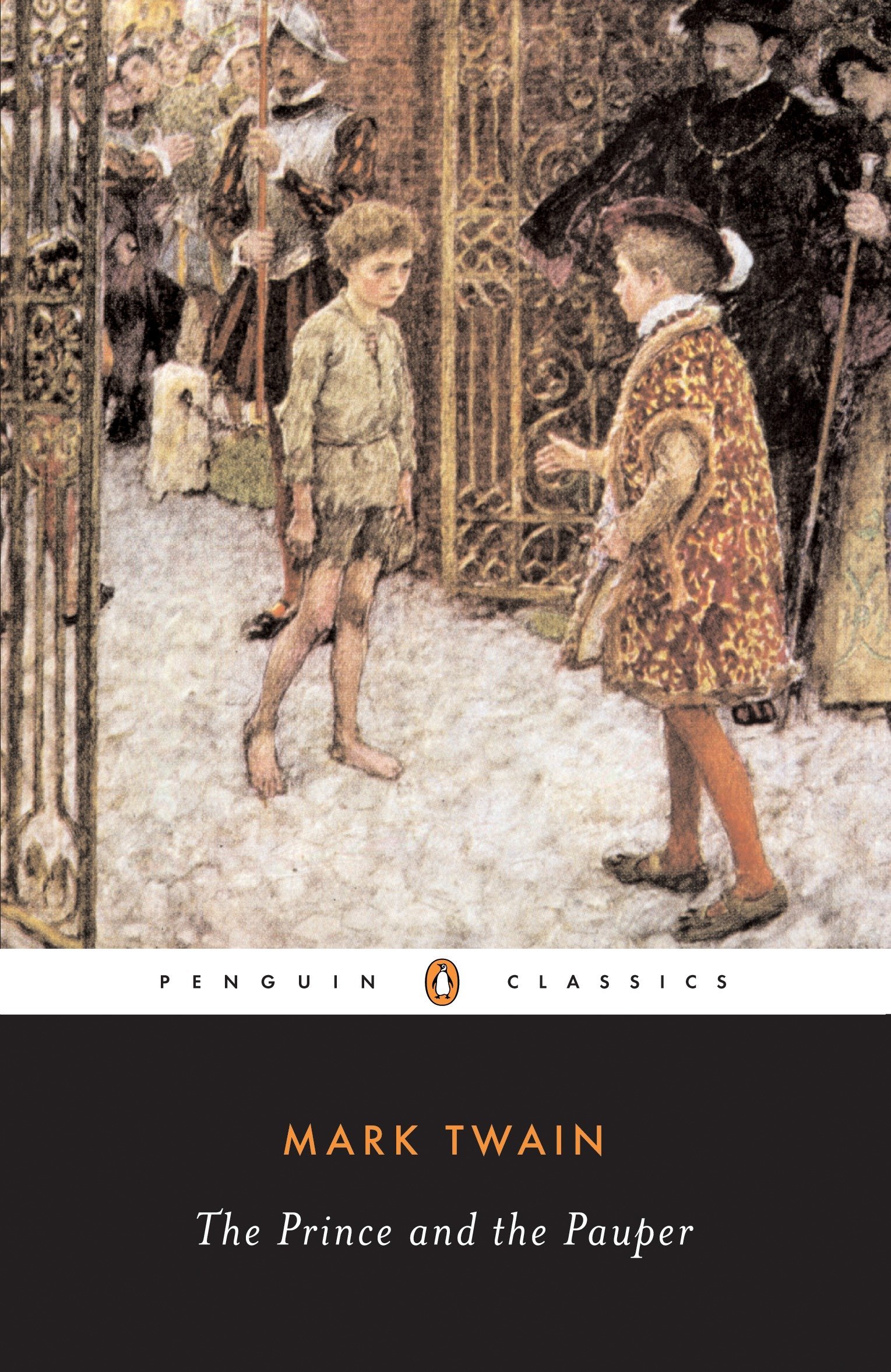
The Prince and The Pauper: Chapters 22-30
A young prince and a poor commoner look almost exactly alike, so they decide to switch places to discover how the other lives. Read the full text here.
Here are links to our lists for the novel: Chapters 1-7, Chapters 8-14, Chapters 15-21, Chapters 22-30, Chapter 31-Notes
Here are links to our lists for other works by Mark Twain: The Adventures of Tom Sawyer, The Adventures of Huckleberry Finn, Life on the Mississippi, A Story Without an End, The Celebrated Jumping Frog of Calaveras County
35 words
127 learners
Learn words with Flashcards and other activities
Definition First

Other learning activities
Full list of words from this list:
-
raillery
light teasingOnce more 'King Foo-foo the First' was roving with the tramps and outlaws, a butt for their coarse jests and dull-witted railleries, and sometimes the victim of small spitefulness at the hands of Canty and Hugo when the Ruffler's back was turned.
-
prodigious
very impressive; far beyond what is usualTwice he stepped upon the King's toes--accidentally--and the King, as became his royalty, was contemptuously unconscious of it and indifferent to it; but the third time Hugo entertained himself in that way, the King felled him to the ground with a cudgel, to the prodigious delight of the tribe.
-
hamper
prevent the progress or free movement ofHe delivered the thunders of his royalty upon the heads of all who hampered his liberties or tried to force him to service.
-
respite
a relief from harm or discomfortThus several days went by; and the miseries of this tramping life, and the weariness and sordidness and meanness and vulgarity of it, became gradually and steadily so intolerable to the captive that he began at last to feel that his release from the hermit's knife must prove only a temporary respite from death, at best.
-
implacable
incapable of being appeased or pacifiedOne was to inflict upon the lad what would be, to his proud spirit and 'imagined' royalty, a peculiar humiliation; and if he failed to accomplish this, his other plan was to put a crime of some kind upon the King, and then betray him into the implacable clutches of the law.The Latin "placare" means "to calm, soothe, quiet, appease." To Hugo, a thief, the law would seem like an implacable thing that can clutch him and that would not listen to any of his pleas for mercy. To the King, the law is more of a tool that he can use and change.
-
tirade
a speech of violent denunciationThe insulted King threw the bundle on the ground; and the blanket fell away from it just as the woman arrived, with an augmenting crowd at her heels; she seized the King's wrist with one hand, snatched up her bundle with the other, and began to pour out a tirade of abuse upon the boy while he struggled, without success, to free himself from her grip.
-
consternation
sudden shock or dismay that causes confusionThe little King started, wide-eyed with consternation, but controlled himself and held his peace; but not so the woman.
-
flog
beat with a whip, rod, or caneThe justice wrote a while longer, then read the King a wise and kindly lecture, and sentenced him to a short imprisonment in the common jail, to be followed by a public flogging.
-
rebuke
an act or expression of criticism and censureAnd even if one granted it were not a jest, it is a fault so small that e'en the grimmest penalty it could call forth would be but a rebuke and warning from the judge's lips.
-
commutation
the reduction in severity of a punishment imposed by law"By advantage taken of one in fault, in dire peril, and at thy mercy, thou hast seized goods worth above thirteenpence ha'penny, paying but a trifle for the same; and this, in the eye of the law, is constructive barratry, misprision of treason, malfeasance in office, ad hominem expurgatis in statu quo--and the penalty is death by the halter, without ransom, commutation, or benefit of clergy."The Latin and polysyllabic words are nonsense that Hendon hopes the constable would not understand (for example, he suggests that cheating a woman out of the true value of a pig is the same as inciting lawsuits and failing to report treason). What Hendon wants is for the constable to be so scared by the words "penalty is death" that he would want a commutation in exchange for doing things that would help Edward.
-
endeavor
earnest and conscientious activity intended to do something"You'll find it to your advantage to offend not with useless endeavours at escape."
-
denounce
speak out against"If you were Miles Hendon, and he knew it and all the region knew it--consider what I am saying, weigh it well--you would stand in the same peril, your punishment would be no less sure; he would deny you and denounce you, and none would be bold enough to give you countenance."
-
miscreant
a person without moral scruplesPoor Miles, and Arthur, and my dear guardian, Sir Richard, are free of him, and at rest: better that you were with them than that you bide here in the clutches of this miscreant.
-
manacle
confine or restrain with or as if with handcuffsThey had company, for there were some twenty manacled and fettered prisoners here, of both sexes and of varying ages,--an obscene and noisy gang."Manacle" and "fetter" can both be nouns or verbs (here, they're used as participial adjectives). Both are shackles that limit movement, but a manacle is for the hands, while a fetter is for the ankles.
-
chafe
feel extreme irritation or angerThe King chafed bitterly over the stupendous indignity thus put upon his royalty, but Hendon was moody and taciturn."Chafe" also means "tear or wear off the skin or make sore by rubbing"--in the scene, the chains could be physically chafing the King, but in this example sentence, the verb is meant to be the opposite of the reaction of Hendon (the adjective "taciturn" means "reserved and uncommunicative").
-
prodigal
a recklessly extravagant personHe was pretty thoroughly bewildered; he had come home, a jubilant prodigal, expecting to find everybody wild with joy over his return; and instead had got the cold shoulder and a jail.The noun is an allusion to the Biblical story where a man wastes his inheritance, and then goes home to ask for forgiveness. The father welcomes his son. This story emphasizes compassion and redemption. It is slightly different from the story of Hendon, who was framed by his brother and banished by his father, yet now returns after years of difficult living. This story emphasizes justice, but not revenge, since Miles would not testify against his brother.
-
repudiate
refuse to acknowledge, ratify, or recognize as validIt was a perplexing puzzle, and occupied him a long time; but he ended, finally, with the conviction that she did know him, and had repudiated him for interested reasons.
-
ribald
humorously vulgarFor a bribe the jailer had furnished liquor to some of the prisoners; singing of ribald songs, fighting, shouting, and carousing was the natural consequence.
-
delicacy
something considered choice to eatThe old servant became very valuable to Hendon and the King; for he dropped in several times a day to 'abuse' the former, and always smuggled in a few delicacies to help out the prison bill of fare
-
confine
place limits onAndrews was obliged to confine himself to brief visits, in order to avoid suspicion; but he managed to impart a fair degree of information each time
-
seditious
in opposition to a civil authority or government"The King is not mad, good man--and thou'lt find it to thy advantage to busy thyself with matters that nearer concern thee than this seditious prattle."
-
unendurable
incapable of being put up withHis impatience to get to London grew hourly, and his captivity became almost unendurable.
-
tumult
a state of commotion and noise and confusionBoth the girls screamed continually, and fought for freedom; but suddenly this tumult was drowned under a volley of heart-piercing shrieks of mortal agony
-
gallows
an instrument from which a person is executed by hangingAnother was a man who had been accused of stealing a horse; he said the proof had failed, and he had imagined that he was safe from the halter; but no--he was hardly free before he was arraigned for killing a deer in the King's park; this was proved against him, and now he was on his way to the gallows.Compare with "scaffold" in the list for Chapters 15-21. Both are connected to punishment by hanging, but a scaffold is the platform on which the prisoner stands (for viewing purposes or a higher drop), while the gallows is the actual pole from which the prisoner hangs. Nowadays, a scaffold is a more positive image that connects to temporary support needed for the building of structures or skills.
-
dauntless
invulnerable to fear or intimidationAmong these prisoners was an old lawyer--a man with a strong face and a dauntless mien.
-
pillory
a wooden instrument of punishment on a postThree years past, he had written a pamphlet against the Lord Chancellor, accusing him of injustice, and had been punished for it by the loss of his ears in the pillory, and degradation from the bar, and in addition had been fined 3,000 pounds and sentenced to imprisonment for life.
-
stocks
a former instrument of punishment consisting of a heavy timber frame with holes in which the feet (and sometimes the hands) of an offender could be lockedHe was in a fine fury when he found himself described as a 'sturdy vagabond' and sentenced to sit two hours in the stocks for bearing that character and for assaulting the master of Hendon Hall.Compare with "pillory" in this list. Similar to manacles and fetters, they both serve the same purpose (punishment through public humiliation), but are designed to hold different parts of the body.
-
irreverent
showing lack of due respect or venerationHe raged and threatened on his way to punishment, but it did no good; he was snatched roughly along by the officers, and got an occasional cuff, besides, for his irreverent conduct.
-
inflict
impose something unpleasantHe did not even struggle, so paralysed was he with the mere thought of the monstrous outrage that was proposed to be inflicted upon his sacred person.
-
scourge
punish severely; excoriateHistory was already defiled with the record of the scourging of an English king with whips--it was an intolerable reflection that he must furnish a duplicate of that shameful page."Scourge" also means "whip" but this definition would make the example sentence sound repetitive. Compare with "flog" in this list. As used in their example sentences, the two words are synonymous. But "scourge" has additional definitions as a noun and verb: 1) something causing misery or death; 2) someone inspiring fear or dread; 3) cause extensive destruction or ruin utterly.
-
remission
an abatement in intensity or degreeHe was in the toils, there was no help for him; he must either take this punishment or beg for its remission.Compare with "commutation" in this list--the definitions don't look identical, but they are both used in their example sentences to refer to the lessening of a severe punishment, which earlier was death, and here is whipping.
-
fortitude
strength of mind that enables one to endure adversityHendon made no outcry under the scourge, but bore the heavy blows with soldierly fortitude.
-
homage
respectful deferencenobody went so far as to venture a remark in favour of the prisoner, or in compliment to him; but no matter--the absence of abuse was a sufficient homage in itself.
-
deride
treat or speak of with contemptWhilst the true King wandered about the land poorly clad, poorly fed, cuffed and derided by tramps one while, herding with thieves and murderers in a jail another, and called idiot and impostor by all impartially, the mock King Tom Canty enjoyed quite a different experience.
-
penury
a state of extreme poverty or destitutionAt first he pined for them, sorrowed for them, longed to see them, but later, the thought of their coming some day in their rags and dirt, and betraying him with their kisses, and pulling him down from his lofty place, and dragging him back to penury and degradation and the slums, made him shudder.
Created on Wed Aug 06 21:03:29 EDT 2014
(updated Mon Jul 02 15:18:52 EDT 2018)
Sign up now (it’s free!)
Whether you’re a teacher or a learner,
Vocabulary.com can put you or your class
on the path to systematic vocabulary improvement.