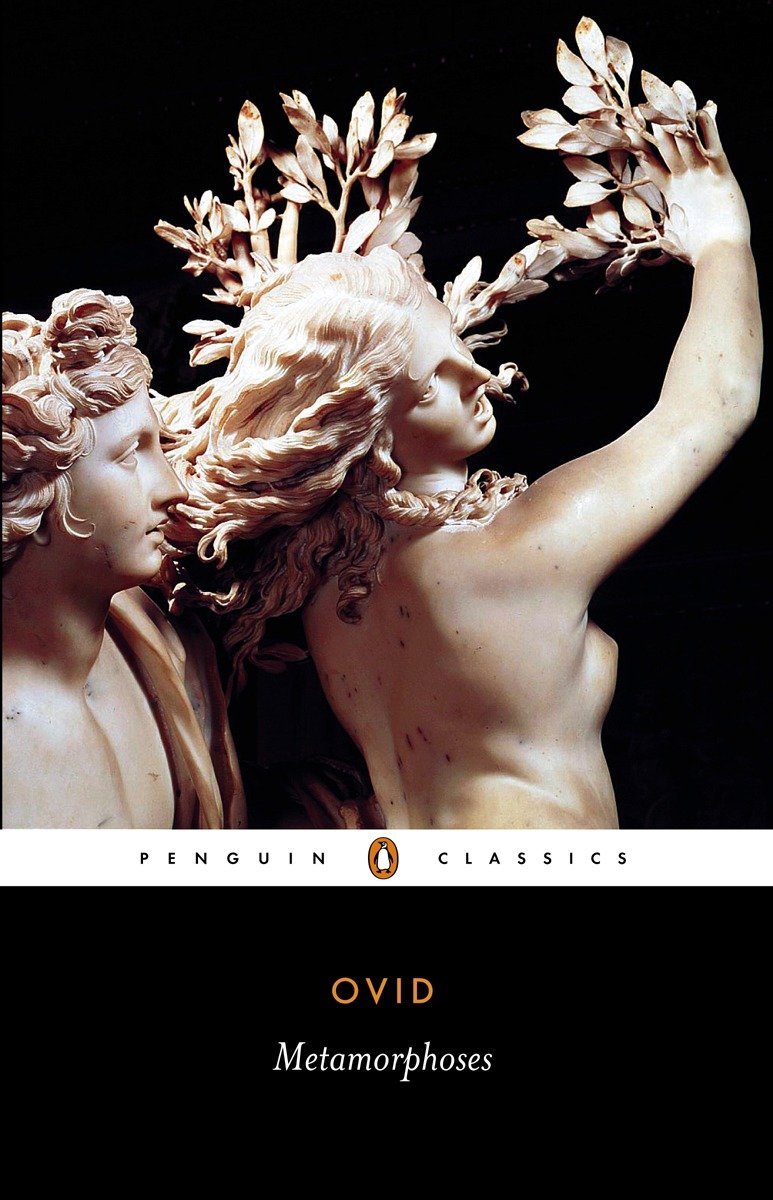
Metamorphoses: Book 8
Ovid's Metamorphoses features myths and stories of change, mutation, and transformation. Learn these words from the translation by John Dryden here.
Here are links to our lists for the book: Book 1, Book 2, Book 3, Book 4, Book 5, Book 6, Book 7, Book 8, Book 9, Book 10, Book 11, Book 12, Book 13, Book 14
30 words
40 learners
Learn words with Flashcards and other activities
Definition First

Other learning activities
Full list of words from this list:
-
vanquish
defeat in a competition, race, or conflictNow shone the morning star in bright array,
To vanquish night, and usher in the day: -
veer
turn sharply; change direction abruptlyThe wind veers southward, and moist clouds arise,
That blot with shades the blue meridian skies. -
gale
a strong wind moving 34–40 knotsCephalus feels with joy the kindly gales,
His new allies unfurl the swelling sails;
Steady their course, they cleave the yielding main,
And, with a wish, th' intended harbour gain. -
descry
catch sight ofAnd, since the siege was long, had learnt the name
Of ev'ry chief, his character, and fame;
Their arms, their horse, and quiver she descried,
Nor cou'd the dress of war the warriour hide. -
burnish
polish and make shinyHis ample shield, embost with burnish'd gold,
Still makes the bearer lovelier to behold:
When the tough jav'lin, with a whirl, he sends,
His strength and skill the sighing maid commends; -
sanguine
confidently optimistic and cheerfulYet I have no such enemies to fear,
My sole obstruction is my father's hair;
His purple lock my sanguine hope destroys,
And clouds the prospect of my rising joys."Sanguine" also means "a blood-red color"--this could represent the color of Scylla's passion for Minos or the blood shed in the war that brought Minos to the city ruled by Scylla's father. It also emphasizes the scarlet clothes that make Scylla desire Minos more. And it contrasts with the purple lock of hair that is the source of her father's power, which Scylla believes is the only thing that prevents her from being with Minos. -
emboldened
made bold or courageousEmboldened, by the merit of the deed
She traverses the adverse camp with speed,
'Till Minos' tent she reach'd: the righteous king
She thus bespoke, who shiver'd at the thing. -
perdition
the place or state in which one suffers eternal punishmentPerdition seize thee, thou, thy kind's disgrace!
May thy devoted carcass find no place
In earth, or air, or sea, by all out-cast!Here, "perdition" simply means the part of the Underworld that punishes sinners. Far from Scylla's expectation that he would love her for handing him the key to her father's head, Minos wishes that her carcass ("the dead body of an animal") would never peacefully rest anywhere because of her monstrous betrayal. -
proffer
present for acceptance or rejectionCan nor my love, nor proffer'd presents find
A passage to thy heart, and make thee kind? -
pinion
wing of a birdShe, fearful of the blow, the ship disclaims,
Quitting her hold: and yet she fell not far,
But wond'ring, finds her self sustain'd in air.
Chang'd to a lark, she mottled pinions shook,
And, from the ravish'd lock, the name of Ciris took. -
intricate
having many complexly arranged elements; elaborateSuch was the work, so intricate the place,
That scarce the workman all its turns cou'd trace;
And Daedalus was puzzled how to find
The secret ways of what himself design'd. -
glut
supply with an excess ofThese private walls the Minotaur include,
Who twice was glutted with Athenian blood:
But the third tribute more successful prov'd,
Slew the foul monster, and the plague remov'd. -
tedious
so lacking in interest as to cause mental wearinessIn tedious exile now too long detain'd,
Daedalus languish'd for his native land: -
azure
bright blue in color, like a clear skyThey stare, and view 'em with religious eyes,
And strait conclude 'em Gods; since none, but they,
Thro' their own azure skies cou'd find a way. -
subsist
support oneselfOh! Father, father, as he strove to cry,
Down to the sea he tumbled from on high,
And found his Fate; yet still subsists by fame,
Among those waters that retain his name. -
ingenious
showing inventiveness and skillThe Goddess, who th' ingenious still befriends,
On this occasion her assistance lends;
His arms with feathers, as he fell, she veils,
And in the air a new made bird he sails. -
invidious
containing or implying a slight or showing prejudiceBeginning from the rural Gods, his hand
Was lib'ral to the Pow'rs of high command:
Each deity in ev'ry kind was bless'd,
'Till at Diana's fane th' invidious honour ceas'd. -
coeval
of the same periodThere stood a forest on a mountain's brow,
Which over-look'd the shaded plains below.
No sounding ax presum'd those trees to bite;
Coeval with the world, a venerable sight.The forest is coeval with the beginning of the world, which makes it primeval. It is venerable because of its age and its untouched nature, which makes it a fitting setting for Diana to take her revenge, because she is the virgin goddess of woodland and wild nature. -
wary
marked by keen caution and watchful prudenceBut the more wary beast prevents the blow,
And upward rips the groin of his audacious foe.
Ancaeus falls; his bowels from the wound
Rush out, and clotted blood distains the ground. -
prostrate
lying face downwardMatrons and maidens beat their breasts, and tear
Their habits, and root up their scatter'd hair:
The wretched father, father now no more,
With sorrow sunk, lies prostrate on the floor, -
satiate
supplied (especially fed) to satisfactionSatiate at last, no longer she pursu'd
The weeping sisters; but With Wings endu'd,
And horny beaks, and sent to flit in air;
Who yearly round the tomb in feather'd flocks repair. -
cataract
disease that involves the clouding of the lens of the eyeIn cataracts when the dissolving snow
Falls from the hills, and floods the plains below;
Toss'd by the eddies with a giddy round,
Strong youths are in the sucking whirlpools drown'd. -
gall
irritate or vexHippodamas's passion grew so strong,
Gall'd with th' abuse, and fretted at the wrong,
He cast his pregnant daughter from a rock; -
relentless
not willing or able to stop or yieldO let relief for her hard case be found,
Her, whom paternal rage expell'd from ground,
Her, whom paternal rage relentless drown'd. -
accretion
an increase in land resulting from alluvial depositsA crusting Earth cas'd her stiff body o'er;
And as accretions of new-cleaving soil
Inlarg'd the mass, the nymph became an isle. -
attribute
credit toHe shook his impious head, and thus replies.
These legends are no more than pious lies:
You attribute too much to heav'nly sway,
To think they give us forms, and take away. -
inure
cause to accept or become hardened toThere Baucis and Philemon liv'd, and there
Had liv'd long married, and a happy pair:
Now old in love, though little was their store,
Inured to want, their poverty they bore,
Nor aim'd at wealth, professing to be poor. -
strife
bitter conflict; heated or violent dissensionWe crave to serve before your sacred shrine,
And offer at your altars rites divine:
And since not any action of our life
Has been polluted with domestic strife; -
blaspheme
speak of in an irreverent or impious mannerHe sternly charg'd his slaves with strict decree,
To fell with gashing steel the sacred tree.
But whilst they, ling'ring, his commands delay'd,
He snatch'd an Ax, and thus blaspheming said:
Was this no oak, nor Ceres' favourite care,
But Ceres' self, this arm, unaw'd, shou'd dare
Its leafy honours in the dust to spread, -
keen
painful as if caused by a sharp instrumentSoon she contriv'd in her projecting mind
A plague severe, and piteous in its kind
(If plagues for crimes of such presumptuous height
Could pity in the softest breast create).
With pinching want, and hunger's keenest smart,
To tear his vitals, and corrode his heart.The plague that Ceres sends as punishment for the axing of her sacred tree is famine. It can tear and corrode one's internal organs, which will lead to suffering that is keen, severe, pinching, and piteous. Although "keen" is used as a superlative adjective here, as a verb, it could fit the situation too, since it means to express grief verbally.
Created on Mon Jun 17 12:25:40 EDT 2013
(updated Mon Apr 08 17:20:30 EDT 2019)
Sign up now (it’s free!)
Whether you’re a teacher or a learner,
Vocabulary.com can put you or your class
on the path to systematic vocabulary improvement.