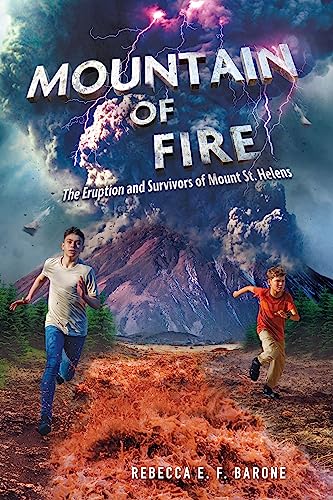
Mountain of Fire: Chapter 38–Epilogue
The historic account of Mount St. Helens’ violent volcanic eruption in 1980 is filled with real-life stories of survivors, heroes, and a devastation of nature almost beyond belief. It all started at 8:32 a.m., Sunday, May 18, 1980.
Here are links to our lists for the book: Prologue–Chapter 14, Chapters 15–27, Chapters 28–37, Chapter 38–Epilogue
15 words
59 learners
Learn words with Flashcards and other activities
Definition First

Other learning activities
Full list of words from this list:
-
trauma
an emotional wound or shock having long-lasting effectsThere was so much grief and trauma. Yet if the scientists let their emotions get in the way of learning from the volcano, then the missed opportunity—the chance to prevent harm to someone else in the future—would only add to the tragedy.
-
geologic
of or relating to the study of Earth and its structureMullineaux would later tell a Senate committee that “the lateral blast extended about three times farther than any such blast recorded by the geologic history of the volcano.”
-
disorientation
confusion about where you are and how to proceed“Their maps won’t work in the changed valleys,” Nole remembered. In the rain, cloud cover would add to their disorientation.
-
succession
the gradual and orderly process of change in an ecosystemThe bill that established the national monument and resulted in the Johnston Ridge Observatory not only set aside land but also charged the Forest Service to administer the area in a unique way....the Forest Service “shall manage the Monument to protect the geologic, ecologic, and cultural resources, in accordance with the provisions of this Act, allowing geologic forces and ecological succession to continue substantially unimpeded.”
They were going to leave the mountain alone. -
isolated
marked by separation of or from usually contiguous elementsRoger del Moral, another ecologist, remembered a hike he took only four months after the eruption: “… far from any visible vegetation, I discovered an isolated, yet active ant nest.”
-
putrid
in an advanced state of decomposition and having a foul odorWhen Charlie Crisafulli first saw the lake, he remembered that “the water was warm and bubbled with new hot springs. The once famously clear water turned to murk. If you put your fingers in … you couldn’t even see your fingertips. The whole area was gray and foul. It was putrid and smelled like rotten eggs.”
-
sustain
supply with necessities and supportThe phytoplankton, microscopic plants that float near the surface of water, had begun to remodel the lake into an environment that could once again sustain larger life.
-
resiliency
an occurrence of rebounding or springing back“It has to be a lesson of resiliency,” Crisafulli said. “One, our expectation is most life—albeit if there’s just a few individuals—will persist. That’s the first. The second is if you just leave nature alone, the systems will come back in really remarkable ways.”
-
decomposition
the organic phenomenon of rottingAfter decades of mixing with the soil underneath and becoming enriched by animal and plant decomposition, the ash and mud were finally able to support large plants.
-
tsunami
a cataclysm resulting from a destructive sea waveHowever, the information from the satellites paired with instruments in other countries gave scientists enough of the story to help predict when and if tsunamis would arrive as well as a basic understanding of the extent of the damage.
-
stethoscope
a medical instrument for listening to sounds inside the body“It’s like having a stethoscope on the volcano,” said Harold Tobin, Steve Malone’s successor at the University of Washington.
-
devastating
wreaking or capable of wreaking complete destructionThe initial landslide on the north slope of Mount St. Helens released pressure that had been building within the volcano, “uncorking” the mountain and giving an escape to the devastating blast.
-
hummock
a small natural moundThe pattern of hummocks in the debris fields around Mount St. Helens after the eruption helped scientists to recognize the signs of landslides at other volcanoes.
-
infrastructure
basic facilities needed for the functioning of a countryThe May 18, 1980, eruption of Mount St. Helens showed the need for a wide range of professions—from emergency responders to infrastructure specialists (people who work with water and sewer systems, electrical grids, dams, and ports) to news media—to understand the impact of volcanoes within their area.
-
coalition
the union of diverse things into one body or form or groupWhile this preparation often happens at a local level, the international Volcano Disaster Assistance Program was created as a direct result of the Mount St. Helens eruption. Led by the USGS, this coalition helps not only to monitor volcanoes around the world but also works to train local scientists and emergency responders to prepare for an eruption.
Created on Tue Aug 12 18:08:50 EDT 2025
(updated Thu Sep 18 13:18:48 EDT 2025)
Sign up now (it’s free!)
Whether you’re a teacher or a learner,
Vocabulary.com can put you or your class
on the path to systematic vocabulary improvement.