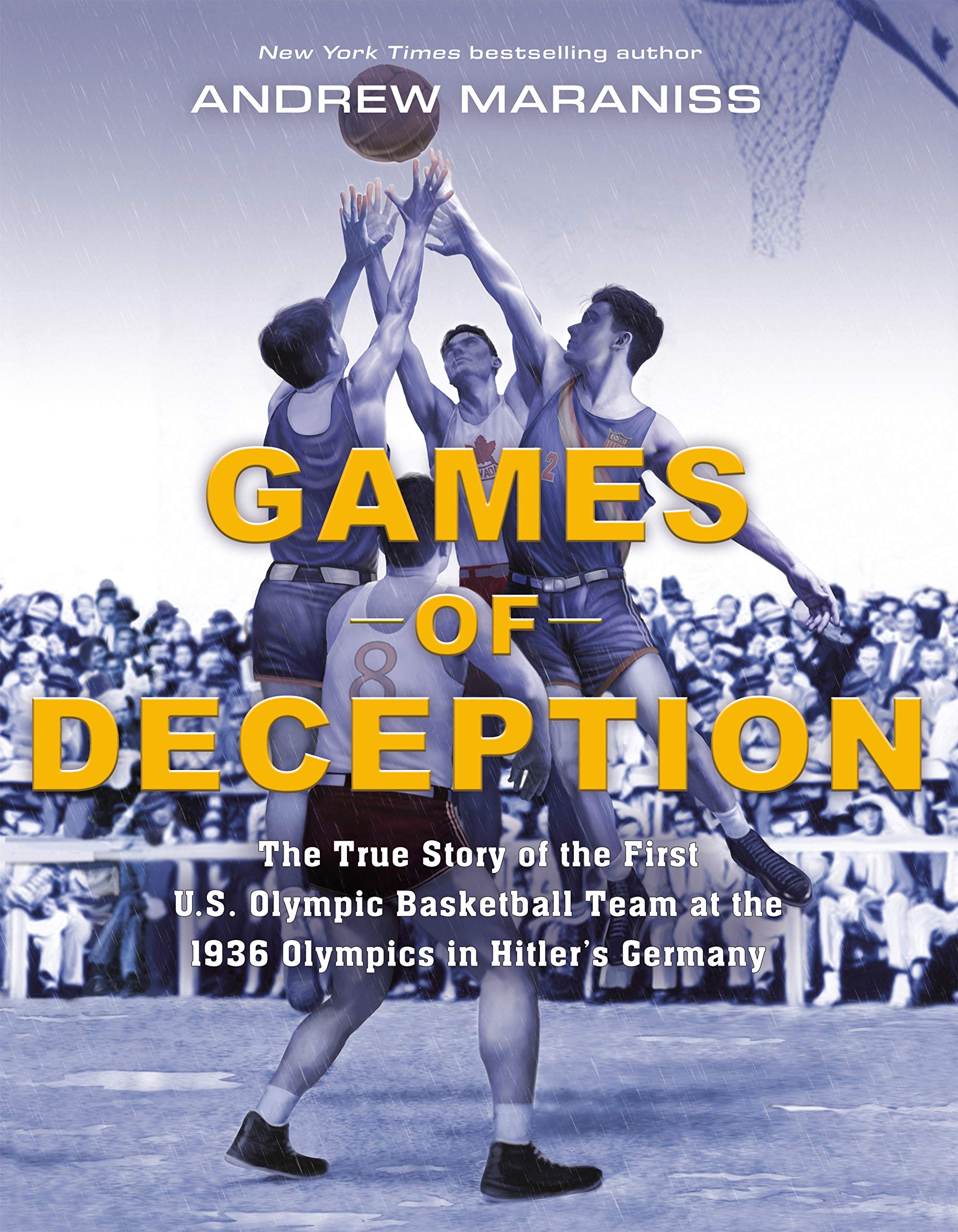
Games of Deception: Chapters 1–6
This nonfiction account traces the history of basketball through the U.S. team's first Olympic competition, in pre-World War II Germany.
Here are links to our lists for the book: Chapters 1–6, Chapters 7–12, Chapters 13–18, Chapters 19–25
40 words
364 learners
Learn words with Flashcards and other activities
Definition First

Other learning activities
Full list of words from this list:
-
dub
give a nickname toDecades later, the U.S. Olympic basketball team would be dubbed the Dream Team, and a new collection of superstars would command the world’s attention at the Summer Olympics every four years.
-
undertaking
any piece of work that is attemptedIt was as if the seven-hundred-year-old German capital had transformed into the world’s largest movie set, a bright and shiny, picture-perfect fantasyland where every blade of grass was manicured, every smile permanently affixed and gleaming. A New York Times reporter called the massive undertaking a “civic clean-up unequaled in history.”
-
thoroughfare
a public road from one place to anotherThere were big projects impossible to miss: dirt and grime washed away from centuries-old buildings, a subway line extending to the new 110,000-seat Olympic Stadium, fifty-foot banners lining downtown streets like a multicolored bamboo forest, geraniums and fuchsias hanging from every windowsill along the main thoroughfares, and waltzes blaring from new outdoor speakers.
-
imposing
impressive in appearancePolice officers exchanged their imposing military-style uniforms for a gentler look, complete with delicate white gloves.
-
facade
a showy misrepresentation to conceal something unpleasantBut like a temporary movie set, this was all just a façade; it was for show, and it would disappear as soon as the Olympic guests went home. There was something sinister afoot. The flowers, the flags, the smiling faces—they weren’t there to reveal the city’s best self. They were meant to distract from terrible things happening behind the scenes.
-
rabid
marked by excessive enthusiasm for a cause or ideaHis Nazi party had come to power in 1933 in the throes of the devastating global economic crisis known as the Great Depression, appealing to many Germans with calculated messages related to jobs, food, hatred of Jewish people, and rabid nationalism, which is not to be confused with patriotism.
-
fascist
relating to authoritarian hierarchical governmentThis was a classic fascist state—an oppressive, authoritarian government where political opposition of any kind was forbidden and individual liberty was an evil.
-
deviation
aberrant behaviorGermans were told what to think and how to behave, and any deviations were subject to severe punishment.
-
manifestation
an indication of the existence of some person or thingWhich is why for those who knew better, it was easy to see through the smoke screen of Berlin’s happy transformation in the summer of 1936; they recognized it as just another manifestation of the Nazis’ total control of German society.
-
derogatory
expressive of low opinionIn the middle of the night of July 16, police rousted Berlin's Romani citizens (sometimes derogatorily referred to as gypsies) from their sleep, herding six hundred men, women, and children off to a camp next to a sewage dump fifteen miles from the Olympic Stadium and out of sight of international visitors.
-
subside
wear off or die downAs the world’s attention turned toward Germany for the Olympics, Nazi brutality escalated rather than subsided.
-
dismal
causing dejectionIn the summer of 1936, when citizens of the world were mesmerized by an Olympic fantasy—the elaborate, colorful, and deceptive stage the Nazis built in Berlin—they would have been better served investigating the reality—dismal, dark, and violent—just up the road in Sachsenhausen.
-
ministry
the work of a person authorized to conduct religious worshipNaismith was thirty years old, a strong and sincere man—a devout one, too, intent on bringing young men closer to God through the ministry of athletics.
-
offhand
with little or no preparation or forethoughtNaismith made an offhand comment to Gulick that he could come up with a new game, and Gulick surprised him by replying, “Okay, fine, do it.”
-
succumb
be fatally overwhelmedBut John Naismith died, and then Margaret succumbed to the disease on November 6, the same day James turned nine and Annie turned twelve.
-
coddle
treat with excessive indulgenceAt age fifteen, he dropped out of school and went to work full time, drawn to the physical exertion, the outdoor life, and the paydays. There was no coddling from Uncle Peter or the lumberjacks.
-
progressive
favoring or promoting modern or innovative ideasNaismith found himself surrounded by like-minded, progressive thinkers and doers.
-
flummox
be a mystery or bewildering toIts purpose was to prepare these students to run YMCAs all over the world, many of which encountered the same challenge that flummoxed the instructors in Springfield: how to keep restless young men physically active during the long, dark days of winter.
-
catalyst
something that causes an important event to happenSo, while the game quickly became a community attraction in Springfield—within two weeks, as many as two hundred people packed the gym to watch, including female schoolteachers, who soon created their own team—it also found receptive audiences across the globe. The catalyst was an article in Luther Gulick’s magazine, The Triangle, which he mailed to YMCA directors worldwide.
-
venue
the scene of any event or actionThe young man and the investors would split any profit from ticket sales at the five-thousand-seat venue.
-
lucrative
producing a sizeable profitEven though hardly any other countries played football, organizers believed they could draw a big crowd at the LA Coliseum for an All-Star game between American college players, and the promise of lucrative ticket sales overshadowed any other considerations.
-
indoctrinate
teach uncriticallySieweke was now back in Germany working for the Hitler Youth, a sinister organization that indoctrinated German boys in Nazi culture.
-
dogged
stubbornly unyieldingFor Allen, years of dogged lobbying, networking, and fact-finding across multiple continents had paid off.
-
elated
exultantly proud and joyful; in high spirits“Yes, we are elated over the fact that basket ball is to become an Olympic sport,” he said.
-
steadfast
marked by firm determination or resolution; not shakableTo be fair, there was some merit to Brundage’s steadfast insistence on moving forward with the Olympics regardless of the politics of the moment.
-
lofty
of high moral or intellectual valueJust as many public officials throughout history have considered their own personal fortunes when making decisions that affect large groups of people, Brundage looked out for himself even as he publicly spoke of lofty Olympic and American ideals.
-
condemnation
an expression of strong disapprovalAs a personal guest of Hitler, Sherrill attended an infamous Nazi Party rally in Nuremberg, Germany, in 1935 where Hitler stripped Jewish people of their German citizenship. The American came away not with condemnation for this heinous act, but with admiration for the entire spectacle.
-
farce
an event or situation that is absurd, empty, or insincereBrundage had visited Germany in 1934, supposedly to see for himself if there was discrimination against Jewish athletes. But his trip was a farce. His host was an old Nazi pal, Karl Ritter von Halt, who not only translated for Brundage but also handpicked all the people he interviewed.
-
consulate
the residence or workplace of a diplomatOn the other side of the debate were prominent figures such as George Messersmith, head of the U.S. Consulate in Germany; Jeremiah Mahoney, president of the Amateur Athletic Union; and Rabbi Stephen Wise of New York, each of whom strongly objected to U.S. participation in the Nazi Olympics.
-
incensed
angered at something unjust or wrongIncensed that Brundage and Sherrill were uninterested in acknowledging the true conditions in Germany and were willingly misleading the American public, he sent cables to U.S. Secretary of State Cordell Hull in hopes that accurate information would educate the general public and the decision makers at the American Olympic Committee and Amateur Athletic Union who would ultimately decide whether the U.S. would boycott or participate.
-
unconscionable
lacking a sense of right conductMahoney was a defender of civil rights and found it unconscionable that America would send its athletes to Hitler’s Germany.
-
hypocritical
professing feelings or virtues one does not haveHe said it was hypocritical for Brundage to claim supporters of the boycott were introducing politics into sports.
-
radicalism
political orientation of those favoring revolutionary change“And the worst and rottenest kind of politics, the politics of Nazism, the politics of organized prejudice, the politics of crazy radicalism, which has robbed the German people of freedom...I am ashamed to think that any American might possibly go to Berlin and take part in the Olympics.”
-
valiant
having or showing heroism or courage“If America goes to the Olympic Games,” he said, “the world will remember it to our dishonor and our shame. If we valiantly withdraw from the Olympics, history will say under valiant leadership America did what America's best and highest can always be counted on to do. Namely to seek the right, to pursue the way of justice.”
-
despotic
having the characteristics of a tyrannical rulerTheir America could not in good conscience compete in the spirit of fair play and sportsmanship in a despotic dictatorship that stood starkly against everything that made the United States exceptional.
-
prowess
a superior skill learned by study and practiceTheir America would not be prevented from demonstrating its prowess at the world's greatest athletic spectacle over the concerns of a vocal minority—Jewish people in America and Europe and their supporters.
-
articulate
characterized by clear expressive language“Every fair minded American will stand behind you and your associates in resisting the pressure of an obnoxious, articulate minority to break faith with American youth who wish to participate in the Games,” wrote Charles Estabrook of Chicago, who congratulated Brundage for his “sturdy Americanism.”
-
affront
a deliberately offensive actIn the Waterbury, Connecticut, Evening Democrat, columnist John Cluney wrote that Hitler’s “cruel and merciless” anti-Semitism was an affront to American values.
-
cardinal
serving as an essential component“It is a cardinal principle of true and loyal Americanism that all people should be permitted to worship God as they see fit,” he wrote, “and that no particular race, creed or color shall ever be a necessary qualification for public honors or for the right to represent America, athletically or otherwise.”
-
inculcate
teach and impress by frequent repetitions or admonitions“If you want your children to be taught that might is right,” he said, “that woman is a lower animal than man, that free press, free speech and religious freedom are false ideals, that peace is weakness, that liberty as we have learned to love it in America is a myth—if you want these doctrines inculcated in the youth of America, then send your boys and girls to Germany.”
Created on Mon Nov 08 11:37:43 EST 2021
(updated Wed Nov 17 09:28:04 EST 2021)
Sign up now (it’s free!)
Whether you’re a teacher or a learner,
Vocabulary.com can put you or your class
on the path to systematic vocabulary improvement.