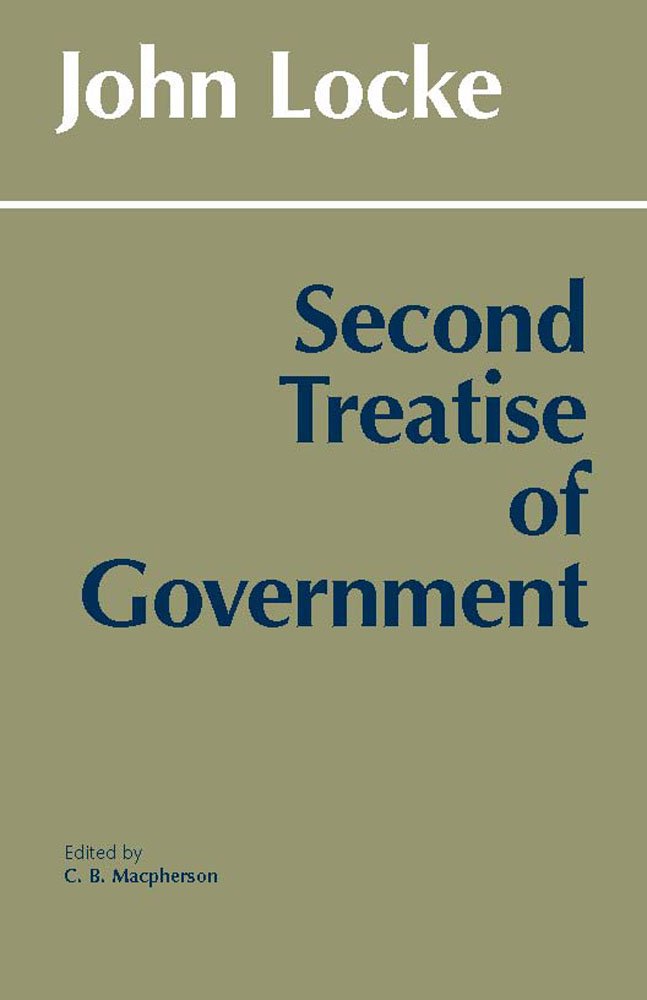
Second Treatise of Government: Chapters 7–10
In this 17th-century treatise, Locke argues that governments are only legitimate when leaders rule with the consent of those who are governed. Read the full text here.
Here are links to our lists for the text: Chapters 1–3, Chapters 4–6, Chapters 7–10, Chapters 11–16, Chapters 17–19
35 words
53 learners
Learn words with Flashcards and other activities
Definition First

Other learning activities
Full list of words from this list:
-
conjugal
relating to the relationship between a wife and husbandConjugal society is made by a voluntary compact between man and woman; and tho' it consist chiefly in such a communion and right in one another's bodies as is necessary to its chief end, procreation; yet it draws with it mutual support and assistance, and a communion of interests too, as necessary not only to unite their care and affection, but also necessary to their common offspring, who have a right to be nourished, and maintained by them, till they are able to provide for themselves.
-
viviparous
producing living young and not eggsIn those viviparous animals which feed on grass, the conjunction between male and female lasts no longer than the very act of copulation; because the teat of the dam being sufficient to nourish the young, till it be able to feed on grass, the male only begets, but concerns not himself for the female or young, to whose sustenance he can contribute nothing.
-
sustenance
a source of food or nourishmentIn those viviparous animals which feed on grass, the conjunction between male and female lasts no longer than the very act of copulation; because the teat of the dam being sufficient to nourish the young, till it be able to feed on grass, the male only begets, but concerns not himself for the female or young, to whose sustenance he can contribute nothing.
-
ordain
order by virtue of superior authority; decree...why this compact, where procreation and education are secured, and inheritance taken care for, may not be made determinable, either by consent, or at a certain time, or upon certain conditions, as well as any other voluntary compacts, there being no necessity in the nature of the thing, nor to the ends of it, that it should always be for life; I mean, to such as are under no restraint of any positive law, which ordains all such contracts to be perpetual.
-
indifferent
characterized by a lack of partialityAnd thus all private judgment of every particular member being excluded, the community comes to be umpire, by settled standing rules, indifferent, and the same to all parties; and by men having authority from the community, for the execution of those rules, decides all the differences that may happen between any members of that society concerning any matter of right; and punishes those offences which any member hath committed against the society, with such penalties as the law has established...
-
vindicate
show to be right by providing justification or proofAnd herein we have the original of the legislative and executive power of civil society, which is to judge by standing laws, how far offences are to be punished, when committed within the commonwealth; and also to determine, by occasional judgments founded on the present circumstances of the fact, how far injuries from without are to be vindicated; and in both these to employ all the force of all the members, when there shall be need.
-
enjoin
give instructions to or direct somebody to do somethingThe public power of all society is above every soul contained in the same society; and the principal use of that power is, to give laws unto all that are under it, which laws in such cases we must obey, unless there be reason shewed which may necessarily inforce, that the law of reason, or of God, doth enjoin the contrary...
-
grievance
a complaint about a wrong that causes resentmentTo take away all such mutual grievances, injuries and wrongs, i.e. such as attend men in the state of nature, there was no way but only by growing into composition and agreement amongst themselves, by ordaining some kind of government public, and by yielding themselves subject thereunto, that unto whom they granted authority to rule and govern, by them the peace, tranquillity and happy estate of the rest might be procured.
-
strife
bitter conflict; heated or violent dissensionFinally, they knew that no man might in reason take upon him to determine his own right, and according to his own determination proceed in maintenance thereof, in as much as every man is towards himself, and them whom he greatly affects, partial; and therefore that strifes and troubles would be endless, except they gave their common consent, all to be ordered by some, whom they should agree upon...
-
insolent
not held back by conventional ideas of behaviorHe that would have been insolent and injurious in the woods of America, would not probably be much better in a throne...
-
faction
conflict between members of the same organizationBetwixt subject and subject, they will grant, there must be measures, laws and judges, for their mutual peace and security: but as for the ruler, he ought to be absolute, and is above all such circumstances; because he has power to do more hurt and wrong, it is right when he does it. To ask how you may be guarded from harm, or injury, on that side where the strongest hand is to do it, is presently the voice of faction and rebellion...
-
licentious
lacking moral discipline...as if when men quitting the state of nature entered into society, they agreed that all of them but one, should be under the restraint of laws, but that he should still retain all the liberty of the state of nature, increased with power, and made licentious by impunity.
-
impunity
exemption from punishment or loss...as if when men quitting the state of nature entered into society, they agreed that all of them but one, should be under the restraint of laws, but that he should still retain all the liberty of the state of nature, increased with power, and made licentious by impunity.
-
arbitration
the hearing and determination of a dispute by a referee...some one good and excellent man having got a pre-eminency amongst the rest, had this deference paid to his goodness and virtue, as to a kind of natural authority, that the chief rule, with arbitration of their differences, by a tacit consent devolved into his hands, without any other caution, but the assurance they had of his uprightness and wisdom...
-
divest
deprive of status or authorityThe only way whereby any one divests himself of his natural liberty, and puts on the bonds of civil society, is by agreeing with other men to join and unite into a community for their comfortable, safe, and peaceable living one amongst another, in a secure enjoyment of their properties, and a greater security against any, that are not of it.
-
avocation
an auxiliary activityFor if the consent of the majority shall not, in reason, be received as the act of the whole, and conclude every individual; nothing but the consent of every individual can make any thing to be the act of the whole: but such a consent is next to impossible ever to be had, if we consider the infirmities of health, and avocations of business, which in a number, though much less than that of a commonwealth, will necessarily keep many away from the public assembly.
-
leviathan
monstrous sea creature symbolizing evil in the Old TestamentTo which if we add the variety of opinions, and contrariety of interests, which unavoidably happen in all collections of men, the coming into society upon such terms would be only like Cato's coming into the theatre, only to go out again. Such a constitution as this would make the mighty Leviathan of a shorter duration, than the feeblest creatures, and not let it outlast the day it was born in...
-
antecedent
preceding in time or orderGovernment is every where antecedent to records, and letters seldom come in amongst a people till a long continuation of civil society has, by other more necessary arts, provided for their safety, ease, and plenty...
-
conjecture
the formation of conclusions from incomplete evidenceThere are great and apparent conjectures, says he, that these men, speaking of those of Peru, for a long time had neither kings nor commonwealths, but lived in troops, as they do this day in Florida, the Cheriquanas, those of Brazil, and many other nations, which have no certain kings, but as occasion is offered, in peace or war, they choose their captains as they please...
-
preeminence
high status importance owing to marked superiorityBut this having given occasion to men to mistake, and think, that by nature government was monarchical, and belonged to the father, it may not be amiss here to consider, why people in the beginning generally pitched upon this form, which though perhaps the father's pre-eminency might, in the first institution of some commonwealths, give a rise to, and place in the beginning, the power in one hand...
-
exorbitance
extreme excess...it was not at all strange, that they should not much trouble themselves to think of methods of restraining any exorbitances of those to whom they had given the authority over them, and of balancing the power of government, by placing several parts of it in different hands.
-
apprehension
fearful expectation or anticipationSince then those, who like one another so well as to join into society, cannot but be supposed to have some acquaintance and friendship together, and some trust one in another; they could not but have greater apprehensions of others, than of one another: and therefore their first care and thought cannot but be supposed to be, how to secure themselves against foreign force.
-
devolve
pass on or delegate to anotherTho' the war itself, which admits not of plurality of governors, naturally devolves the command into the king's sole authority.
-
upbraid
express criticism towardsSo when Jotham upbraids the Shechemites with the obligation they had to Gideon, who had been their judge and ruler, he tells them, He fought for you, and adventured his life far, and delivered you out of the hands of Midian...
-
anoint
choose by or as if by divine interventionGod granting their desire, says to Samuel, I will send thee a man, and thou shalt anoint him to be captain over my people Israel, that he may save my people out of the hands of the Philistines...
-
acquiesce
agree or express agreementThus, whether a family by degrees grew up into a commonwealth, and the fatherly authority being continued on to the elder son, every one in his turn growing up under it, tacitly submitted to it, and the easiness and equality of it not offending any one, every one acquiesced, till time seemed to have confirmed it, and settled a right of succession by prescription...
-
prudence
discretion in practical affairsThus we may see how probable it is, that people that were naturally free, and by their own consent either submitted to the government of their father, or united together out of different families to make a government, should generally put the rule into one man's hands, and chuse to be under the conduct of a single person, without so much as by express conditions limiting or regulating his power, which they thought safe enough in his honesty and prudence...
-
polity
the form of government of a social organizationThis has been the practice of the world from its first beginning to this day; nor is it now any more hindrance to the freedom of mankind, that they are born under constituted and ancient polities, that have established laws, and set forms of government, than if they were born in the woods, amongst the unconfined inhabitants, that run loose in them...
-
progenitor
an ancestor in the direct line...by being born under any government, we are naturally subjects to it, and have no more any title or pretence to the freedom of the state of nature, have no other reason (bating that of paternal power, which we have already answered) to produce for it, but only, because our fathers or progenitors passed away their natural liberty, and thereby bound up themselves and their posterity to a perpetual subjection to the government, which they themselves submitted to.
-
homage
respectful deferenceBut submitting to the laws of any country, living quietly, and enjoying privileges and protection under them, makes not a man a member of that society: this is only a local protection and homage due to and from all those, who, not being in a state of war, come within the territories belonging to any government, to all parts whereof the force of its laws extends.
-
denizen
a person who inhabits a particular placeAnd thus we see, that foreigners, by living all their lives under another government, and enjoying the privileges and protection of it, though they are bound, even in conscience, to submit to its administration, as far forth as any denison; yet do not thereby come to be subjects or members of that commonwealth.
-
remiss
failing in what duty requiresIn the state of nature there wants a known and indifferent judge, with authority to determine all differences according to the established law: for every one in that state being both judge and executioner of the law of nature, men being partial to themselves, passion and revenge is very apt to carry them too far, and with too much heat, in their own cases; as well as negligence, and unconcernedness, to make them too remiss in other men's.
-
extempore
with little or no preparation or forethoughtAnd so whoever has the legislative or supreme power of any commonwealth, is bound to govern by established standing laws, promulgated and known to the people, and not by extemporary decrees; by indifferent and upright judges, who are to decide controversies by those laws; and to employ the force of the community at home, only in the execution of such laws, or abroad to prevent or redress foreign injuries, and secure the community from inroads and invasion.
-
inroad
an invasion or hostile attackAnd so whoever has the legislative or supreme power of any commonwealth, is bound to govern by established standing laws, promulgated and known to the people, and not by extemporary decrees; by indifferent and upright judges, who are to decide controversies by those laws; and to employ the force of the community at home, only in the execution of such laws, or abroad to prevent or redress foreign injuries, and secure the community from inroads and invasion.
-
oligarchy
a political system governed by a few peopleThe majority having, as has been shewed, upon men's first uniting into society, the whole power of the community naturally in them, may employ all that power in making laws for the community from time to time, and executing those laws by officers of their own appointing; and then the form of the government is a perfect democracy: or else may put the power of making laws into the hands of a few select men, and their heirs or successors; and then it is an oligarchy...
Created on Tue Jul 13 09:24:15 EDT 2021
(updated Wed Aug 25 09:14:33 EDT 2021)
Sign up now (it’s free!)
Whether you’re a teacher or a learner,
Vocabulary.com can put you or your class
on the path to systematic vocabulary improvement.