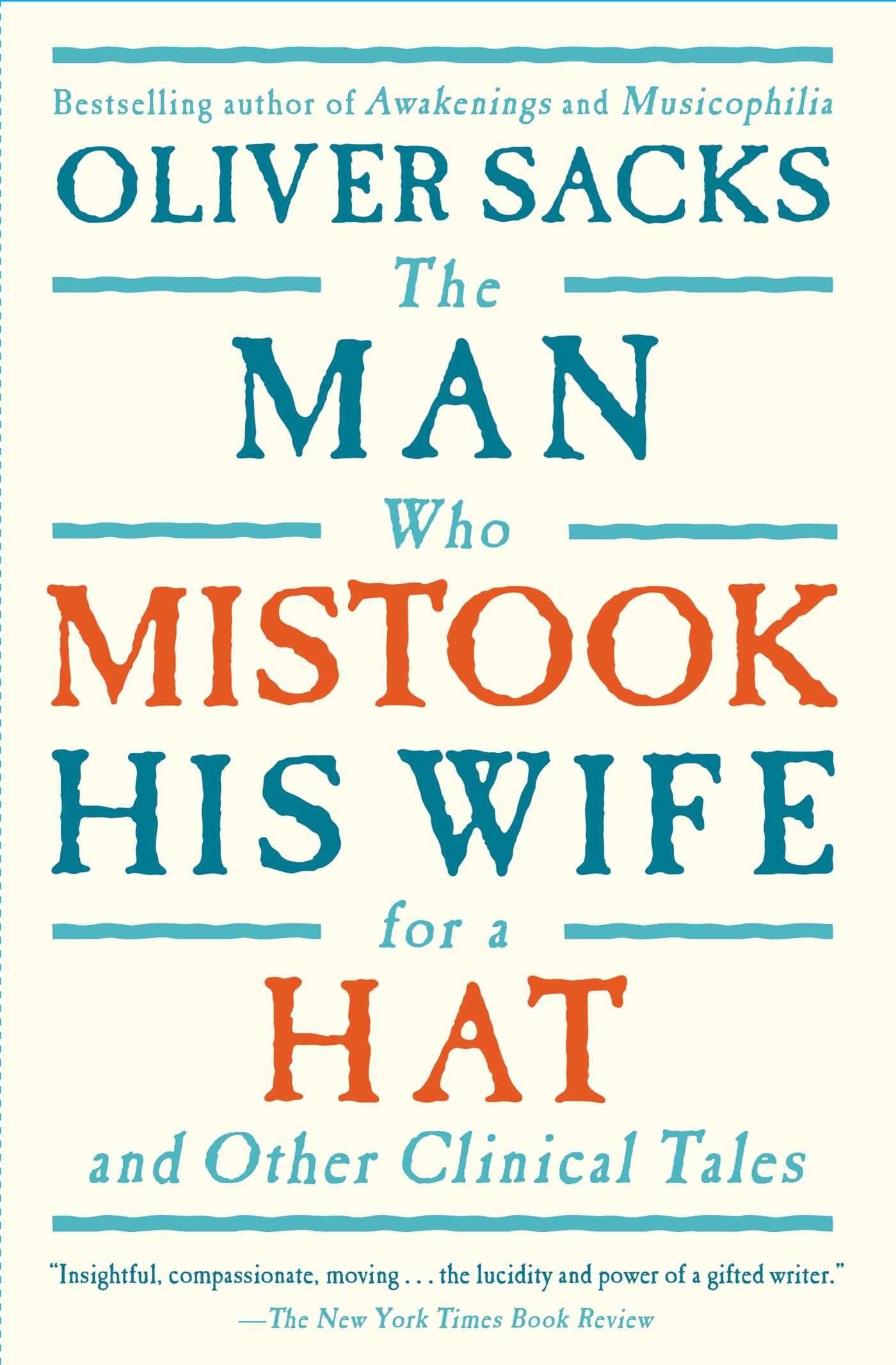
The Man Who Mistook His Wife for a Hat: "On the Level"
In this classic collection of "clinical tales," neurologist Oliver Sacks explores a range of neurological conditions and phenomena.
Here are links to our lists for the collection: Part One Introduction; The Man Who Mistook His Wife for a Hat; The Lost Mariner; The Disembodied Lady; The Man Who Fell out of Bed; Hands; Phantoms; On the Level; Eyes Right!; The President's Speech; Part Two Introduction; Witty Ticcy Ray; Cupid's Disease; A Matter of Identity; Yes, Father-Sister; The Possessed; Part Three Introduction; Reminiscence; Incontinent Nostalgia; A Passage to India; The Dog Beneath the Skin; Murder; The Visions of Hildegard; Part Four Introduction; Rebecca; A Walking Grove; The Twins; The Autist Artist
20 words
4 learners
Learn words with Flashcards and other activities
Definition First

Other learning activities
Full list of words from this list:
-
cant
lean or slope to one sideHe was walking, now, confidently, swiftly, but canted over, improbably, a good twenty degrees, his centre of gravity way off to the left, maintaining his balance by the narrowest possible margin.
-
constitute
form or composeWe have five senses in which we glory and which we recognise and celebrate, senses that constitute the sensible world for us.
-
paradoxical
seemingly contradictory but nonetheless possibly truePerhaps it will only be in this space age, with the paradoxical license and hazards of gravity-free life, that we will truly appreciate our inner ears, our vestibules and all the other obscure receptors and reflexes that govern our body orientation.
-
vestibule
any of various bodily cavities leading to another cavityPerhaps it will only be in this space age, with the paradoxical license and hazards of gravity-free life, that we will truly appreciate our inner ears, our vestibules and all the other obscure receptors and reflexes that govern our body orientation.
-
conspicuous
obvious to the eye or mindYet their absence can be quite conspicuous. If there is defective (or distorted) sensation in our overlooked secret senses, what we then experience is profoundly strange, an almost incommunicable equivalent to being blind or being deaf.
-
gnarled
old and twisted and covered in lines'Let me think, let me think,' he murmured, half to himself, drawing his shaggy white brows down over his eyes and emphasising each point with his powerful, gnarled hands.
-
labyrinthine
relating to or affecting or originating in the inner earParts of the inner ear are indeed physically—literally—like levels; the labyrinth consists of semicircular canals containing liquid whose motion is continually monitored...Mr MacGregor’s homely symbol applies not just to the labyrinth but also to the complex integration of the three secret senses: the labyrinthine, the proprioceptive, and the visual.
-
profound
showing intellectual penetration or emotional depthThe most profound (and most practical) studies of such integrations—and of their singular disintegrations in Parkinsonism—were made by the late, great Purdon Martin and are to be found in his remarkable book The Basal Ganglia and Posture (originally published in 1967, but continually revised and expanded in the ensuing years; he was just completing a new edition when he died recently).
-
ganglion
an encapsulated collection of nerve cell bodiesThe most profound (and most practical) studies of such integrations—and of their singular disintegrations in Parkinsonism—were made by the late, great Purdon Martin and are to be found in his remarkable book The Basal Ganglia and Posture (originally published in 1967, but continually revised and expanded in the ensuing years; he was just completing a new edition when he died recently).
-
subtle
difficult to detect or grasp by the mind or analyzeIn the section on 'tilting reactions’ Purdon Martin emphasises the threefold contribution to the maintenance of a stable and upright posture, and he notes how commonly its subtle balance is upset in Parkinsonism—how, in particular, 'it is usual for the labyrinthine element to be lost before the proprioceptive and the visual’.
-
compensate
adjust forThis triple control system, he implies, is such that one sense, one control, can compensate for the others—not wholly (since the senses differ in their capabilities) but in part, at least, and to a useful degree.
-
precariously
in a manner affording no ease or reassuranceWe do not tilt or lean or fall over the moment we close our eyes. But the precariously balanced Parkinsonian may do so.
-
vertigo
a reeling sensation; a feeling that you are about to fallThus patients who have been surgically deprived of their labyrinths (as is sometimes done to relieve the intolerable, crippling vertigo of severe Ménière’s disease), while at first unable to stand upright or take a single step, may learn to employ and to enhance their proprioception quite wonderfully...
-
gait
a person's manner of walkingPurdon Martin was endlessly thoughtful and ingenious in designing a variety of mechanisms and methods that made it possible for even severely disabled Parkinsonians to achieve an artificial normality of gait and posture—lines painted on the floor, counterweights in the belt, loudly ticking pacemakers—to set the cadence for walking.
-
cadence
a recurrent rhythmical seriesPurdon Martin was endlessly thoughtful and ingenious in designing a variety of mechanisms and methods that made it possible for even severely disabled Parkinsonians to achieve an artificial normality of gait and posture—lines painted on the floor, counterweights in the belt, loudly ticking pacemakers—to set the cadence for walking.
-
prosthesis
a device that replaces a missing part of the bodyBut he had not, to my knowledge, devised a prosthesis for the correction of impaired tilting and higher vestibular reflexes, the problem that afflicted Mr MacGregor.
-
afflict
cause physical pain or suffering inBut he had not, to my knowledge, devised a prosthesis for the correction of impaired tilting and higher vestibular reflexes, the problem that afflicted Mr MacGregor.
-
don
put on clothesIn a couple of weeks we had completed a prototype, a pair of somewhat Heath Robinsonish spirit spectacles: ‘The world's first pair!' said Mr MacGregor, in glee and triumph. He donned them.
-
cumbersome
difficult to handle or use, especially because of size or weightThey looked a bit cumbersome and odd, but scarcely more so than the bulky hearing-aid spectacles that were coming in at the time.
-
ensuing
following immediately and as a result of what went beforeThis worked, in a fashion—at least he stopped tilting: but it was a continuous, exhausting exercise. And then, over the ensuing weeks, it got easier and easier; keeping an eye on his 'instruments' became unconscious, like keeping an eye on the instrument panel of one's car while being free to think, chat, and do other things.
Created on Tue Sep 01 14:34:56 EDT 2020
(updated Wed Oct 28 13:06:51 EDT 2020)
Sign up now (it’s free!)
Whether you’re a teacher or a learner,
Vocabulary.com can put you or your class
on the path to systematic vocabulary improvement.