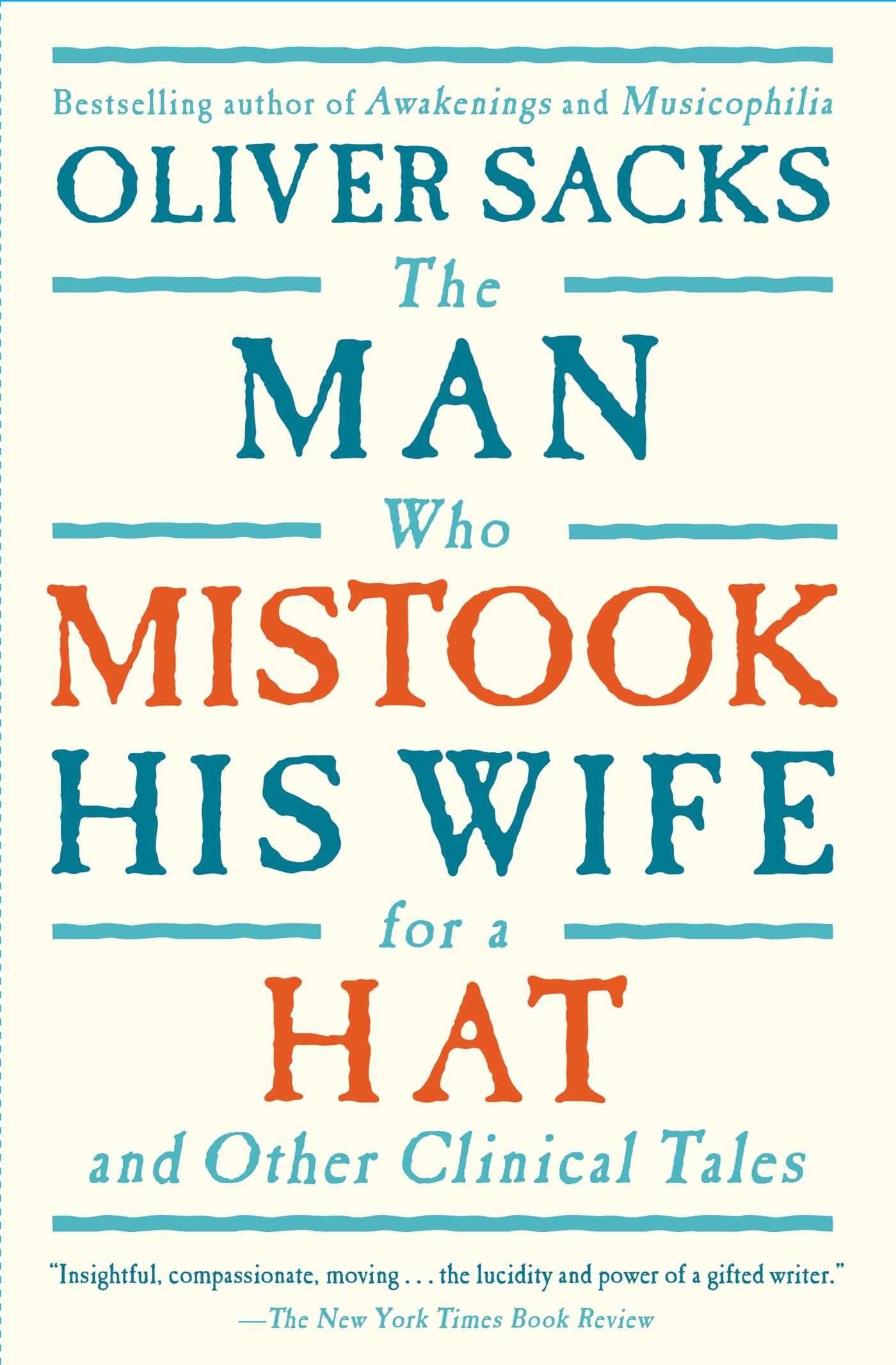
The Man Who Mistook His Wife for a Hat: "The Dog Beneath the Skin"
In this classic collection of "clinical tales," neurologist Oliver Sacks explores a range of neurological conditions and phenomena.
Here are links to our lists for the collection: Part One Introduction; The Man Who Mistook His Wife for a Hat; The Lost Mariner; The Disembodied Lady; The Man Who Fell out of Bed; Hands; Phantoms; On the Level; Eyes Right!; The President's Speech; Part Two Introduction; Witty Ticcy Ray; Cupid's Disease; A Matter of Identity; Yes, Father-Sister; The Possessed; Part Three Introduction; Reminiscence; Incontinent Nostalgia; A Passage to India; The Dog Beneath the Skin; Murder; The Visions of Hildegard; Part Four Introduction; Rebecca; A Walking Grove; The Twins; The Autist Artist
25 words
3 learners
Learn words with Flashcards and other activities
Definition First

Other learning activities
Full list of words from this list:
-
exalt
heighten or intensifyBut it was the exaltation of smell which really transformed his world...
-
olfactory
of or relating to the sense of smell‘I had dreamt I was a dog—it was an olfactory dream—and now I awoke to an infinitely redolent world—a world in which all other sensations, enhanced as they were, paled before smell.'
-
redolent
having a strong pleasant odor‘I had dreamt I was a dog—it was an olfactory dream—and now I awoke to an infinitely redolent world—a world in which all other sensations, enhanced as they were, paled before smell.'
-
evocative
serving to bring to mind‘I had never had much of a nose for smells before, but now I distinguished each one instantly—and I found each one unique, evocative, a whole world.’
-
physiognomy
the human face‘I went into the clinic, I sniffed like a dog, and in that sniff recognised, before seeing them, the twenty patients who were there. Each had his own olfactory physiognomy, a smell-face, far more vivid and evocative, more redolent, than any sight face.’
-
infallible
incapable of failure or errorHe could recognise every street, every shop, by smell—he could find his way around New York, infallibly, by smell.
-
suppress
control and refrain from showingHe experienced a certain impulse to sniff and touch everything (‘It wasn’t really real until I felt it and smelt it’) but suppressed this, when with others, lest he seem inappropriate.
-
aesthetic
a philosophical theory as to what is beautifulSmell pleasure was intense—smell displeasure, too—but it seemed to him less a world of mere pleasure and displeasure than a whole aesthetic, a whole judgment, a whole new significance, which surrounded him.
-
inclined
having a preference, disposition, or tendencySomewhat intellectual before, and inclined to reflection and abstraction, he now found thought, abstraction and categorisation, somewhat difficult and unreal, in view of the compelling immediacy of each experience.
-
abstraction
the process of formulating general conceptsSomewhat intellectual before, and inclined to reflection and abstraction, he now found thought, abstraction and categorisation, somewhat difficult and unreal, in view of the compelling immediacy of each experience.
-
pallor
an unnatural lack of color in the skinRather suddenly, after three weeks, this strange transformation ceased—his sense of smell, all his senses, returned to normal; he found himself back, with a sense of mingled loss and relief, in his old world of pallor, sensory faintness, non-concreteness and abstraction.
-
ramification
a consequence, especially one that causes complicationsExcitation of this, by whatever means, produces heightened emotionalism and an intensification of the senses. The entire subject, with its intriguing ramifications, has been explored in great detail by David Bear (1979).
-
nostalgic
unhappy about being away and longing for familiar thingsHe has no regrets—but he is occasionally nostalgic: ‘That smell-world, that world of redolence,’ he exclaims. ‘So vivid, so real! It was like a visit to another world, a world of pure perception, rich, alive, self-sufficient, and full. If only I could go back sometimes and be a dog again!’
-
repression
classic defense mechanism that protects you from impulsesFreud wrote on several occasions of man’s sense of smell as being a ‘casualty’, repressed in growing up and civilisation with the assumption of an upright posture and the repression of primitive, pre-genital sexuality.
-
pathological
caused by or altered by or manifesting diseaseSpecific (and pathological) enhancements of smell have indeed been reported as occurring in paraphilia, fetishism, and allied perversions and regressions.
-
regression
a defense mechanism in which you flee from realitySpecific (and pathological) enhancements of smell have indeed been reported as occurring in paraphilia, fetishism, and allied perversions and regressions.
-
inhibition
the conscious exclusion of unacceptable thoughts or desiresWhat we see, if nothing else, is the universality of inhibition, even at the most elemental perceptual level: the need to inhibit what Head regarded as primordial and full of feeling-tone, and called 'protopathic’, in order to allow the emergence of the sophisticated, categorising, affectless ‘epicritic’.
-
primordial
having existed from the beginningWhat we see, if nothing else, is the universality of inhibition, even at the most elemental perceptual level: the need to inhibit what Head regarded as primordial and full of feeling-tone, and called 'protopathic’, in order to allow the emergence of the sophisticated, categorising, affectless ‘epicritic’.
-
corollary
something that follows or accompanies naturallyI have recently encountered a sort of corollary of this case—a gifted man who sustained a head injury, severely damaging his olfactory tracts (these are very vulnerable in their long course across the anterior fossa) and, in consequence, entirely losing his sense of smell.
-
yearning
prolonged unfulfilled desire or needThere was an acute sense of loss, and an acute sense of yearning, a veritable osmalgia: a desire to remember the smell-world to which he had paid no conscious attention, but which, he now felt, had formed the very ground base of life.
-
veritable
not counterfeit or copiedThere was an acute sense of loss, and an acute sense of yearning, a veritable osmalgia: a desire to remember the smell-world to which he had paid no conscious attention, but which, he now felt, had formed the very ground base of life.
-
insipid
lacking taste or flavor or tangAnd then, some months later, to his astonishment and joy, his favourite morning coffee, which had become ‘insipid’, started to regain its savour.
-
tentatively
in a hesitant mannerTentatively he tried his pipe, not touched for months, and here too caught a hint of the rich aroma he loved.
-
minutely
in painstaking detailBut after testing him minutely, using a ‘double-blind’ technique, his doctor said: ‘No, I’m sorry, there’s not a trace of recovery. You still have a total anosmia. Curious though that you should now “smell” your pipe and coffee...’
-
fraught
filled with or attended withWhat seems to be happening—and it is important that it was only the olfactory tracts, not the cortex, which were damaged—is the development of a greatly enhanced olfactory imagery, almost, one might say, a controlled hallucinosis, so that in drinking his coffee, or lighting his pipe—situations normally and previously fraught with associations of smell—he is now able to evoke or re-evoke these, unconsciously, and with such intensity as to think, at first, that they are ‘real’.
Created on Wed Sep 02 14:03:11 EDT 2020
(updated Wed Oct 28 13:21:24 EDT 2020)
Sign up now (it’s free!)
Whether you’re a teacher or a learner,
Vocabulary.com can put you or your class
on the path to systematic vocabulary improvement.