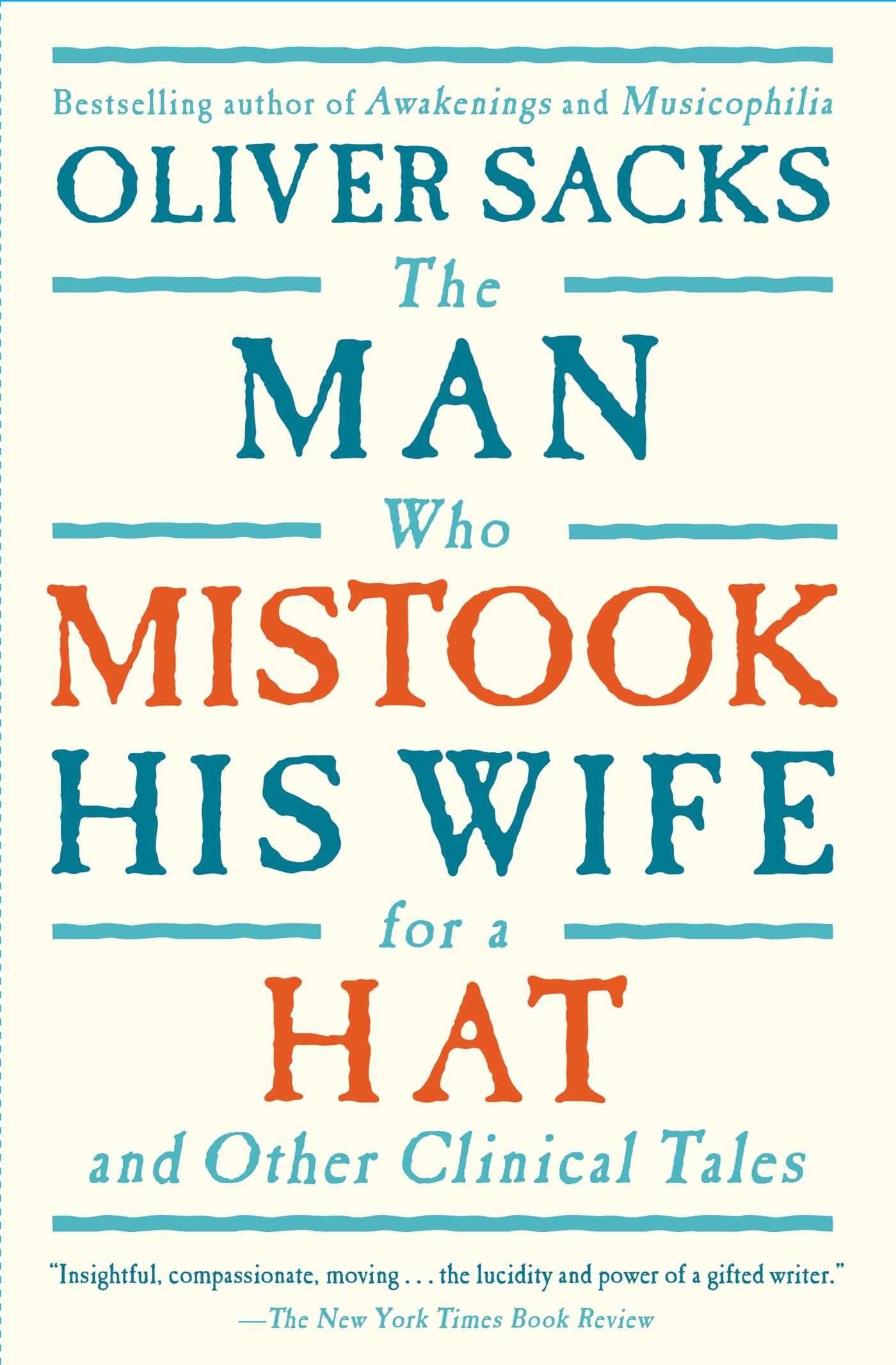
The Man Who Mistook His Wife for a Hat: Introduction to Part Three
In this classic collection of "clinical tales," neurologist Oliver Sacks explores a range of neurological conditions and phenomena.
Here are links to our lists for the collection: Part One Introduction; The Man Who Mistook His Wife for a Hat; The Lost Mariner; The Disembodied Lady; The Man Who Fell out of Bed; Hands; Phantoms; On the Level; Eyes Right!; The President's Speech; Part Two Introduction; Witty Ticcy Ray; Cupid's Disease; A Matter of Identity; Yes, Father-Sister; The Possessed; Part Three Introduction; Reminiscence; Incontinent Nostalgia; A Passage to India; The Dog Beneath the Skin; Murder; The Visions of Hildegard; Part Four Introduction; Rebecca; A Walking Grove; The Twins; The Autist Artist
15 words
3 learners
Learn words with Flashcards and other activities
Definition First

Other learning activities
Full list of words from this list:
-
reminiscent
serving to bring to mindAs soon as we attend to phenomena as such, to the actual quality of experience or thought or action, we have to use terms more reminiscent of a poem or painting.
-
intelligible
capable of being apprehended or understoodHow, say, is a dream intelligible in terms of function?
-
discourse
an extended communication dealing with some particular topicWe have always two universes of discourse—call them ‘physical' and ‘phenomenal', or what you will—one dealing with questions of quantitative and formal structure, the other with those qualities that constitute a ‘world'.
-
phenomenal
relating to a state or process known through the sensesWe have always two universes of discourse—call them ‘physical' and ‘phenomenal', or what you will—one dealing with questions of quantitative and formal structure, the other with those qualities that constitute a ‘world'.
-
supererogatory
more than is needed, desired, or requiredWe can usually tell a man's story, relate passages and scenes from his life, without bringing in any physiological or neurological considerations: such considerations would seem, at the least, supererogatory, if not frankly absurd or insulting.
-
vicissitude
mutability in life or natureFor we consider ourselves, and rightly, ‘free'—at least, determined by the most complex human and ethical considerations, rather than by the vicissitudes of our neural functions or nervous systems.
-
pathological
caused by or altered by or manifesting diseaseIn the first half of this book we described cases of the obviously
pathological—situations in which there is some blatant neurological excess or deficit. -
blatant
without any attempt at concealment; completely obviousIn the first half of this book we described cases of the obviously
pathological—situations in which there is some blatant neurological excess or deficit. Sooner or later it is obvious to such patients, or their relatives, no less than to their doctors, that there is ‘something (physically) the matter’. -
disposition
your usual moodTheir inner worlds, their dispositions, may indeed be altered, transformed; but, as becomes clear, this is due to some gross (and almost quantitative) change in neural function.
-
poignant
keenly distressing to the mind or feelingsSuch ‘transports’—often of poignant intensity, and shot through with personal feeling and meaning—tend to be seen, like dreams, as psychical: as a manifestation, perhaps, of unconscious or preconscious activity (or, in the mystically-minded, of something ‘spiritual’), not as something ‘medical’, let alone ‘neurological’.
-
manifestation
an indication of the existence of some person or thingSuch ‘transports’—often of poignant intensity, and shot through with personal feeling and meaning—tend to be seen, like dreams, as psychical: as a manifestation, perhaps, of unconscious or preconscious activity (or, in the mystically-minded, of something ‘spiritual’), not as something ‘medical’, let alone ‘neurological’.
-
intrinsic
belonging to a thing by its very natureThey have an intrinsic dramatic, or narrative, or personal ‘sense’, and so are not apt to be seen as ‘symptoms’.
-
apt
naturally disposed towardThey have an intrinsic dramatic, or narrative, or personal ‘sense’, and so are not apt to be seen as ‘symptoms’.
-
etiology
the cause of a diseaseFor it never occurs to us at first that a vision might be ‘medical’; and if an organic basis is suspected or found, this may be felt to ‘devalue’ the vision (though, of course, it does not—values, valuations, have nothing to do with etiology).
-
paroxysm
a sudden uncontrollable attackI should never diagnose epilepsy from the paroxysmal occurrence of ‘reminiscence’, without other symptoms, although I should suspect epilepsy if that super-positive mental state began to occur very frequently.
Created on Wed Sep 02 12:15:48 EDT 2020
(updated Wed Oct 28 13:16:55 EDT 2020)
Sign up now (it’s free!)
Whether you’re a teacher or a learner,
Vocabulary.com can put you or your class
on the path to systematic vocabulary improvement.