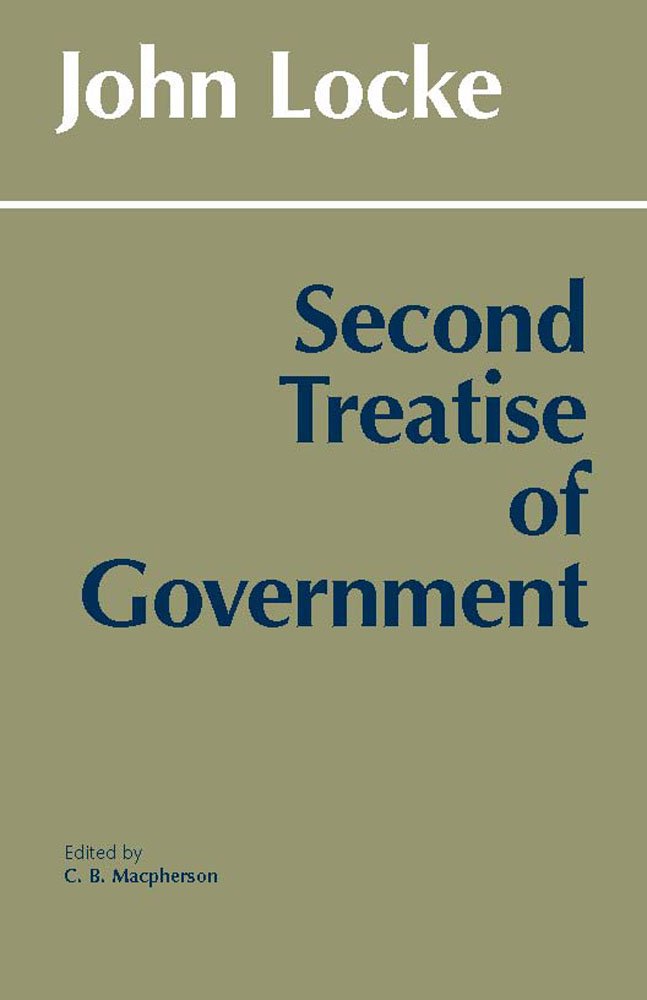
Second Treatise of Government: Chapters 17–19
In this 17th-century treatise, Locke argues that governments are only legitimate when leaders rule with the consent of those who are governed. Read the full text here.
Here are links to our lists for the text: Chapters 1–3, Chapters 4–6, Chapters 7–10, Chapters 11–16, Chapters 17–19
35 words
42 learners
Learn words with Flashcards and other activities
Definition First

Other learning activities
Full list of words from this list:
-
felicity
state of well-being characterized by contentmentI will ever prefer the weal of the public, and of the whole commonwealth, in making of good laws and constitutions, to any particular and private ends of mine; thinking ever the wealth and weal of the commonwealth to be my greatest weal and worldly felicity; a point wherein a lawful king doth directly differ from a tyrant...
-
deluge
a heavy rainThe king binds himself by a double oath, to the observation of the fundamental laws of his kingdom; tacitly, as by being a king, and so bound to protect as well the people, as the laws of his kingdom; and expressly, by his oath at his coronation, so as every just king, in a settled kingdom, is bound to observe that paction made to his people, by his laws, in framing his government agreeable thereunto, according to that paction which God made with Noah after the deluge.
-
perjure
make oneself guilty of telling untruths in a court of lawTherefore all kings that are not tyrants, or perjured, will be glad to bound themselves within the limits of their laws; and they that persuade them the contrary, are vipers, and pests both against them and the commonwealth.
-
rapine
the act of despoiling a country in warfareThe being rightfully possessed of great power and riches, exceedingly beyond the greatest part of the sons of Adam, is so far from being an excuse, much less a reason, for rapine and oppression, which the endamaging another without authority is, that it is a great aggravation of it...
-
constable
a police officer of the lowest rank...exceeding the bounds of authority is no more a right in a great, than in a petty officer; no more justifiable in a king than a constable; but is so much the worse in him, in that he has more trust put in him, has already a much greater share than the rest of his brethren, and is supposed, from the advantages of his education, employment, and counsellors, to be more knowing in the measures of right and wrong.
-
heady
marked by defiant disregard for danger or consequences...nor being able by his single strength to subvert the laws, nor oppress the body of the people, should any prince have so much weakness, and ill nature as to be willing to do it, the inconveniency of some particular mischiefs, that may happen sometimes, when a heady prince comes to the throne, are well recompensed by the peace of the public, and security of the government, in the person of the chief magistrate, thus set out of the reach of danger...
-
embroil
force into some kind of situation or course of actionThirdly, Supposing a government wherein the person of the chief magistrate is not thus sacred; yet this doctrine of the lawfulness of resisting all unlawful exercises of his power, will not upon every slight occasion indanger him, or imbroil the government: for where the injured party may be relieved, and his damages repaired by appeal to the law, there can be no pretence for force, which is only to be used where a man is intercepted from appealing to the law...
-
alight
come downTo another I deliver 100 pounds to hold only whilst I alight, which he refuses to restore me, when I am got up again, but draws his sword to defend the possession of it by force, if I endeavour to retake it.
-
dissipate
cause to separate and go in different directions...there wants not much argument to prove, that where the society is dissolved, the government cannot remain; that being as impossible, as for the frame of an house to subsist when the materials of it are scattered and dissipated by a whirl-wind, or jumbled into a confused heap by an earthquake.
-
impute
attribute to a cause or sourceWhy, in such a constitution as this, the dissolution of the government in these cases is to be imputed to the prince, is evident; because he, having the force, treasure and offices of the state to employ, and often persuading himself, or being flattered by others, that as supreme magistrate he is uncapable of controul...
-
artifice
the use of deception or trickeryTo tell people they may provide for themselves, by erecting a new legislative, when by oppression, artifice, or being delivered over to a foreign power, their old one is gone, is only to tell them, they may expect relief when it is too late, and the evil is past cure.
-
solicitation
an entreaty addressed to someone of superior statusHe acts also contrary to his trust, when he either employs the force, treasure, and offices of the society, to corrupt the representatives, and gain them to his purposes; or openly preengages the electors, and prescribes to their choice, such, whom he has, by sollicitations, threats, promises, or otherwise, won to his designs; and employs them to bring in such, who have promised before-hand what to vote, and what to enact.
-
adventitious
associated by chance and not an integral partAnd if there be any original defects, or adventitious ones introduced by time, or corruption; it is not an easy thing to get them changed, even when all the world sees there is an opportunity for it.
-
aversion
a feeling of intense dislikeThis slowness and aversion in the people to quit their old constitutions, has, in the many revolutions which have been seen in this kingdom, in this and former ages, still kept us to, or, after some interval of fruitless attempts, still brought us back again to our old legislative of king, lords and commons: and whatever provocations have made the crown be taken from some of our princes' heads, they never carried the people so far as to place it in another line.
-
ferment
a state of agitation or turbulent change or developmentBut it will be said, this hypothesis lays a ferment for frequent rebellion.
-
prevarication
the deliberate act of deviating from the truthBut if a long train of abuses, prevarications and artifices, all tending the same way, make the design visible to the people, and they cannot but feel what they lie under, and see whither they are going...
-
specious
plausible but false...they should then rouze themselves, and endeavour to put the rule into such hands which may secure to them the ends for which government was at first erected; and without which, ancient names, and specious forms, are so far from being better, that they are much worse, than the state of nature, or pure anarchy; the inconveniencies being all as great and as near, but the remedy farther off and more difficult.
-
imperious
having or showing arrogant superiorityWho would not think it an admirable peace betwix the mighty and the mean, when the lamb, without resistance, yielded his throat to be torn by the imperious wolf?
-
exhort
urge or force in an indicated directionAnd no doubt Ulysses, who was a prudent man, preached up passive obedience, and exhorted them to a quiet submission, by representing to them of what concernment peace was to mankind; and by shewing the inconveniences might happen, if they should offer to resist Polyphemus, who had now the power over them.
-
turbulent
characterized by unrest or disorder or insubordinationNor let any one say, that mischief can arise from hence, as often as it shall please a busy head, or turbulent spirit, to desire the alteration of the government.
-
perdition
the place or state in which one suffers eternal punishmentIt is true, such men may stir, whenever they please; but it will be only to their own just ruin and perdition: for till the mischief be grown general, and the ill designs of the rulers become visible, or their attempts sensible to the greater part, the people, who are more disposed to suffer than right themselves by resistance, are not apt to stir.
-
wanton
indulgent in immoral or improper behaviorBut whether the mischief hath oftener begun in the people's wantonness, and a desire to cast off the lawful authority of their rulers, or in the rulers' insolence, and endeavours to get and exercise an arbitrary power over their people; whether oppression, or disobedience, gave the first rise to the disorder, I leave it to impartial history to determine.
-
pillage
steal goods; take as spoilsMust they see their cities pillaged, and laid in ashes, their wives and children exposed to the tyrant's lust and fury, and themselves and families reduced by their king to ruin, and all the miseries of want and oppression, and yet sit still?
-
debar
prevent the occurrence of; prevent from happeningMust men alone be debarred the common privilege of opposing force with force, which nature allows so freely to all other creatures for their preservation from injury?
-
abate
make less active or intenseHe that shall oppose an assault only with a shield to receive the blows, or in any more respectful posture, without a sword in his hand, to abate the confidence and force of the assailant, will quickly be at an end of his resistance, and will find such a defence serve only to draw on himself the worse usage.
-
cudgel
strike with a club that is used as a weaponHe that can reconcile blows and reverence, may, for aught I know, desire for his pains, a civil, respectful cudgeling where-ever he can meet with it.
-
ordinance
an authoritative ruleHonour the king, and he that resists the power, resists the ordinance of God...
-
interregnum
the time between two reigns or governmentsThe people therefore can never come by a power over him, unless he does something that makes him cease to be a king: for then he divests himself of his crown and dignity, and returns to the state of a private man, and the people become free and superior, the power which they had in the interregnum, before they crowned him king, devolving to them again.
-
stickler
someone who insists on somethingBilson, a bishop of our church, and a great stickler for the power and prerogative of princes, does, if I mistake not, in his treatise of Christian subjection, acknowledge, that princes may forfeit their power, and their title to the obedience of their subjects...
-
treatise
a formal text that treats a particular topic systematicallyBilson, a bishop of our church, and a great stickler for the power and prerogative of princes, does, if I mistake not, in his treatise of Christian subjection, acknowledge, that princes may forfeit their power, and their title to the obedience of their subjects...
-
ecclesiastical
of or associated with a churchBut I thought Hooker alone might be enough to satisfy those men, who relying on him for their ecclesiastical polity, are by a strange fate carried to deny those principles upon which he builds it.
-
broach
bring up a topic for discussionThis I am sure, their civil policy is so new, so dangerous, and so destructive to both rulers and people, that as former ages never could bear the broaching of it; so it may be hoped, those to come, redeemed from the impositions of these Egyptian under-task-masters, will abhor the memory of such servile flatterers, who, whilst it seemed to serve their turn, resolved all government into absolute tyranny, and would have all men born to, what their mean souls fitted them for, slavery.
-
imposition
an uncalled-for burdenThis I am sure, their civil policy is so new, so dangerous, and so destructive to both rulers and people, that as former ages never could bear the broaching of it; so it may be hoped, those to come, redeemed from the impositions of these Egyptian under-task-masters, will abhor the memory of such servile flatterers, who, whilst it seemed to serve their turn, resolved all government into absolute tyranny, and would have all men born to, what their mean souls fitted them for, slavery.
-
servile
submissive or fawning in attitude or behaviorThis I am sure, their civil policy is so new, so dangerous, and so destructive to both rulers and people, that as former ages never could bear the broaching of it; so it may be hoped, those to come, redeemed from the impositions of these Egyptian under-task-masters, will abhor the memory of such servile flatterers, who, whilst it seemed to serve their turn, resolved all government into absolute tyranny, and would have all men born to, what their mean souls fitted them for, slavery.
-
factious
dissenting with the majority opinionHere, it is like, the common question will be made, Who shall be judge, whether the prince or legislative act contrary to their trust? This, perhaps, ill-affected and factious men may spread amongst the people, when the prince only makes use of his due prerogative.
Created on Tue Jul 13 09:25:04 EDT 2021
(updated Tue Jul 20 10:25:48 EDT 2021)
Sign up now (it’s free!)
Whether you’re a teacher or a learner,
Vocabulary.com can put you or your class
on the path to systematic vocabulary improvement.