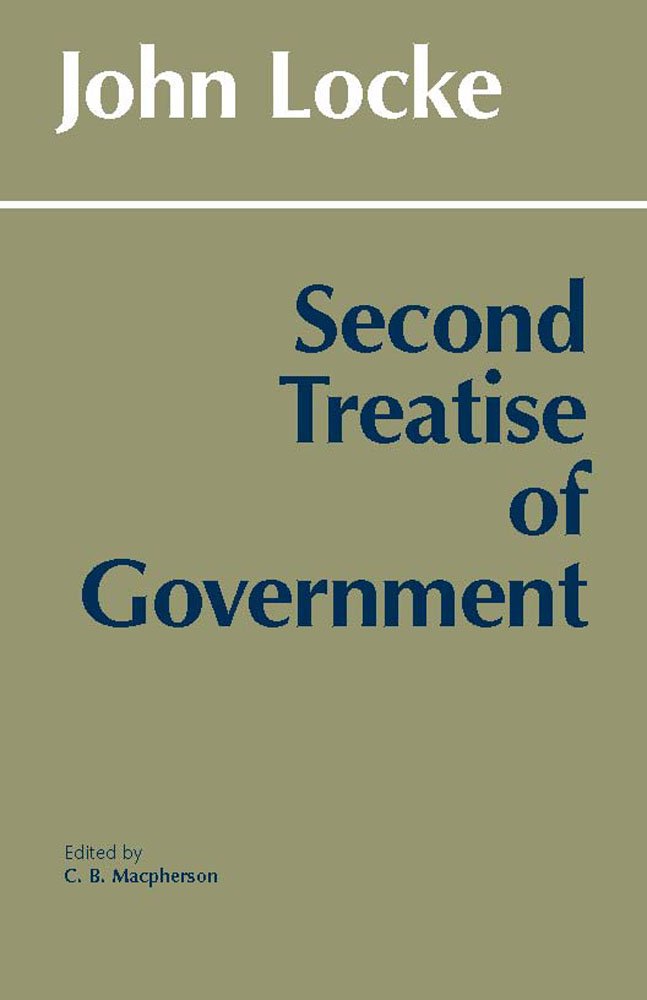
Second Treatise of Government: Chapters 11–16
In this 17th-century treatise, Locke argues that governments are only legitimate when leaders rule with the consent of those who are governed. Read the full text here.
Here are links to our lists for the text: Chapters 1–3, Chapters 4–6, Chapters 7–10, Chapters 11–16, Chapters 17–19
35 words
48 learners
Learn words with Flashcards and other activities
Definition First

Other learning activities
Full list of words from this list:
-
edict
a formal or authoritative proclamationThis legislative is not only the supreme power of the commonwealth, but sacred and unalterable in the hands where the community have once placed it; nor can any edict of any body else, in what form soever conceived, or by what power soever backed, have the force and obligation of a law, which has not its sanction from that legislative which the public has chosen and appointed...
-
pursuant
in conformance to or agreement with...nor can any oaths to any foreign power whatsoever, or any domestic subordinate power, discharge any member of the society from his obedience to the legislative, acting pursuant to their trust; nor oblige him to any obedience contrary to the laws so enacted, or farther than they do allow; it being ridiculous to imagine one can be tied ultimately to obey any power in the society, which is not the supreme.
-
potentate
a powerful ruler, especially one who is unconstrained by lawThe lawful power of making laws to command whole politic societies of men, belonging so properly unto the same intire societies, that for any prince or potentate of what kind soever upon earth, to exercise the same of himself, and not by express commission immediately and personally received from God, or else by authority derived at the first from their consent, upon whose persons they impose laws, it is no better than mere tyranny.
-
approbation
official acceptance or agreementLaws they are not therefore which public approbation hath not made so.
-
depraved
deviating from what is considered moral or right or properLaws politic, ordained for external order and regiment amongst men, are never framed as they should be, unless presuming the will of man to be inwardly obstinate, rebellious, and averse from all obedience to the sacred laws of his nature; in a word, unless presuming man to be, in regard of his depraved mind, little better than a wild beast, they do accordingly provide, notwithstanding, so to frame his outward actions, that they be no hindrance unto the common good...
-
equitable
fair to all parties as dictated by reason and conscience...for a man's property is not at all secure, tho' there be good and equitable laws to set the bounds of it between him and his fellow subjects, if he who commands those subjects have power to take from any private man, what part he pleases of his property, and use and dispose of it as he thinks good.
-
levy
impose and collectBut still it must be with his own consent, i.e. the consent of the majority, giving it either by themselves, or their representatives chosen by them: for if any one shall claim a power to lay and levy taxes on the people, by his own authority, and without such consent of the people, he thereby invades the fundamental law of property, and subverts the end of government: for what property have I in that, which another may by right take, when he pleases, to himself?
-
subvert
undermine or hinder normal operationsBut still it must be with his own consent, i.e. the consent of the majority, giving it either by themselves, or their representatives chosen by them: for if any one shall claim a power to lay and levy taxes on the people, by his own authority, and without such consent of the people, he thereby invades the fundamental law of property, and subverts the end of government: for what property have I in that, which another may by right take, when he pleases, to himself?
-
fiduciary
relating to or of the nature of a legal trustThough in a constituted commonwealth, standing upon its own basis, and acting according to its own nature, that is, acting for the preservation of the community, there can be but one supreme power, which is the legislative, to which all the rest are and must be subordinate, yet the legislative being only a fiduciary power to act for certain ends, there remains still in the people a supreme power to remove or alter the legislative...
-
repose
put or place something (e.g., trust) in or on...there remains still in the people a supreme power to remove or alter the legislative, when they find the legislative act contrary to the trust reposed in them: for all power given with trust for the attaining an end, being limited by that end, whenever that end is manifestly neglected, or opposed, the trust must necessarily be forfeited, and the power devolve into the hands of those that gave it, who may place it anew where they shall think best for their safety and security.
-
adjourn
break from a meeting or gathering...for the supreme power being placed in them by the people, it is always in them, and they may exercise it when they please, unless by their original constitution they are limited to certain seasons, or by an act of their supreme power they have adjourned to a certain time; and when that time comes, they have a right to assemble and act again.
-
convoke
call togetherIf the legislative, or any part of it, be made up of representatives chosen for that time by the people, which afterwards return into the ordinary state of subjects, and have no share in the legislature but upon a new choice, this power of chusing must also be exercised by the people, either at certain appointed seasons, or else when they are summoned to it; and in this latter case the power of convoking the legislative is ordinarily placed in the executive...
-
exigency
a pressing or urgent situation...either the original constitution requires their assembling and acting at certain intervals, and then the executive power does nothing but ministerially issue directions for their electing and assembling, according to due forms; or else it is left to his prudence to call them by new elections, when the occasions or exigencies of the public require the amendment of old, or making of new laws, or the redress or prevention of any inconveniencies, that lie on, or threaten the people.
-
render
cause to becomeThe use of force without authority, always puts him that uses it into a state of war, as the aggressor, and renders him liable to be treated accordingly.
-
deliberation
(usually plural) discussion of all sides of a question...any delay of their convening might endanger the public; and sometimes too their business might be so great, that the limited time of their sitting might be too short for their work, and rob the public of that benefit which could be had only from their mature deliberation.
-
desolate
having few or no inhabitantsThus people, riches, trade, power, change their stations, flourishing mighty cities come to ruin, and prove in times neglected desolate corners, whilst other unfrequented places grow into populous countries, filled with wealth and inhabitants.
-
mitigate
make less severe or harsh...'tis fit the ruler should have a power, in many cases, to mitigate the severity of the law, and pardon some offenders: for the end of government being the preservation of all, as much as may be, even the guilty are to be spared, where it can prove no prejudice to the innocent.
-
dispatch
the property of being prompt and efficientThis power to act according to discretion, for the public good, without the prescription of the law, and sometimes even against it, is that which is called prerogative: for since in some governments the lawmaking power is not always in being, and is usually too numerous, and so too slow, for the dispatch requisite to execution...
-
latitude
freedom from normal restraints in conduct...because also it is impossible to foresee, and so by laws to provide for, all accidents and necessities that may concern the public, or to make such laws as will do no harm, if they are executed with an inflexible rigour, on all occasions, and upon all persons that may come in their way; therefore there is a latitude left to the executive power, to do many things of choice which the laws do not prescribe.
-
scrupulous
characterized by extreme care and great effortThis power, whilst employed for the benefit of the community, and suitably to the trust and ends of the government, is undoubted prerogative, and never is questioned: for the people are very seldom or never scrupulous or nice in the point; they are far from examining prerogative, whilst it is in any tolerable degree employed for the use it was meant, that is, for the good of the people, and not manifestly against it...
-
fain
in a willing mannerBut when mistake or flattery prevailed with weak princes to make use of this power for private ends of their own, and not for the public good, the people were fain by express laws to get prerogative determined in those points wherein they found disadvantage from it...
-
frailty
moral weakness...prerogative was always largest in the hands of our wisest and best princes; because the people, observing the whole tendency of their actions to be the public good, contested not what was done without law to that end: or, if any human frailty or mistake (for princes are but men, made as others) appeared in some small declinations from that end; yet 'twas visible, the main of their conduct tended to nothing but the care of the public.
-
subservient
serving or acting as a means or aid...for it being impossible to foresee which should always be the fittest place for them to assemble in, and what the best season; the choice of these was left with the executive power, as might be most subservient to the public good, and best suit the ends of parliaments.
-
paramount
more important than anything else; supremeAnd therefore, though the people cannot be judge, so as to have, by the constitution of that society, any superior power, to determine and give effective sentence in the case; yet they have, by a law antecedent and paramount to all positive laws of men, reserved that ultimate determination to themselves which belongs to all mankind, where there lies no appeal on earth, viz. to judge, whether they have just cause to make their appeal to heaven.
-
tribunal
an assembly to conduct judicial businessHe that troubles his neighbour without a cause, is punished for it by the justice of the court he appeals to: and he that appeals to heaven must be sure he has right on his side; and a right too that is worth the trouble and cost of the appeal, as he will answer at a tribunal that cannot be deceived, and will be sure to retribute to every one according to the mischiefs he hath created to his fellow subjects...
-
arrant
complete and without qualificationThey that found absolute monarchy upon the title of the sword, make their heroes, who are the founders of such monarchies, arrant Draw-can-sirs, and forget they had any officers and soldiers that fought on their side in the battles they won, or assisted them in the subduing, or shared in possessing, the countries they mastered.
-
abet
assist or encourage, usually in some wrongdoingSecondly, I say then the conqueror gets no power but only over those who have actually assisted, concurred, or consented to that unjust force that is used against him: for the people having given to their governors no power to do an unjust thing, such as is to make an unjust war, (for they never had such a power in themselves) they ought not to be charged as guilty of the violence and unjustice that is committed in an unjust war, any farther than they actually abet it...
-
vanquish
defeat in a competition, race, or conflictLet the conqueror have as much justice on his side, as could be supposed, he has no right to seize more than the vanquished could forfeit: his life is at the victor's mercy; and his service and goods he may appropriate, to make himself reparation; but he cannot take the goods of his wife and children; they too had a title to the goods he enjoyed, and their shares in the estate he possessed...
-
brethren
people who are members of the same social or cultural groupEvery man is born with a double right: first, a right of freedom to his person, which no other man has a power over, but the free disposal of it lies in himself. Secondly, a right, before any other man, to inherit with his brethren his father's goods.
-
usurpation
wrongfully seizing and holding by force...for the first conqueror never having had a title to the land of that country, the people who are the descendants of, or claim under those who were forced to submit to the yoke of a government by constraint, have always a right to shake it off, and free themselves from the usurpation or tyranny which the sword hath brought in upon them, till their rulers put them under such a frame of government as they willingly and of choice consent to.
-
yoke
an oppressive powerWho doubts but the Grecian Christians, descendants of the ancient possessors of that country, may justly cast off the Turkish yoke, which they have so long groaned under, whenever they have an opportunity to do it?
-
collusion
secret agreement...and all the grants and promises of men in power are but mockery and collusion: for can there be any thing more ridiculous than to say, I give you and yours this for ever, and that in the surest and most solemn way of conveyance can be devised; and yet it is to be understood, that I have right, if I please, to take it away from you again tomorrow?
-
countenance
consent to, give permissionWhence it is plain, that shaking off a power, which force, and not right, hath set over any one, though it hath the name of rebellion, yet is no offence before God, but is that which he allows and countenances, though even promises and covenants, when obtained by force, have intervened...
-
covenant
a signed written agreement between two or more partiesWhence it is plain, that shaking off a power, which force, and not right, hath set over any one, though it hath the name of rebellion, yet is no offence before God, but is that which he allows and countenances, though even promises and covenants, when obtained by force, have intervened...
-
depose
force to leave an office...for it is very probable, to any one that reads the story of Ahaz and Hezekiah attentively, that the Assyrians subdued Ahaz, and deposed him, and made Hezekiah king in his father's lifetime; and that Hezekiah by agreement had done him homage, and paid him tribute all this time.
Created on Tue Jul 13 09:24:39 EDT 2021
(updated Tue Jul 20 10:37:53 EDT 2021)
Sign up now (it’s free!)
Whether you’re a teacher or a learner,
Vocabulary.com can put you or your class
on the path to systematic vocabulary improvement.