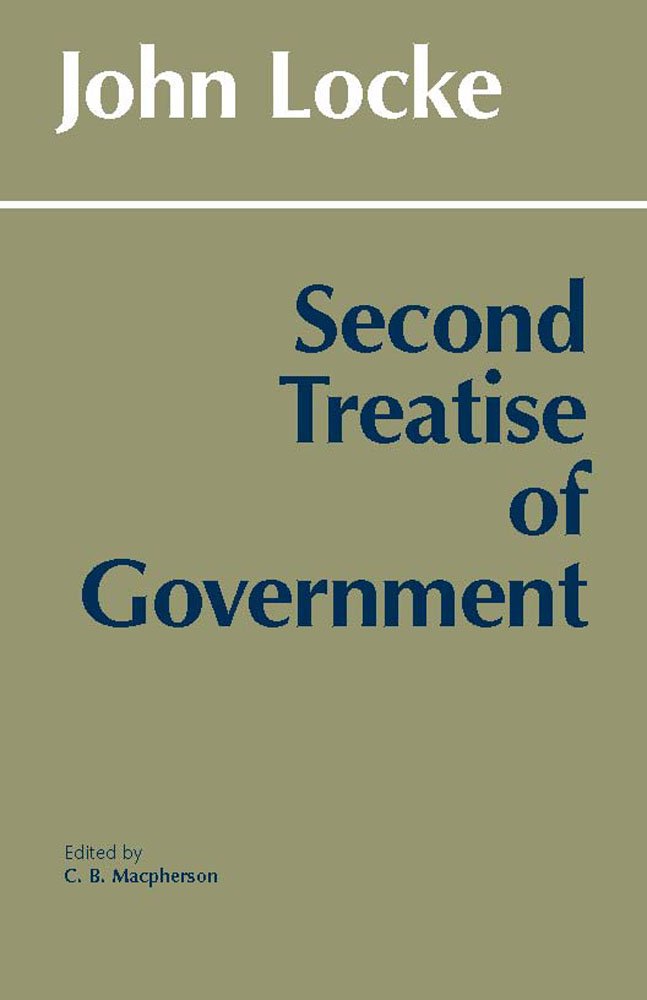
Second Treatise of Government: Chapters 4–6
In this 17th-century treatise, Locke argues that governments are only legitimate when leaders rule with the consent of those who are governed. Read the full text here.
Here are links to our lists for the text: Chapters 1–3, Chapters 4–6, Chapters 7–10, Chapters 11–16, Chapters 17–19
40 words
59 learners
Learn words with Flashcards and other activities
Definition First

Other learning activities
Full list of words from this list:
-
drudgery
hard, monotonous, routine workI confess, we find among the Jews, as well as other nations, that men did sell themselves; but, it is plain, this was only to drudgery, not to slavery: for, it is evident, the person sold was not under an absolute, arbitrary, despotical power: for the master could not have power to kill him, at any time, whom, at a certain time, he was obliged to let go free out of his service...
-
despotic
having the characteristics of a tyrannical rulerI confess, we find among the Jews, as well as other nations, that men did sell themselves; but, it is plain, this was only to drudgery, not to slavery: for, it is evident, the person sold was not under an absolute, arbitrary, despotical power: for the master could not have power to kill him, at any time, whom, at a certain time, he was obliged to let go free out of his service...
-
subsistence
a means of survivingWhether we consider natural reason, which tells us, that men, being once born, have a right to their preservation, and consequently to meat and drink, and such other things as nature affords for their subsistence: or revelation, which gives us an account of those grants God made of the world to Adam, and to Noah, and his sons, it is very clear, that God, as king David says, Psal. cxv. has given the earth to the children of men; given it to mankind in common.
-
provision
a store or supply of somethingAnd thus, considering the plenty of natural provisions there was a long time in the world, and the few spenders; and to how small a part of that provision the industry of one man could extend itself, and ingross it to the prejudice of others; especially keeping within the bounds, set by reason, of what might serve for his use; there could be then little room for quarrels or contentions about property so established.
-
penury
a state of extreme poverty or destitutionGod, when he gave the world in common to all mankind, commanded man also to labour, and the penury of his condition required it of him.
-
draught
a large and hurried swallowNo body could think himself injured by the drinking of another man, though he took a good draught, who had a whole river of the same water left him to quench his thirst: and the case of land and water, where there is enough of both, is perfectly the same.
-
contentious
showing an inclination to disagreeHe gave it to the use of the industrious and rational, (and labour was to be his title to it;) not to the fancy or covetousness of the quarrelsome and contentious.
-
beholden
under a moral obligation to someoneBut, on the contrary, the inhabitants think themselves beholden to him, who, by his industry on neglected, and consequently waste land, has increased the stock of corn, which they wanted.
-
intrinsic
belonging to a thing by its very natureThis is certain, that in the beginning, before the desire of having more than man needed had altered the intrinsic value of things, which depends only on their usefulness to the life of man; or had agreed, that a little piece of yellow metal, which would keep without wasting or decay, should be worth a great piece of flesh, or a whole heap of corn...
-
husbandry
the practice of cultivating the land or raising stockI have here rated the improved land very low, in making its product but as ten to one, when it is much nearer an hundred to one: for I ask, whether in the wild woods and uncultivated waste of America, left to nature, without any improvement, tillage or husbandry, a thousand acres yield the needy and wretched inhabitants as many conveniencies of life, as ten acres of equally fertile land do in Devonshire, where they are well cultivated?
-
raiment
especially fine or decorative clothingThere cannot be a clearer demonstration of any thing, than several nations of the Americans are of this, who are rich in land, and poor in all the comforts of life; whom nature having furnished as liberally as any other people, with the materials of plenty, i.e. a fruitful soil, apt to produce in abundance, what might serve for food, raiment, and delight...
-
toil
productive work, especially physical work done for wagesIt is labour then which puts the greatest part of value upon land, without which it would scarcely be worth any thing: it is to that we owe the greatest part of all its useful products; for all that the straw, bran, bread, of that acre of wheat, is more worth than the product of an acre of as good land, which lies waste, is all the effect of labour: for it is not barely the plough-man's pains, the reaper's and thresher's toil, and the baker's sweat, is to be counted into the bread we eat...
-
requisite
necessary for relief or supply...the labour of those who broke the oxen, who digged and wrought the iron and stones, who felled and framed the timber employed about the plough, mill, oven, or any other utensils, which are a vast number, requisite to this corn, from its being feed to be sown to its being made bread, must all be charged on the account of labour, and received as an effect of that: nature and the earth furnished only the almost worthless materials, as in themselves.
-
proprietor
someone who owns a businessFrom all which it is evident, that though the things of nature are given in common, yet man, by being master of himself, and proprietor of his own person, and the actions or labour of it, had still in himself the great foundation of property; and that, which made up the great part of what he applied to the support or comfort of his being, when invention and arts had improved the conveniencies of life, was perfectly his own, and did not belong in common to others.
-
tacitly
by unexpressed agreement...the leagues that have been made between several states and kingdoms, either expresly or tacitly disowning all claim and right to the land in the others' possession, have, by common consent, given up their pretences to their natural common right, which originally they had to those countries, and so have, by positive agreement, settled a property amongst themselves, in distinct parts and parcels of the earth...
-
tract
an extended area of land...yet there are still great tracts of ground to be found, which (the inhabitants thereof not having joined with the rest of mankind, in the consent of the use of their common money) lie waste, and are more than the people who dwell on it do, or can make use of, and so still lie in common; tho' this can scarce happen amongst that part of mankind that have consented to the use of money.
-
encroachment
entry to another's property without right or permissionRight and conveniency went together; for as a man had a right to all he could employ his labour upon, so he had no temptation to labour for more than he could make use of. This left no room for controversy about the title, nor for encroachment on the right of others; what portion a man carved to himself, was easily seen; and it was useless, as well as dishonest, to carve himself too much, or take more than he needed.
-
censure
rebuke formallyIt may perhaps be censured as an impertinent criticism, in a discourse of this nature, to find fault with words and names, that have obtained in the world: and yet possibly it may not be amiss to offer new ones, when the old are apt to lead men into mistakes, as this of paternal power probably has done, which seems so to place the power of parents over their children wholly in the father, as if the mother had no share in it...
-
impertinent
not relevant to the matter under considerationIt may perhaps be censured as an impertinent criticism, in a discourse of this nature, to find fault with words and names, that have obtained in the world: and yet possibly it may not be amiss to offer new ones, when the old are apt to lead men into mistakes, as this of paternal power probably has done, which seems so to place the power of parents over their children wholly in the father, as if the mother had no share in it...
-
precipice
the brink of a dangerous or potentially disastrous situation...for law, in its true notion, is not so much the limitation as the direction of a free and intelligent agent to his proper interest, and prescribes no farther than is for the general good of those under that law: could they be happier without it, the law, as an useless thing, would of itself vanish; and that ill deserves the name of confinement which hedges us in only from bogs and precipices.
-
incumbent
necessary as a duty or responsibility; morally bindingThe power, then, that parents have over their children, arises from that duty which is incumbent on them, to take care of their offspring, during the imperfect state of childhood.
-
discretion
freedom to act or judge on one's ownWhen he has acquired that state, he is presumed to know how far that law is to be his guide, and how far he may make use of his freedom, and so comes to have it; till then, some body else must guide him, who is presumed to know how far the law allows a liberty. If such a state of reason, such an age of discretion made him free, the same shall make his son free too.
-
obstinate
refusing to change one's mind or ways; difficult to convinceThe freedom of a man at years of discretion, and the subjection of a child to his parents, whilst yet short of that age, are so consistent, and so distinguishable, that the most blinded contenders for monarchy, by right of fatherhood, cannot miss this difference; the most obstinate cannot but allow their consistency...
-
discern
perceive, recognize, or detectBut at what time, says the judicious Hooker, Eccl. Pol. l. i. sect. 6. a man may be said to have attained so far forth the use of reason, as sufficeth to make him capable of those laws whereby he is then bound to guide his actions: this is a great deal more easy for sense to discern, than for any one by skill and learning to determine.
-
fealty
the loyalty that one owes to a country, sovereign, or lordCommon-wealths themselves take notice of, and allow, that there is a time when men are to begin to act like free men, and therefore till that time require not oaths of fealty, or allegiance, or other public owning of, or submission to the government of their countries.
-
rectitude
righteousness as a consequence of being honorable and honestBut what reason can hence advance this care of the parents due to their offspring into an absolute arbitrary dominion of the father, whose power reaches no farther, than by such a discipline, as he finds most effectual, to give such strength and health to their bodies, such vigour and rectitude to their minds, as may best fit his children to be most useful to themselves and others; and, if it be necessary to his condition, to make them work, when they are able, for their own subsistence.
-
beget
have childrenSo little power does the bare act of begetting give a man over his issue; if all his care ends there, and this be all the title he hath to the name and authority of a father.
-
cleave
stick or hold together and resist separationThe father's empire then ceases, and he can from thence forwards no more dispose of the liberty of his son, than that of any other man: and it must be far from an absolute or perpetual jurisdiction, from which a man may withdraw himself, having license from divine authority to leave father and mother, and cleave to his wife.
-
affront
treat, mention, or speak to rudely...as he hath laid on them an obligation to nourish, preserve, and bring up their offspring; so he has laid on the children a perpetual obligation of honouring their parents, which containing in it an inward esteem and reverence to be shewn by all outward expressions, ties up the child from any thing that may ever injure or affront, disturb or endanger, the happiness or life of those from whom he received his...
-
prerogative
a right reserved exclusively by a person or groupThe want of distinguishing these two powers, viz. that which the father hath in the right of tuition, during minority, and the right of honour all his life, may perhaps have caused a great part of the mistakes about this matter: for to speak properly of them, the first of these is rather the privilege of children, and duty of parents, than any prerogative of paternal power.
-
absolve
excuse or free from blameThe nourishment and education of their children is a charge so incumbent on parents for their children's good, that nothing can absolve them from taking care of it: and though the power of commanding and chastising them go along with it, yet God hath woven into the principles of human nature such a tenderness for their offspring, that there is little fear that parents should use their power with too much rigour...
-
chasten
correct by punishment or disciplineAnd therefore God almighty when he would express his gentle dealing with the Israelites, he tells them, that though he chastened them, he chastened them as a man chastens his son, Deut. viii. 5. i.e. with tenderness and affection, and kept them under no severer discipline than what was absolutely best for them, and had been less kindness to have slackened.
-
infirmity
the state of being weak in health or bodyThis is intended for the parents' advantage, as the other is for the child's; though education, the parents' duty, seems to have most power, because the ignorance and infirmities of childhood stand in need of restraint and correction; which is a visible exercise of rule, and a kind of dominion.
-
precept
a doctrine that is taught...for who can think the command, Children obey your parents, requires in a man, that has children of his own, the same submission to his father, as it does in his yet young children to him; and that by this precept he were bound to obey all his father's commands, if, out of a conceit of authority, he should have the indiscretion to treat him still as a boy?
-
deference
a courteous expression of esteem or regardHe has no dominion over his son's property, or actions; nor any right, that his will should prescribe to his son's in all things; however it may become his son in many things, not very inconvenient to him and his family, to pay a deference to it.
-
filial
relating to or characteristic of or befitting an offspringBut these two powers, political and paternal, are so perfectly distinct and separate; are built upon so different foundations, and given to so different ends, that every subject that is a father, has as much a paternal power over his children, as the prince has over his: and every prince, that has parents, owes them as much filial duty and obedience...
-
comport
be harmonious or consistent withAnd this is the power men generally have to bestow their estates on those who please them best; the possession of the father being the expectation and inheritance of the children, ordinarily in certain proportions, according to the law and custom of each country; yet it is commonly in the father's power to bestow it with a more sparing or liberal hand, according as the behaviour of this or that child hath comported with his will and humour.
-
sundry
consisting of a haphazard assortment of different kindsThe inconveniences of one kind have caused sundry others to be devised; so that in a word, all public regiment, of what kind soever, seemeth evidently to have risen from the deliberate advice, consultation and composition between men, judging it convenient and behoveful; there being no impossibility in nature considered by itself, but that man might have lived without any public regiment...
-
covetous
immoderately desirous of acquiring somethingTheir little properties, and less covetousness, seldom afforded greater controversies; and when any should arise, where could they have a fitter umpire than he, by whose care they had every one been sustained and brought up, and who had a tenderness for them all?
-
de facto
existing, whether with lawful authority or notBut if princes have their titles in their fathers' right, and it be a sufficient proof of the natural right of fathers to political authority, because they commonly were those in whose hands we find, de facto, the exercise of government: I say, if this argument be good, it will as strongly prove, that all princes, nay princes only, ought to be priests, since it is as certain, that in the beginning, the father of the family was priest, as that he was ruler in his own houshold.
Created on Tue Jul 13 09:23:51 EDT 2021
(updated Tue Jul 20 10:12:10 EDT 2021)
Sign up now (it’s free!)
Whether you’re a teacher or a learner,
Vocabulary.com can put you or your class
on the path to systematic vocabulary improvement.