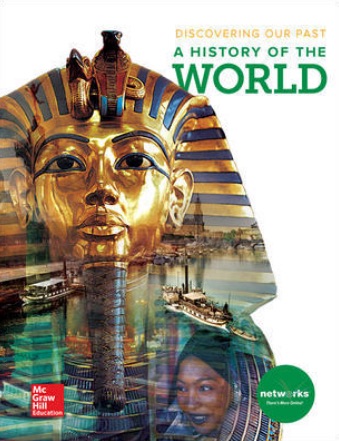
A History of the World: Chapter 7: The Ancient Greeks
32 words
626 learners
Learn words with Flashcards and other activities
Definition First

Other learning activities
Full list of words from this list:
-
dominate
be larger in number, quantity, power, status or importanceGreek civilization began in an area dominated by mountains and seas.
-
peninsula
a large mass of land projecting into a body of waterA peninsula is a body of land with water on three sides.
-
community
a group of people living in a particular local areaOther ancient Greeks settled in farming communities.
-
conclude
decide by reasoningEvans concluded that Minos and his family lived in the palace.
-
economic
of or relating to production and management of wealthTrade was an important economic activity for the Minoans.
-
decline
grow worseHowever, the Mycenaean civilization declined over time. Mycenaean kingdoms fought one another, and earthquakes destroyed their palace fortresses. By 1100 B.C., the Mycenaean civilization had crumbled.
-
bard
a lyric poetSoon, people wrote down the tales that had been told by bards, or storytellers.
-
colony
a geographical area controlled by a distant countryA colony is a settlement in a new territory that has close ties to its homeland.
-
affect
have an influence uponAs the Greeks began to make coins from metal, this affected their trade. Trade expanded as merchants traded money for goods rather than bartered for goods.
-
agora
the marketplace in ancient GreeceOutside the acropolis was an open area called an agora. This space was used as a marketplace. It was also an area where people could gather and debate issues, choose officials, pass laws, and carry out business.
-
phalanx
a body of troops in close arrayDuring battles, rows of hoplites marched forward together, shoulder to shoulder. They raised their shields above them to protect them from the enemy's arrows. This unified formation is called a phalanx.
-
consider
deem to beMerchants and artisans had earned a good living in the growing city-states. However, because they did not own land, they were not considered citizens.
-
tyrant
in ancient Greece, a ruler who had illegally seized powerA tyrant is someone who seizes power and rules with total authority. Most tyrants who commanded city-states ruled fairly. However, the harsh rule of a few tyrants gave the word tyranny its current meaning; that is, rule by a cruel and unjust person.
-
oligarchy
a political system governed by a few peopleIn an oligarchy, a few wealthy people hold power over the larger group of citizens.
-
democracy
a political system in which power lies in a body of citizensIn a democracy, all citizens share in running the government.
-
helot
a serf in ancient Sparta with status below a citizenThe Spartans called their enslaved laborers helots, a word that comes from the Greek word for "capture.”
-
military
associated with members of the armed servicesSparta's leaders wanted to prevent future revolts. They decided to make Sparta a military society that stressed discipline.
-
stability
a constant order, especially of societySparta's strict government brought stability. But that stability cost the people of Sparta. Because the government feared losing the helots, it discouraged free thinking and new ideas.
-
achieve
gain with effortThe Spartans achieved Greece's greatest military strength and power.
-
construct
make by combining materials and partsHe also hired the poor to construct temples and other public works.
-
obtain
come into possession ofTravelers could obtain food, water, and fresh horses at roadside stations along the route.
-
satrap
a governor of a province in ancient PersiaEach satrapy was ruled by a governor called a satrap, which means "defender of the kingdom." The satrap collected taxes, judged legal cases, managed the police, and recruited soldiers for the Persian army.
-
collapse
break down due to fatigue, an illness, or a sudden attackWhen the runner reached Athens, he cried out "Victory" and then collapsed and died from exhaustion.
-
channel
a deep and relatively narrow body of waterA strait is a narrow channel of water between two pieces of land.
-
direct
with nothing or no one intervening or getting in the wayIn a direct democracy, all citizens meet to debate and vote on government matters.
-
representative
related to government in which citizens elect officialsIn a representative democracy, such as the one we have in the United States today, citizens elect a smaller group of people. This group represents them, makes laws, and governs on their behalf.
-
philosopher
a specialist in the investigation of existence and knowledgePhilosophers are thinkers who reflect on the meaning of life.
-
accompany
go or travel along withMost upper-class women rarely left their houses except to attend funerals and festivals. Even then, they had to be accompanied by a male relative.
-
sufficient
of a quantity that can fulfill a need or requirementAthenian farms lacked sufficient land to grow enough food to support the city-state.
-
decade
a period of 10 yearsDuring the next several decades, the league drove Persia out of the remaining Greek territories in Anatolia.
-
conflict
a hostile meeting of opposing military forcesHistorians call this conflict the Peloponnesian War because Sparta was located in the Peloponnesus.
-
emphasize
stress or single out as importantIn his speech, Pericles emphasized that the democratic way of life is worth protecting.
Created on Thu Jun 17 09:58:26 EDT 2021
(updated Thu Jun 17 15:31:54 EDT 2021)
Sign up now (it’s free!)
Whether you’re a teacher or a learner,
Vocabulary.com can put you or your class
on the path to systematic vocabulary improvement.