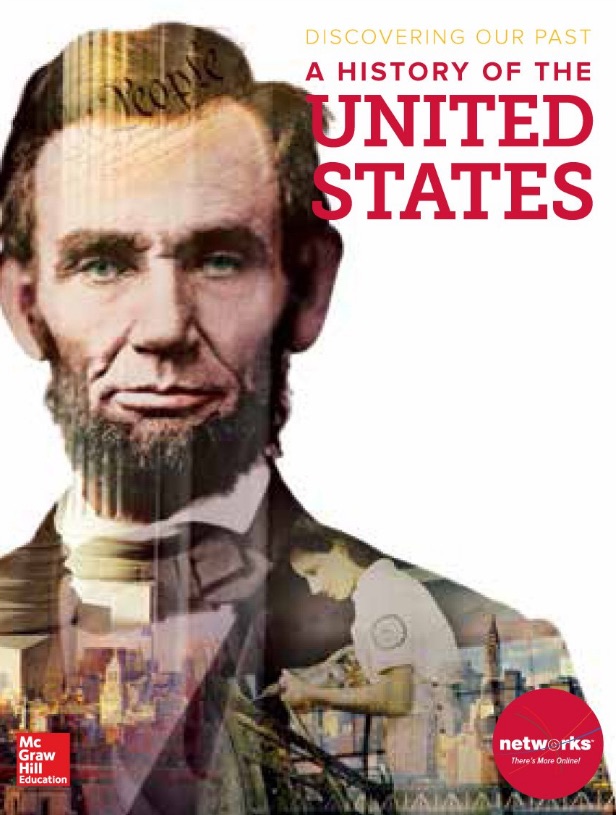
A History of the United States: Chapter 29: The Civil Rights Era
18 words
299 learners
Learn words with Flashcards and other activities
Definition First

Other learning activities
Full list of words from this list:
-
discrimination
unfair treatment of a person or group based on prejudiceAfter suffering discrimination and unfair treatment for centuries, African Americans in the mid-1900s began to make real progress in winning an equal place in American life.
-
civil
of or relating to or befitting citizens as individualsChange was slow, and the strong desire to end unfairness soon led to protest. This became the civil rights movement. The word civil means "having to do with citizens and their government."
-
integrate
open up to members of all races and ethnic groupsIn 1955 the Supreme Court followed up its decision in Brown v. Board of Education with another ruling. This ruling called on public schools to make plans for integrating their classrooms.
-
boycott
refuse to sponsor; refuse to do business withThe arrest led African Americans in the city to boycott—refuse to use—city buses.
-
civil disobedience
refusal to comply with a law as a form of political protestGandhi had used protest methods based on civil disobedience, or the refusal to obey laws that were considered unjust.
-
assign
delegate a task toKennedy also boasted a fine military record. During World War II, he joined the United States Navy. He was assigned to active duty in the Pacific.
-
consist
be composed ofPresident Johnson outlined a set of programs known as the "Great Society." His War on Poverty consisted of programs that helped people living below the poverty line—the income level required to obtain life's necessities.
-
poverty line
a level of income that provides for basic necessitiesPresident Johnson outlined a set of programs known as the "Great Society." His War on Poverty consisted of programs that helped people living below the poverty line—the income level required to obtain life's necessities.
-
Medicare
federally administered health care for older individualsIn 1965 Congress passed Medicare and Medicaid. Medicare established a health insurance program for elderly people. Medicaid provided health care to low-income families.
-
Medicaid
government-funded health care for those with low incomeIn 1965 Congress passed Medicare and Medicaid. Medicare established a health insurance program for elderly people. Medicaid provided health care to low-income families.
-
sit-in
a protest in which people occupy seats and refuse to moveHigh school and college students staged sit-ins in nearly 80 cities. A sit-in is the act of protesting by sitting down to block traffic and normal activities.
-
interstate
of relations between individual divisions of a countryOfficials issued new rules that banned segregation on interstate buses—those that crossed state lines—and in bus stations.
-
register
sign up to be a voterIn the summer of 1964, thousands of civil rights workers volunteered to work in the South. Their goal was to help African Americans register, or enroll, to vote.
-
emerge
become known or apparentMalcolm X was born Malcolm Little in Omaha, Nebraska. He emerged as an important voice for African Americans at the height of the civil rights movement.
-
feminist
a supporter of equal rights for womenThree years later, feminists—activists for women's rights—created the National Organization for Women (NOW).
-
aspect
a distinct feature or element in a problemNOW fought for equal rights for women in all aspects of life—jobs, education, and marriage.
-
Latino
related to a Spanish-speaking people or cultureThe Latino—or Hispanic—population sought equal rights in the 1960s as well. The term Latino refers to Americans with family backgrounds in Latin America or Spain.
-
diverse
distinctly dissimilar or unlikeAlthough they share many aspects of culture and a language, Latinos are a diverse group with different histories.
Created on Mon Jun 14 16:46:22 EDT 2021
(updated Fri Jun 18 11:17:56 EDT 2021)
Sign up now (it’s free!)
Whether you’re a teacher or a learner,
Vocabulary.com can put you or your class
on the path to systematic vocabulary improvement.