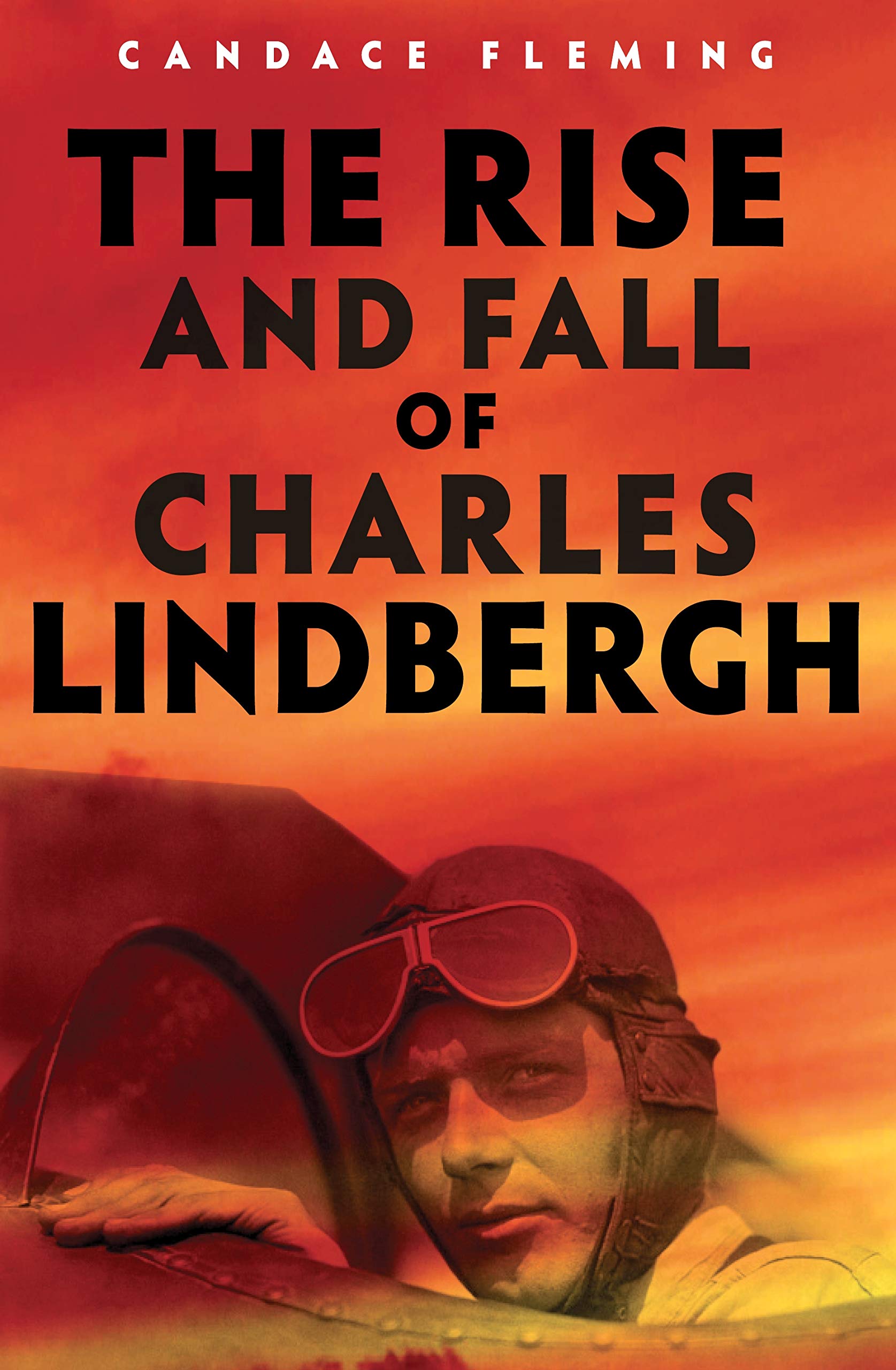
The Rise and Fall of Charles Lindbergh: Chapters 20–26
This biography of the explores the famed aviator's childhood, flying career, and eventual attraction to eugenics and Nazism.
Here are links to our lists for the book: Prologue–Chapter 6, Chapters 7–11, Chapters 12–19, Chapters 20–26, Chapters 27–33
40 words
16 learners
Learn words with Flashcards and other activities
Definition First

Other learning activities
Full list of words from this list:
-
preeminent
greatest in importance, degree, or significanceAn investigation had been done by Arthur Koehler, the country’s preeminent expert on wood identification.
-
poignant
arousing powerful emotions, especially pity or sadnessRadio stations and newspaper publishers sent special correspondents—gossip columnist Walter Winchell, Pulitzer Prize-winning novelist Edna Ferber, renowned newspaperman Damon Runyon—to the trial, in hopes of capturing the poignant, the shocking, and the tragic for listeners and readers all around the world.
-
macabre
shockingly repellent; inspiring horrorVendors hawked everything from the phony to the macabre—ladies’ lapel pins shaped like miniature ladders and forged photographs of Charles and Anne.
-
resolute
firm in purpose or beliefWith Schwarzkopf beside him, he parked two blocks from the courthouse, then walked—with a sure stride and a resolute set to his jaw—through the jostling, pointing, shouting crowds to the courthouse.
-
circumstantial
suggesting that something is true without proving itThe trial continued. The prosecution presented a good circumstantial case.
-
acquitted
declared not guilty of a specific offense or crimeShe’d been impressed by Reilly’s track record of getting his clients acquitted in difficult homicide cases.
-
motley
consisting of a haphazard assortment of different kindsHe called a motley parade of poorly prepared witnesses whose testimonies were easily discredited by Wilentz on cross-examination.
-
disreputable
lacking respectability in character, behavior or appearanceSo shady and disreputable were most of these witnesses that at one point Hauptmann looked over at Lloyd Fisher, one of the members of the defense team, and said in disgust, “Where are they getting these witnesses? They’re killing me.”
-
speculative
not based on fact or investigationAll through the day—as the jurors remained sequestered in their guarded room and reporters and broadcasters spread speculative stories—tension mounted.
-
deftly
in an agile mannerDr. Carrel peered at it through his pince-nez, considering where to make the incision. He held out a gloved hand and was given a scalpel. Deftly, he sliced open the animal’s neck.
-
edict
a formal or authoritative proclamationIf organs could be kept alive indefinitely, they could be used as replacement parts to keep members of the “higher council” alive forever. Living uninterrupted for centuries, these men could gather knowledge, reach conclusions, and issue edicts telling the rest of mankind how to live.
-
rostrum
a platform raised above the surrounding levelAt noon on March 7, 1936—two months after the Lindberghs’ arrival in Europe—Adolf Hitler, the Nazi dictator of Germany, stepped to the rostrum in the Reichstag, his country’s parliament.
-
flout
treat with contemptuous disregardHe had purposely flouted the Treaty of Versailles.
-
fanaticism
excessive intolerance of opposing viewsReported one American journalist, “Their hands raised in slavish salute, their faces now contorted with hysteria, their mouths wide open, shouting, shouting, their eyes, burning with fanaticism, glued on their new god, their Führer, Hitler.”
-
exuberant
joyously unrestrainedStanding at the rostrum, his head lowered as if in humility, he now waited out the exuberant pandemonium of the Reichstag.
-
pandemonium
a state of extreme confusion and disorderStanding at the rostrum, his head lowered as if in humility, he now waited out the exuberant pandemonium of the Reichstag.
-
attache
a specialist assigned to the staff of a diplomatic missionOn a Sunday morning in May 1936, Major Truman Smith, military attaché to the American embassy in Berlin, sat down to breakfast with his wife, Kay.
-
sketchy
giving only major points; lacking completenessWhat exactly were the Nazis building? Despite his well-cultivated connections inside the Reich, his information remained sketchy.
-
extol
praise, glorify, or honorWith the world spotlight on Germany, it was his chance to extol the virtues of the Third Reich, cast himself as a strong, sane, and tolerant leader, and prove that Germany had crawled out of the economic ditch of the Depression.
-
entreaty
earnest or urgent requestCharles ignored Straus’s entreaty.
-
virulent
harsh or corrosive in toneEven the virulent anti-Semitic newspaper Der Stürmer had temporarily ceased publication.
-
virility
the trait of being manlyHaving witnessed Nazi “virility” and “efficiency,” he felt that the British people’s “softness” and “stupidity” were obvious in comparison.
-
testy
easily irritated or annoyedEngland “saw not the future, but the past,” he testily wrote in his journal.
-
idyllic
excellent and delightful in all respectsBut this second April in Kent was not as idyllic as the first.
-
tributary
a branch that flows into the main streamSoaring above hilltop castles and the spires of cathedrals, they followed a tributary of the Rhine River until they finally landed in Munich.
-
outstrip
go far ahead ofThe memorandum was eventually sent to the United States War Department, and not only detailed all Charles had seen, but also estimated the strength of the entire Luftwaffe. Charles was convinced that strength was awesome, easily outstripping the French and British air forces, and quickly closing in on the United States.
-
offset
compensate for or counterbalanceAny fanaticism he glimpsed was offset by the Germans’ “sense of decency and value which in many ways is far ahead of our own.”
-
ruse
a deceptive maneuver, especially to avoid captureAs soon as he was sworn in, however, Seyss-Inquart—following Hitler’s orders—cabled Berlin and begged for Germany’s help in restoring order. It was a ruse, of course, an excuse for a German invasion of Austria.
-
pretext
a fictitious reason that conceals the real reasonA majority of the Sudetenland’s inhabitants remained ethnic Germans, and many of them genuinely wanted to return to German rule. Using their desire as pretext, Hitler demanded the Sudetenland be handed over to him.
-
strident
being sharply insistent on being heardWhile French prime minister Edouard Daladier and British prime minister Neville Chamberlain desperately searched for ways to avoid a fight with Germany, Hitler grew angrier and more strident, and the Czechs grew even more stubborn.
-
precarious
not secure; beset with difficultiesThat summer, over breakfasts of black bread and oatmeal, during walks along the wave-pounded shore, in the flickering shadows cast by Carrel’s fireplace, the two talked about the precarious state of civilization and race betterment.
-
impend
be imminent or about to happenHe hadn’t lost confidence in the projects, but “the problems of civilization and survival towered above [all else],” he later explained. “Why spend time on biological experiments when our very civilization was at stake, when one of history’s greatest cataclysms impended?”
-
qualm
uneasiness about the fitness of an actionCharles had no qualms about leaving Jon with the local help Anne had quickly hired.
-
appeasement
a policy of pacifying an enemy by making concessionsCharles’s dire predictions merely confirmed the prime minister’s belief that appeasement was the only possible choice.
-
cede
give overAn agreement had been concluded between Britain, France and Germany. The Sudetenland would be ceded to Hitler. In return, the Führer promised not to invade any other countries.
-
vacillation
indecision in speech or actionBut he knew this wouldn’t happen, because of the “shortsightedness and vacillation” of British and French statesmen.
-
savvy
marked by practical hardheaded intelligenceAt first, most Americans sided with charming, savvy President Roosevelt.
-
winsome
charming in a childlike or naive wayReported the New York Times, every time Charles “flashed [his] familiar, winsome smile, a murmur of approval ran through the hall. He still seemed to be one of the world’s most fascinating figures.”
-
genial
diffusing warmth and friendlinessCharles hadn’t forgotten, either. He smiled genially, knowing full well he was being scrutinized. “Roosevelt judges his man quickly and plays him cleverly,” he wrote that night in his journal.
-
embroil
force into some kind of situation or course of actionThe war clouds over Europe darkened. And Charles still mulled over his actions should war erupt. He wanted to keep his fellow Americans from getting embroiled in the conflict.
Created on Sun Sep 27 20:42:22 EDT 2020
(updated Tue Oct 13 14:37:07 EDT 2020)
Sign up now (it’s free!)
Whether you’re a teacher or a learner,
Vocabulary.com can put you or your class
on the path to systematic vocabulary improvement.