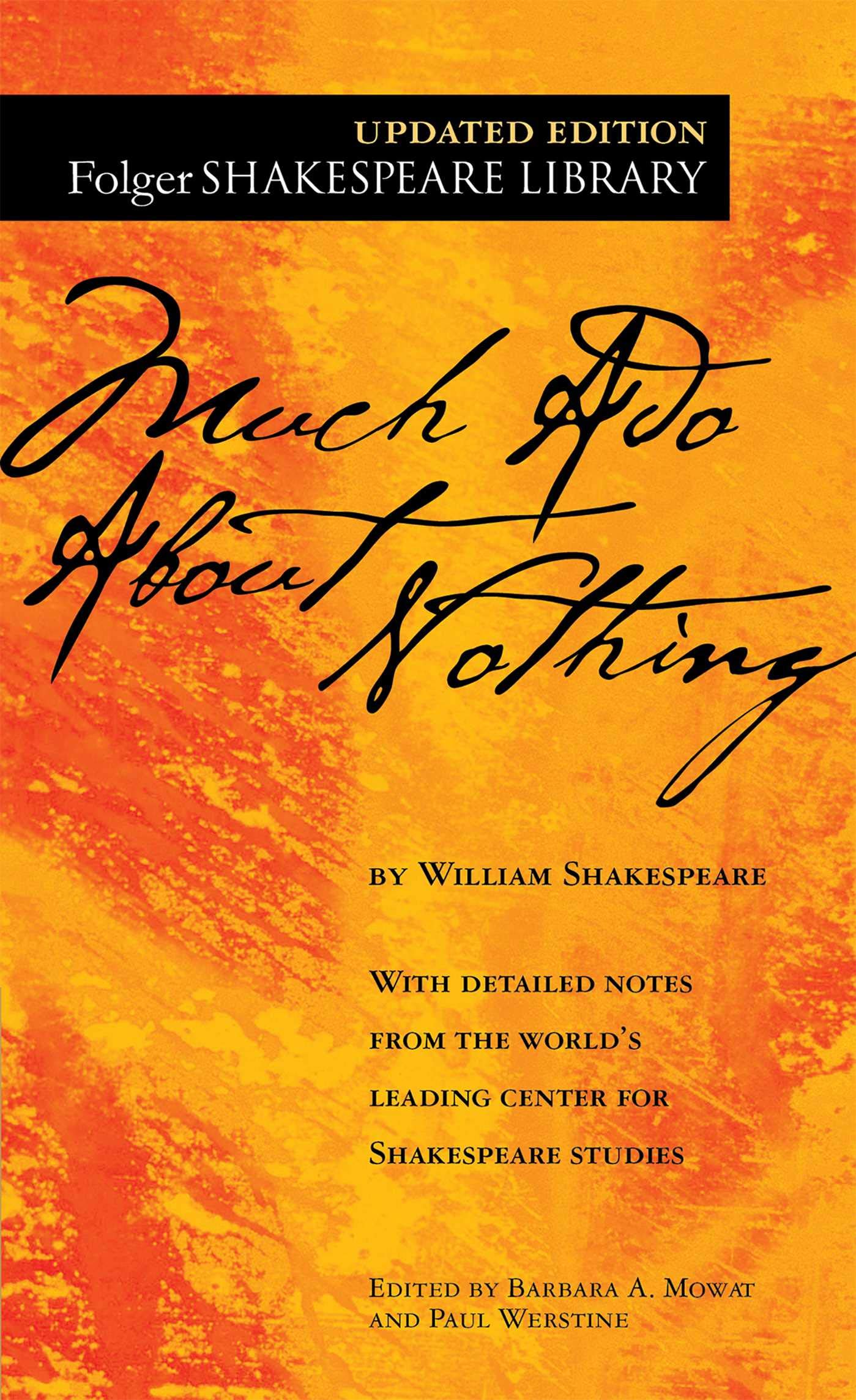
Much Ado About Nothing: Act 1
Tired of their constant bickering, Beatrice and Benedick's friends hatch a plan to get the two to fall in love. Learn these words from Shakespeare's comedy about fidelity and deception. Read the full text here.
Here are links to our lists for the play: Act 1, Act 2, Act 3, Act 4, Act 5
40 words
6721 learners
Learn words with Flashcards and other activities
Definition First

Other learning activities
Full list of words from this list:
-
modest
limited in size or scopeI have already delivered him letters, and there appears much joy in him, even so much that joy could not show itself modest enough without a badge of bitterness.
-
victual
any substance that can be used as foodYou had musty victual, and he hath holp to eat it.Earlier, Leonato declared that "a victory is twice itself when the achiever brings home full numbers." But Beatrice disagrees and insults the soldiers, especially Benedick, by comparing their easy military victory to eating musty (stale or moldy) victual.
-
valiant
having or showing heroism or courageHe is a very valiant trencherman; he hath an excellent stomach.The Latin valere means "be strong, have power" and in the face of danger, that means being brave. Beatrice uses both valiant and excellent to describe Benedick, so her speech sounds positive. But instead of praising his efforts in the trenches (ditches dug in the ground for protection during a war), she praises his efforts in front of a trencher (a wooden board or platter where food is served).
-
skirmish
a minor short-term fightThey never meet but there's a skirmish of wit between them.
-
wit
mental abilityThey never meet but there's a skirmish of wit between them.
-
halting
limping; not able to walk steadily or properlyIn our last conflict four of his five wits went halting off, and now is the whole man govern'd with one; so that if he have wit enough to keep himself warm, let him bear it for a difference between himself and his horse; for it is all the wealth that he hath left to be known a reasonable creature.The adjective also means "fragmentary or broken from emotional strain." This could describe Benedick's reaction to losing a battle of wits. But here, Beatrice compares Benedick's wits to an injured horse that limps away from its rider. For a soldier, a horse is a valuable weapon. Beatrice claims to have unhorsed Benedick, but she admits that he has one wit left, because otherwise, her victory would be musty victual too.
-
pestilence
any epidemic disease with a high death rateO Lord, he will hang upon him like a disease. He is sooner caught than the pestilence, and the taker runs presently mad.
-
presently
at this time or period; nowO Lord, he will hang upon him like a disease. He is sooner caught than the pestilence, and the taker runs presently mad.
-
encounter
contend against an opponent in a sport, game, or battleGood Signior Leonato, are you come to meet your trouble? The fashion of the world is to avoid cost, and you encounter it.
-
abide
dwellNever came trouble to my house in the likeness of your Grace, for trouble being gone, comfort should remain, but when you depart from me, sorrow abides and happiness takes his leave.
-
disdain
lack of respect accompanied by a feeling of intense dislikeIs it possible disdain should die while she hath such meet food to feed it as Signior Benedick? Courtesy itself must convert to disdain if you come in her presence.In the first example sentence, Beatrice personifies the attitude of disdain in order to respond to Benedick calling her "Lady Disdain." In the second, she personifies courtesy ("a respectful or considerate manner") to further disdain Benedick, but also to suggest that disdain is not her natural attitude but one brought on and fed by Benedick's presence.
-
pernicious
exceedingly harmfulThey would else have been troubled with a pernicious suitor.
-
suitor
a man who courts a womanThey would else have been troubled with a pernicious suitor.
-
predestined
established or arranged in advance unalterablyGod keep your Ladyship still in that mind, so some gentleman or other shall ’scape a predestinate scratched face.
-
jade
an old or over-worked horseBENEDICK: I would my horse had the speed of your tongue and so good a continuer, but keep your way, i’ God’s name, I have done.
BEATRICE: You always end with a jade’s trick. I know you of old. -
reconciled
made compatible or consistentLet me bid you welcome, my lord, being reconciled to the Prince your brother, I owe you all duty.The Latin re means "again" and conciliare means "to bring together, make friendly." The word suggests that a conflict has been resolved. But although Pedro has publicly forgiven John for standing against him, John has not reconciled with Pedro. As a bastard who does not have the same rights as the Prince, John does not take joy in Pedro's victories, yet he gladly accepts the invitation from his brother's friend.
-
tyrant
any person who exercises power in a cruel wayDo you question me, as an honest man should do, for my simple true judgment? Or would you have me speak after my custom, as being a professed tyrant to their sex?
-
sober
dignified and serious in manner or characterNo, I pray thee, speak in sober judgment.
-
obstinate
refusing to change one's mind or ways; difficult to convinceThou wast ever an obstinate heretic in the despite of beauty.
-
heretic
a person whose religious beliefs conflict with church dogmaThou wast ever an obstinate heretic in the despite of beauty.Accused heretics were often given a chance to change their beliefs. But Benedick is obstinate ("unwilling to yield" or "resistant to guidance or discipline") and declares he'd rather burn at the stake than admit that Hero (or any woman) is beautiful and worthy of being loved.
-
ballad
a narrative poem of popular originProve that ever I lose more blood with love than I will get again with drinking, pick out mine eyes with a ballad-maker’s pen...
-
commend
mention as by way of greeting or to indicate friendshipCommend me to him, and tell him I will not fail him at supper, for indeed he hath made great preparation.
-
baste
sew together loosely, with large stitchesThe body of your discourse is sometimes guarded with fragments, and the guards are but slightly basted on neither.
-
flout
treat with contemptuous disregardEre you flout old ends any further, examine your conscience.
-
conscience
a feeling of shame when you do something immoralEre you flout old ends any further, examine your conscience.
-
liege
a feudal lord entitled to allegiance and serviceMy liege, your Highness now may do me good.
-
throng
press tightly together or cramBut now I am returned and that war thoughts
Have left their places vacant, in their rooms
Come thronging soft and delicate desires,
All prompting me how fair young Hero is,
Saying I liked her ere I went to wars. -
complexion
texture and appearance of the skin of the faceHow sweetly you do minister to love,
That know love’s grief by his complexion!
But lest my liking might too sudden seem,
I would have salved it with a longer treatise. -
salve
preserve from damage or harmHow sweetly you do minister to love,
That know love’s grief by his complexion!
But lest my liking might too sudden seem,
I would have salved it with a longer treatise. -
revel
celebrate noisily or engage in uproarious festivitiesI know we shall have reveling tonight.
-
amorous
expressive of or exciting love or romanceI will assume thy part in some disguise
And tell fair Hero I am Claudio,
And in her bosom I’ll unclasp my heart
And take her hearing prisoner with the force
And strong encounter of my amorous tale. -
sufferance
patient endurance especially of pain or distressCONRADE: You should hear reason.
DON JOHN: And when I have heard it, what blessing brings it?
CONRADE: If not a present remedy, at least a patient sufferance. -
jest
activity characterized by good humorI must be sad when I have cause, and smile at no man’s jests...
-
hedge
a fence formed by a row of closely planted shrubs or bushesI had rather be a canker in a hedge than a rose in his grace, and it better fits my blood to be disdained of all than to fashion a carriage to rob love from any.
-
enfranchise
grant freedom to, as from slavery or servitudeI am trusted with a muzzle and enfranchised with a clog; therefore I have decreed not to sing in my cage.John uses the word enfranchise ironically here. Although Pedro has not thrown John into a dungeon for trying to overthrow him, he does not trust him. Thus, John describes his freedom with images of a muzzle ("a leather or wire restraint put over an animal's mouth to silence or control") and a clog ("any object that hinders movement, such as wooden shoes or chains").
-
decree
decide with authorityI am trusted with a muzzle and enfranchised with a clog; therefore I have decreed not to sing in my cage.
-
discontent
a longing for something better than the present situationCan you make no use of your discontent?
-
arras
a wall hanging of handwoven fabric with pictorial designsI whipped me behind the arras, and there heard it agreed upon that the Prince should woo Hero for himself, and having obtained her, give her to Count Claudio.
-
thither
to or toward that place; away from the speakerCome, come, let us thither.
-
subdued
quieted and brought under controlTheir cheer is the greater that I am subdued.
Created on Tue Apr 28 12:02:25 EDT 2015
(updated Mon Jun 06 15:30:39 EDT 2022)
Sign up now (it’s free!)
Whether you’re a teacher or a learner,
Vocabulary.com can put you or your class
on the path to systematic vocabulary improvement.