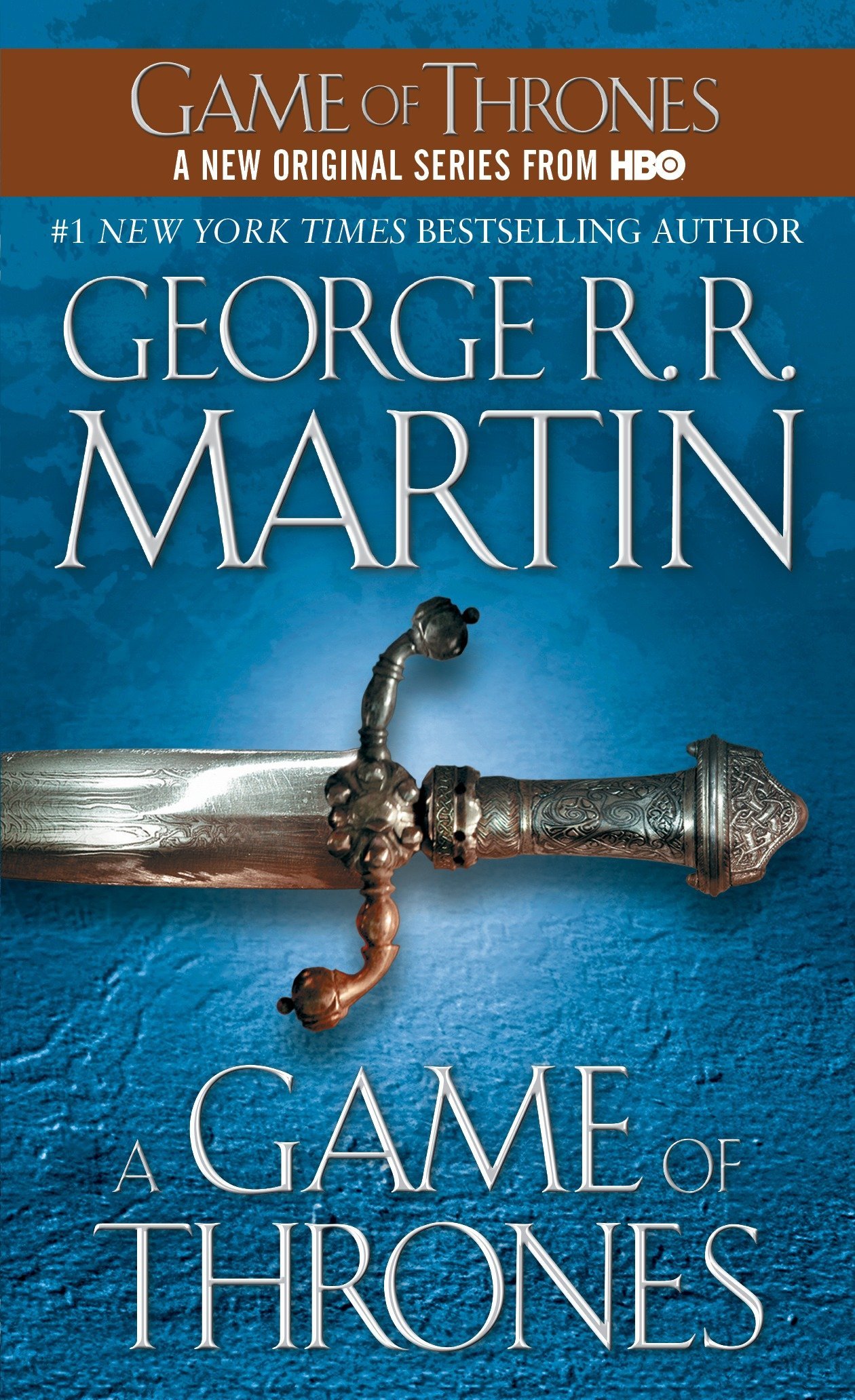
A Game of Thrones: Chapters 61–72
Lord Ned Stark is summoned to serve as an advisor to the King of Westeros, setting in motion a sweeping saga of courtly intrigue, military battle, and fire-breathing dragons.
Here are links to our lists for the novel: Prologue–Chapter 12, Chapters 13–24, Chapters 25–36, Chapters 37–48, Chapters 49–60, Chapters 61–72
Here are links to our lists for other volumes in A Song of Ice and Fire by George R.R. Martin: A Clash of Kings, A Storm of Swords, A Dance with Dragons
30 words
176 learners
Learn words with Flashcards and other activities
Definition First

Other learning activities
Full list of words from this list:
-
sullen
showing a brooding ill humorThe women and children of Ogo's khalasar walked with a sullen pride, even in defeat and bondage; they were slaves now, but they seemed not to fear it.Compare this adjective with the verb "brood" in the list for Chapters 49-60. "Sullen" comes from the Latin "solus" which means "alone"--although the women and children are walking as a group, they are not talking to each other, because they are defeated slaves who are sullenly keeping their individual pride. This differs from the Martells who brood as a family and who are waiting for the chance to avenge the murders of Princess Elia and her babies.
-
vile
morally reprehensibleA maegi was a woman who lay with demons and practiced the blackest of sorceries, a vile thing, evil and soulless, who came to men in the dark of night and sucked life and strength from their bodies.Compare with "wretched" in the list for Chapters 37-48. Although both adjectives have other definitions ("vile" can also mean "causing or able to cause nausea"), they are used synonymously in the two example sentences to describe characters who delight in the deaths of others.
-
travesty
a comedy characterized by broad satireNo pikes, too few bowmen, a bare handful of knights, the ill-armed and unarmored, commanded by an unthinking brute who led with his rage ... how could his father expect this travesty of a battle to hold his left?
-
brazen
not held back by conventional ideas of behaviorThe Lannister trumpets answered, da-DA da-DA da-DAAAAAAAAA, brazen and defiant, yet it seemed to Tyrion that they sounded somehow smaller, more anxious."Brazen" also means "made of brass"--this is a fitting description for a trumpet. The chosen definition is a better fit for the example sentence because Tyrion seems to be personifying the trumpets as they respond to the voice of an opposing warhorn that is low and chilling. Many members of House Lannister, with their wealth and power, are also brazen in their speech and actions.
-
cleave
separate or cut with a tool, such as a sharp instrumentThe man was dead on his feet, the axehead lodged in his breast, yet Shagga rode on, cleaving a shield in two with his left-hand battle-axe while the corpse was bouncing and stumbling bonelessly along on his right.
-
carnage
the savage and excessive killing of many people"And you thought it best to place me in the midst of this carnage, yet keep me ignorant of your plans."
-
rout
cause to flee"A feigned rout is less convincing," his father said, "and I am not inclined to trust my plans to a man who consorts with sellswords and savages."Although "rout" is used as a noun here, the chosen definition for a verb fits the example sentence better. As a noun, "rout" has two meanings: 1) "a disorderly crowd of people"--Lord Tywin was hoping that Tyrion's savages would act like a rout and be routed at the sight of the opposing army; 2) "an overwhelming defeat"--this can be seen in another line about Lord Tywin's strategy: "I'd hoped that if he saw our left collapse, he might plunge into the gap, eager for a rout."
-
condone
excuse, overlook, or make allowances forAnd my lord father never condoned the murder of prisoners after a battle.
-
stagnant
not circulating or flowingThe Dothraki called them bloodflies. They lived in marshes and stagnant pools, sucked blood from man and horse alike, and laid their eggs in the dead and dying.
-
impassive
having or revealing little emotion or sensibility"He fell from his horse," Haggo said, staring down. His broad face was impassive, but his voice was leaden.
-
sere
having lost all moistureThe land was brown and sere, inhospitable.
-
stifling
characterized by oppressive heat and humidityEven so, it was stifling under the sandsilk as Irri and Doreah helped Dany walk Drogo inside.
-
ululate
emit long loud criesMirri Maz Duur's voice rose to a high, ululating wail that sent a shiver down Dany's back.
-
depose
force to leave an officeI swore to defend and protect his children, yet before his blood was cold, I plotted to depose and murder his son and seize the throne for myself.Compare with "usurper" in the list for the Prologue-Chapter 12--although both connect to the forceful removing of another from an office, the Usurper actually took over the throne of King Aerys, while Ned tried to force Joffrey off the throne in order to give it to the person he believes is the rightful heir (which is Stannis Baratheon, not himself, so he is confessing to a lie).
-
entreaty
earnest or urgent requestRainbows danced around his head as he lifted his hands in entreaty. "The gods are just, yet Blessed Baelor taught us that they are also merciful. What shall be done with this traitor, Your Grace?"
-
obsidian
glass formed by the cooling of lava without crystallization"Obsidian," Maester Luwin insisted, holding out his wounded arm. "Forged in the fires of the gods, far below the earth.
-
delicacy
lightness in movement or mannerSandor Clegane knelt before her, between her and Joffrey. With a delicacy surprising in such a big man, he dabbed at the blood welling from her broken lip.
-
anguish
extreme distress of body or mind"I spoke for you," she said, anguished.
-
emulate
strive to equal or match, especially by imitatingLord Tywin was oft quiet in council, preferring to listen before he spoke, a habit Tyrion himself tried to emulate.
-
rapine
the act of despoiling a country in warfareYour savages might relish a bit of rapine.
-
uncouth
lacking refinement or cultivation or tasteUncouth and unruly they might be, yet the wildlings were his, and he trusted them more than any of his father's men.
-
venerable
impressive by reason of ageHer son needs to be taken in hand before he ruins us all. I blame those jackanapes on the council—our friend Petyr, the venerable Grand Maester, and that cockless wonder Lord Varys.
-
haggard
showing the wearing effects of overwork or care or sufferingHe looked worn and tired, battered by battle and haggard
-
grievous
causing or marked by grief or anguish"He will not be with us long, the maesters say. The pain is . . . constant, and grievous."
-
regale
occupy in an agreeable, entertaining or pleasant fashionTheon Greyjoy was seated on a bench in Riverrun's Great Hall, enjoying a horn of ale and regaling her father's garrison with an account of the slaughter in the Whispering Wood.
-
cajole
influence or urge by gentle urging, caressing, or flatteringEach lord had a right to speak, and speak they did . . . and shout, and curse, and reason, and cajole, and jest, and bargain, and slam tankards on the table, and threaten, and walk out, and return sullen or smiling.Compare with "wheedle" in the list for Chapters 13-24. The verbs are synonymous, but the situations in which they are each used are drastically different, since the image of Arya wheedling some breakfast out of a cook's boy has a much happier tone than that of a bunch of lords cajoling (along with arguing, cursing, and other methods) each other about how best to proceed with the war.
-
athwart
across, especially at an oblique angleRiverrun sat athwart the Lannister supply lines, Jason Mallister pointed out; let them bide their time, denying Lord Tywin fresh levies and provisions while they strengthened their defenses and rested their weary troops.The adjective "athwart" could be a pun on the verb "thwart" since Riverrun's position hinders and prevents Lord Tywin from refreshing his army with new soldiers and supplies.
-
ravage
make a pillaging or destructive raid on, as in wartimeWe went to war when Lannister armies were ravaging the riverlands, and Ned was a prisoner, falsely accused of treason.Compare this verb with the noun "rapine" in this list. "Rapine" comes directly from the Latin "rapere" which means "to seize" while "ravage" comes from "ravish" which comes from "rapere" and is synonymous with "rape"--which is also a crime associated with war that involves seizing and carrying off that may include forced sexual intercourse (Lord Tywin most likely intended to connect "rapine" with "raping" in his point about Tyrion's savages).
-
conflagration
a very intense and uncontrolled fireShe had sensed the truth of it long ago, Dany thought as she took a step closer to the conflagration, but the brazier had not been hot enough.
-
translucent
allowing light to pass through diffuselyThe other two pulled away from her breasts and added their voices to the call, translucent wings unfolding and stirring the air, and for the first time in hundreds of years, the night came alive with the music of dragons.
Created on Tue Dec 10 15:41:05 EST 2013
(updated Mon Oct 01 17:01:30 EDT 2018)
Sign up now (it’s free!)
Whether you’re a teacher or a learner,
Vocabulary.com can put you or your class
on the path to systematic vocabulary improvement.