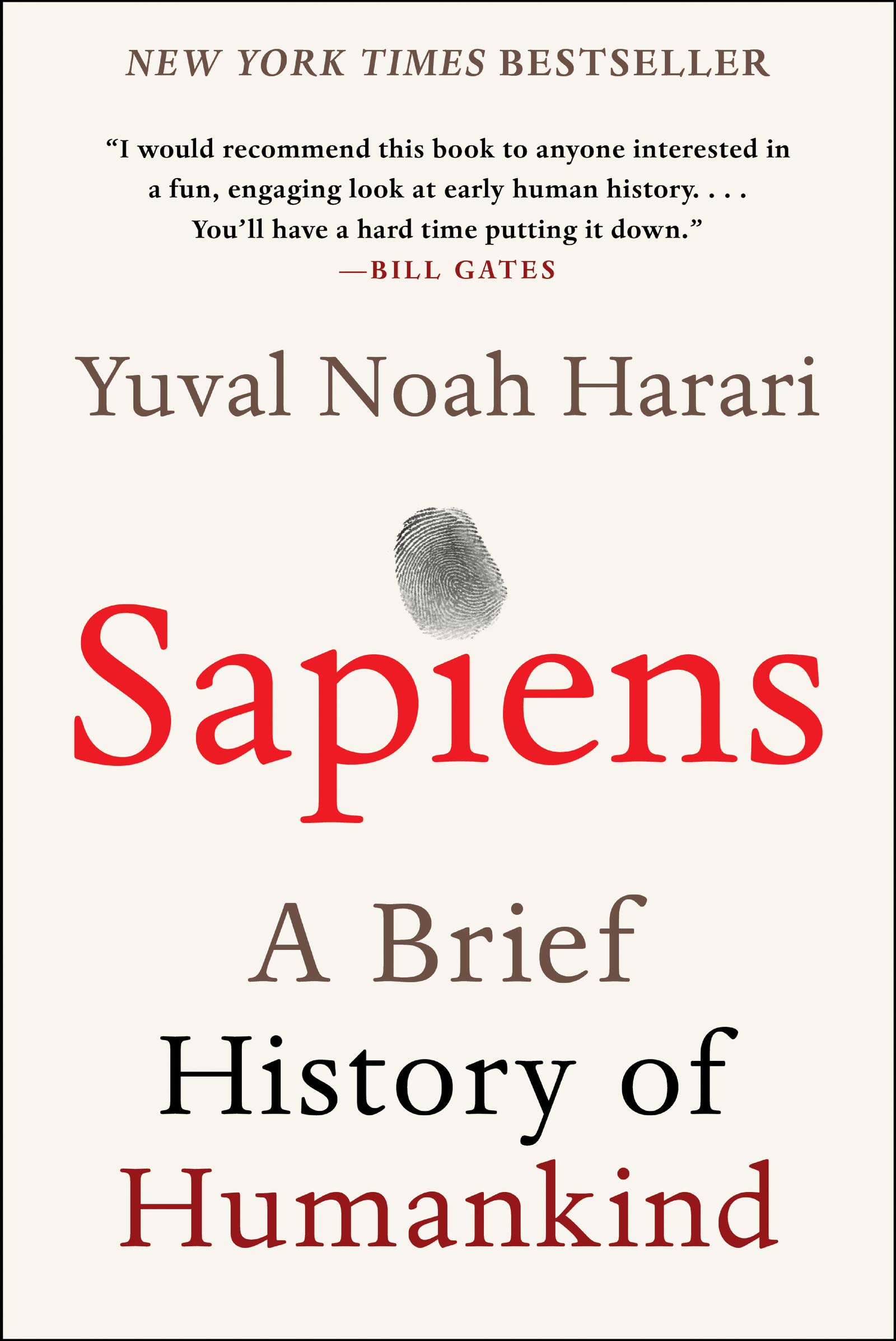
Sapiens: Chapters 14–16
Drawing on both historical and scientific research, this book traces the evolution of human beings over tens of thousands of years.
Here are links to our lists for the nonfiction text: Chapters 1–2, Chapters 3–4, Chapters 5–6, Chapters 7–8, Chapters 9–11, Chapters 12–13, Chapters 14–16, Chapter 17–Afterword
40 words
63 learners
Learn words with Flashcards and other activities
Definition First

Other learning activities
Full list of words from this list:
-
injunction
a formal command or admonitionModern science is based on the Latin injunction ignoramus—‘we do not know’. It assumes that we don’t know everything. Even more critically, it accepts that the things that we think we know could be proven wrong as we gain more knowledge.
-
vociferous
conspicuously and offensively loudIn other cases, competing scientific theories are vociferously debated on the basis of constantly emerging new evidence.
-
corollary
an inference following from the proof of another propositionTake a scientific theory, and in opposition to common scientific practices, declare that it is a final and absolute truth. This was the method used by Nazis (who claimed that their racial policies were the corollaries of biological facts) and Communists (who claimed that Marx and Lenin had divined absolute economic truths that could never be refuted).
-
actuarial
relating to statistics to calculate insurance premiumsProbability calculations such as those used by the two Scottish ministers became the foundation not merely of actuarial science, which is central to the pension and insurance business, but also of the science of demography (founded by another clergyman, the Anglican Robert Malthus).
-
demography
the study of the characteristics of human populationsProbability calculations such as those used by the two Scottish ministers became the foundation not merely of actuarial science, which is central to the pension and insurance business, but also of the science of demography (founded by another clergyman, the Anglican Robert Malthus).
-
redoubt
a refuge or strongholdJust give millions more to the nanotechnology industry, they believe, and the United States could send bionic spy-flies into every Afghan cave, Yemenite redoubt and North African encampment.
-
evince
give expression toThe situation began to change in the fifteenth and sixteenth centuries, but another 200 years went by before most rulers evinced any interest in financing the research and development of new weapons.
-
hubris
overbearing pride or presumptionMany faiths believed that some day a messiah would appear and end all wars, famines and even death itself. But the notion that humankind could do so by discovering new knowledge and inventing new tools was worse than ludicrous—it was hubris.
-
amenable
readily reacting to suggestions and influencesPoverty is increasingly seen as a technical problem amenable to intervention. It’s common wisdom that policies based on the latest findings in agronomy, economics, medicine and sociology can eliminate poverty.
-
spate
a large number or amount or extentPills, injections and sophisticated operations save us from a spate of illnesses and injuries that once dealt an inescapable death sentence.
-
jaundiced
affected by yellowing of the skinIt was a mysterious ailment called scurvy. Men who came down with the disease grew lethargic and depressed, and their gums and other soft tissues bled. As the disease progressed, their teeth fell out, open sores appeared and they grew feverish, jaundiced, and lost control of their limbs.
-
backwater
a place or condition in which no progress is occurringNot long before Cook’s expedition, the British Isles and western Europe in general were but distant backwaters of the Mediterranean world. Little of importance ever happened there.
-
bonanza
a sudden happening that brings good fortuneWhen the technological bonanza began, Europeans could harness it far better than anybody else.
-
bequeath
leave or give, especially by will after one's deathSo it is hardly coincidental that science and capitalism form the most important legacy that European imperialism has bequeathed the post-European world of the twenty-first century.
-
unscrupulous
without principlesFor the subjugated natives, these colonies were hell on earth. They were ruled with an iron fist by greedy and unscrupulous colonists who enslaved them and set them to work in mines and plantations, killing anyone who offered the slightest resistance.
-
virulence
extreme harmfulnessMost of the native population soon died, either because of the harsh working conditions or the virulence of the diseases that hitch-hiked to America on the conquerors’ sailing ships.
-
parochial
narrowly restricted in outlook or scopeThe native peoples of America were not the only ones to pay a heavy price for their parochial outlook.
-
foment
try to stir up...they should not be allowed to enter, lest they foment internal conflicts and corrode European democracy and liberalism.
-
impecunious
not having enough money to pay for necessitiesIn the meantime, Jane McDoughnut, an experienced but impecunious El Dorado chef, thinks she sees a business opportunity—there’s no really good bakery in her part of town. But she doesn’t have enough money of her own to buy a proper facility complete with industrial ovens, sinks, knives and pots.
-
despoil
plunder or steal goodsIn Smith’s story, people become rich not by despoiling their neighbours, but by increasing the overall size of the pie.
-
maxim
a saying that is widely accepted on its own meritsSmith therefore repeated like a mantra the maxim that ‘When profits increase, the landlord or weaver will employ more assistants’ and not ‘When profits increase, Scrooge will hoard his money in a chest and take it out only to count his coins.’
-
panache
distinctive and stylish eleganceIn comparison, modern CEOs don dreary uniforms called suits that afford them all the panache of a flock of crows, and they have little time for festivities.
-
proxy
a person authorized to act for anotherIts principal tenet is that economic growth is the supreme good, or at least a proxy for the supreme good, because justice, freedom and even happiness all depend on economic growth.
-
inculcate
teach and impress by frequent repetitions or admonitionsAsk a capitalist how to bring justice and political freedom to a place like Zimbabwe or Afghanistan, and you are likely to get a lecture on how economic affluence and a thriving middle class are essential for stable democratic institutions, and about the need therefore to inculcate Afghan tribesmen in the values of free enterprise, thrift and self-reliance.
-
stickler
someone who insists on somethingHow exactly did the Dutch win the trust of the financial system? Firstly, they were sticklers about repaying their loans on time and in full, making the extension of credit less risky for lenders.
-
lien
the right to take and hold the property of a debtorThe court in Madrid throws out your brother’s suit, while the court in Amsterdam finds in your favour and puts a lien on the clog-merchant’s assets to force him to pay up.
-
mainstay
a central cohesive source of support and stabilityCautious investors who would never have given their money to the king of Spain, and who would have thought twice before extending credit to the Dutch government, happily invested fortunes in the Dutch joint-stock companies that were the mainstay of the new empire.
-
potentate
a powerful ruler, especially one who is unconstrained by lawHowever, in order to secure their commercial interests and maximise the profits of the shareholders, VOC merchants began to fight against local potentates who charged inflated tariffs, as well as against European competitors.
-
complacency
the feeling you have when you are satisfied with yourselfAs the seventeenth century wound to an end, complacency and costly continental wars caused the Dutch to lose not only New York, but also their place as Europe’s financial and imperial engine.
-
stolid
having or revealing little emotion or sensibilityIn 1717 the lower Mississippi valley offered few attractions besides swamps and alligators, yet the Mississippi Company spread tales of fabulous riches and boundless opportunities. French aristocrats, businessmen and the stolid members of the urban bourgeoisie fell for these fantasies, and Mississippi share prices skyrocketed.
-
bourgeoisie
a socioeconomic group that is neither wealthy nor poorIn 1717 the lower Mississippi valley offered few attractions besides swamps and alligators, yet the Mississippi Company spread tales of fabulous riches and boundless opportunities. French aristocrats, businessmen and the stolid members of the urban bourgeoisie fell for these fantasies, and Mississippi share prices skyrocketed.
-
sundry
consisting of a haphazard assortment of different kindsIn the first half of the nineteenth century, the British East India Company and sundry British business people made fortunes by exporting drugs, particularly opium, to China.
-
abrogation
an official or legal cancellationIn 1881 Egyptian nationalists had had enough and rebelled. They declared a unilateral abrogation of all foreign debt. Queen Victoria was not amused.
-
protectorate
a state or territory partly controlled by a stronger stateA year later she dispatched her army and navy to the Nile and Egypt remained a British protectorate until after World War Two.
-
flotilla
a fleet of small craftThe bondholders’ interest was the national interest, so the British organised an international fleet that, in 1827, sank the main Ottoman flotilla in the Battle of Navarino.
-
endemic
native to or confined to a certain regionAn oil-rich country cursed with a despotic government, endemic warfare and a corrupt judicial system will usually receive a low credit rating.
-
sanction
the act of punishingIt is the job of political systems to ensure trust by legislating sanctions against cheats and to establish and support police forces, courts and jails which will enforce the law.
-
avaricious
immoderately desirous of acquiring somethingIn a completely free market, unsupervised by kings and priests, avaricious capitalists can establish monopolies or collude against their workforces.
-
aberration
a state or condition markedly different from the normIt is important to remember that the Atlantic slave trade was not a single aberration in an otherwise spotless record. The Great Bengal Famine, discussed in the previous chapter, was caused by a similar dynamic—the British East India Company cared more about its profits than about the lives of 10 million Bengalis.
-
abject
most unfortunate or miserableThe Industrial Revolution that swept through Europe enriched the bankers and capital-owners, but condemned millions of workers to a life of abject poverty.
Created on Mon Dec 23 18:11:51 EST 2019
(updated Fri Jan 31 09:12:09 EST 2020)
Sign up now (it’s free!)
Whether you’re a teacher or a learner,
Vocabulary.com can put you or your class
on the path to systematic vocabulary improvement.