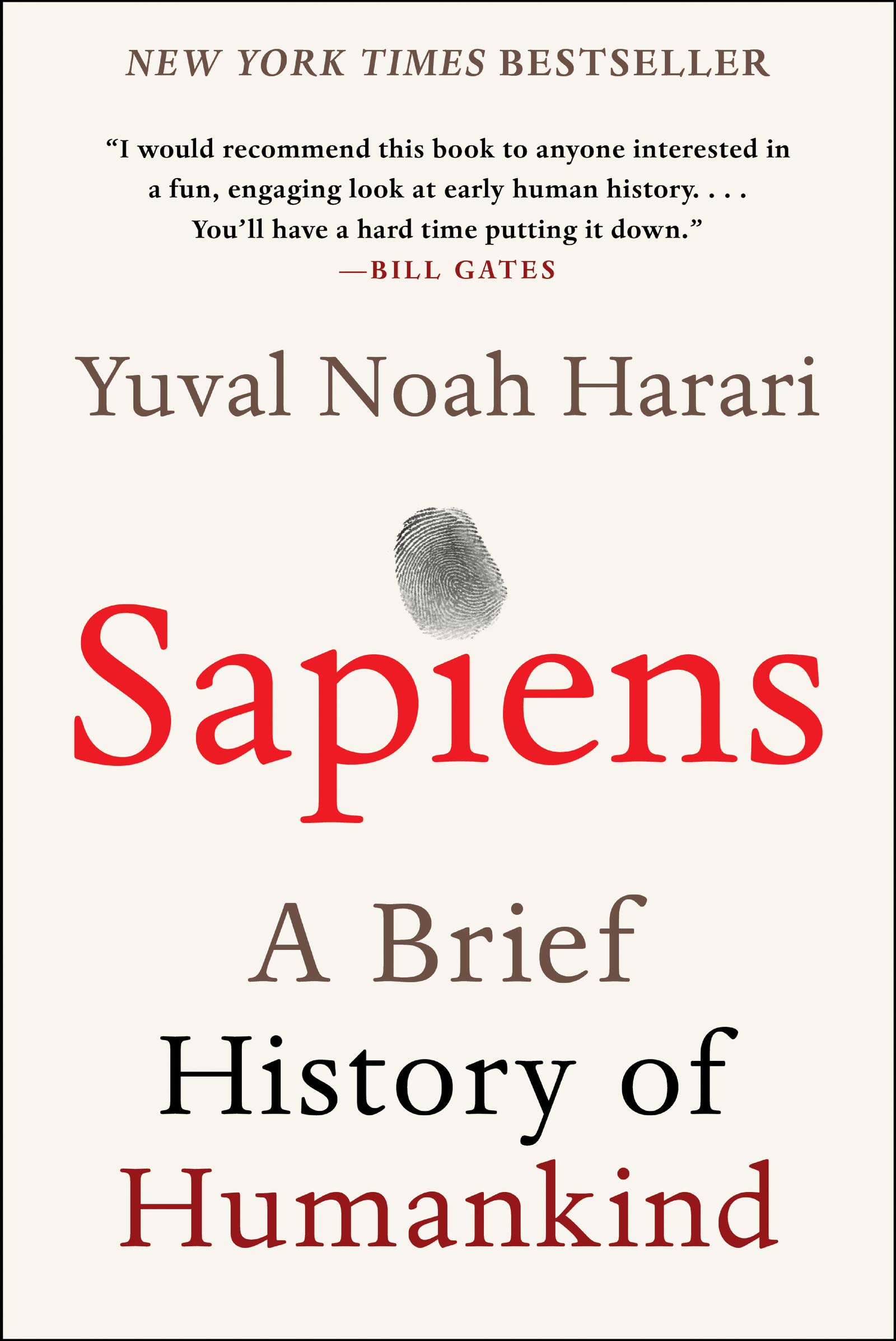
Sapiens: Chapters 7–8
Drawing on both historical and scientific research, this book traces the evolution of human beings over tens of thousands of years.
Here are links to our lists for the nonfiction text: Chapters 1–2, Chapters 3–4, Chapters 5–6, Chapters 7–8, Chapters 9–11, Chapters 12–13, Chapters 14–16, Chapter 17–Afterword
40 words
259 learners
Learn words with Flashcards and other activities
Definition First

Other learning activities
Full list of words from this list:
-
progeny
the immediate descendants of a personBecause the Sapiens social order is imagined, humans cannot preserve the critical information for running it simply by making copies of their DNA and passing these on to their progeny.
-
arrears
an unpaid overdue debtIn order to tax hundreds of thousands of people, it was imperative to collect data about people’s incomes and possessions; data about payments made; data about arrears, debts and fines; data about discounts and exemptions.
-
cuneiform
an ancient wedge-shaped script used in MesopotamiaBetween 3000 BC and 2500 BC more and more signs were added to the Sumerian system, gradually transforming it into a full script that we today call cuneiform.
-
exalt
raise in rank, character, or statusBy 2500 BC, kings were using cuneiform to issue decrees, priests were using it to record oracles, and less exalted citizens were using it to write personal letters.
-
ream
a large quantity of written matterYet writing’s most important task continued to be the storage of reams of mathematical data, and that task remained the prerogative of partial script.
-
inexorably
in a manner impervious to change or persuasionBut tax registries and complex bureaucracies were born together with partial script, and the two remain inexorably linked to this day like Siamese twins—think of the cryptic entries in computerised data bases and spreadsheets.
-
pedantic
marked by a narrow focus on or display of learningClearly, just imprinting a document in clay is not enough to guarantee efficient, accurate and convenient data processing. That requires methods of organisation like catalogues, methods of reproduction like photocopy machines, methods of rapid and accurate retrieval like computer algorithms, and pedantic (but hopefully cheerful) librarians who know how to use these tools.
-
rigorous
demanding strict attention to rules and proceduresThey obviously had no computers or photocopying machines, but they did have catalogues, and far more importantly, they did create special schools in which professional scribes, clerks, librarians and accountants were rigorously trained in the secrets of data-processing.
-
holistic
emphasizing the organic relation between parts and the wholeThe most important impact of script on human history is precisely this: it has gradually changed the way humans think and view the world. Free association and holistic thought have given way to compartmentalisation and bureaucracy.
-
indolence
inactivity resulting from a dislike of workNature, it was claimed, rewarded merit with wealth while penalising indolence.
-
disavow
refuse to acknowledgeYet it is an iron rule of history that every imagined hierarchy disavows its fictional origins and claims to be natural and inevitable.
-
ordained
fixed or established especially by commandHammurabi saw it as ordained by the gods.
-
innate
inborn or existing naturallyTheir status in society is merely a reflection of their innate nature.
-
patrician
a member of the aristocracyTime and again people have created order in their societies by classifying the population into imagined categories, such as superiors, commoners and slaves; whites and blacks; patricians and plebeians; Brahmins and Shudras; or rich and poor.
-
latent
potentially existing but not presently evident or realizedEven if somebody is born with a particular talent, that talent will usually remain latent if it is not fostered, honed and exercised.
-
acumen
shrewdness shown by keen insightIf, in British-ruled India, an Untouchable, a Brahmin, a Catholic Irishman and a Protestant Englishman had somehow developed exactly the same business acumen, they still would not have had the same chance of becoming rich.
-
vested
fixed and absolute and without contingencyIn most cases the hierarchy originated as the result of a set of accidental historical circumstances and was then perpetuated and refined over many generations as different groups developed vested interests in it.
-
surmise
infer from incomplete evidenceFor instance, many scholars surmise that the Hindu caste system took shape when Indo-Aryan people invaded the Indian subcontinent about 3,000 years ago, subjugating the local population.
-
forestall
keep from happening or arising; make impossibleThe invaders, who were few in number, feared losing their privileged status and unique identity. To forestall this danger, they divided the population into castes, each of which was required to pursue a specific occupation or perform a specific role in society.
-
buttress
make stronger or defensibleConcepts of purity and impurity were essential elements in Hindu religion, and they were harnessed to buttress the social pyramid.
-
pious
having or showing or expressing reverence for a deityPious Hindus were taught that contact with members of a different caste could pollute not only them personally, but society as a whole, and should therefore be abhorred.
-
abhor
feel hatred or disgust towardPious Hindus were taught that contact with members of a different caste could pollute not only them personally, but society as a whole, and should therefore be abhorred.
-
indenture
bind by a contract for work, as an apprentice or servantAfricans had acquired over the generations a partial genetic immunity to these diseases, whereas Europeans were totally defenceless and died in droves. It was consequently wiser for a plantation owner to invest his money in an African slave than in a European slave or indentured labourer.
-
expedient
serving to promote your interestBut people don’t like to say that they keep slaves of a certain race or origin simply because it’s economically expedient. Like the Aryan conquerors of India, white Europeans in the Americas wanted to be seen not only as economically successful but also as pious, just and objective.
-
stigma
a symbol of disgrace or infamyYou might think that people would gradually understand that these stigmas were myth rather than fact...
-
paucity
an insufficient quantity or numberTrapped in this vicious circle, blacks were not hired for white-collar jobs because they were deemed unintelligent, and the proof of their inferiority was the paucity of blacks in white-collar jobs.
-
substantiate
establish or strengthen as with new evidence or factsThese fears were substantiated by scientific studies...
-
perpetuation
the act of prolonging or causing to exist indefinitelyMost sociopolitical hierarchies lack a logical or biological basis—they are nothing but the perpetuation of chance events supported by myths.
-
auspicious
indicating favorable circumstances and good luckSome of the earliest Chinese texts are oracle bones, dating to 1200 BC, used to divine the future. On one was engraved the question: ‘Will Lady Hao’s childbearing be lucky?’ To which was written the reply: ‘If the child is born on a ding day, lucky; if on a geng day, vastly auspicious.’
-
morose
showing a brooding ill humorThe text ends with the morose observation: ‘Three weeks and one day later, on jiayin day, the child was born. Not lucky. It was a girl.’
-
discourse
an extended communication dealing with some particular topicWith few exceptions, such an individual could not benefit from a good education, nor engage in business or in philosophical discourse.
-
patriarchy
a form of social organization in which men hold powerPatriarchy has been the norm in almost all agricultural and industrial societies.
-
tenacious
stubbornly unyieldingIt has tenaciously weathered political upheavals, social revolutions and economic transformations.
-
clout
special advantage or influenceThis gives them control of food production, which in turn translates into political clout.
-
prerogative
a right reserved exclusively by a person or groupThis is why throughout history warfare has been a masculine prerogative.
-
plebeian
one of the common peopleHe didn’t think much of the plebeians under his command. ‘We have in the service the scum of the earth as common soldiers,’ he wrote to a fellow aristocrat during the wars against France.
-
appeasement
the act of acceding to demandsIn order to manage a war, you surely need stamina, but not much physical strength or aggressiveness. Wars are not a pub brawl. They are very complex projects that require an extraordinary degree of organisation, cooperation and appeasement.
-
stipulate
make an express demand or provision in an agreementIn order to ensure her own survival and the survival of her children, the woman had little choice but to agree to whatever conditions the man stipulated so that he would stick around and share some of the burden.
-
belie
be in contradiction withBut this approach also seems to be belied by the empirical evidence.
-
empirical
derived from experiment and observation rather than theoryBut this approach also seems to be belied by the empirical evidence.
Created on Mon Dec 23 18:09:45 EST 2019
(updated Thu Jan 30 15:39:45 EST 2020)
Sign up now (it’s free!)
Whether you’re a teacher or a learner,
Vocabulary.com can put you or your class
on the path to systematic vocabulary improvement.