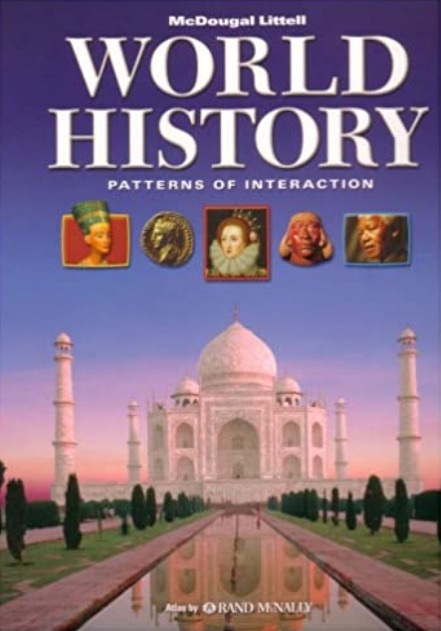
World History: Patterns of Interaction: Chapters 22–23
20 words
147 learners
Learn words with Flashcards and other activities
Definition First

Other learning activities
Full list of words from this list:
-
geocentric
having the earth in the middleThis earth-centered view of the universe was called the geocentric theory.
-
heliocentric
having the sun as or in the middleCopernicus’s heliocentric, or sun-centered, theory still did not completely explain why the planets orbited the way they did.
-
scientific method
a systematic way of investigating to test a hypothesisThe revolution in scientific thinking that Copernicus, Kepler, and Galileo began eventually developed into a new approach to science called the scientific method. The scientific method is a logical procedure for gathering and testing ideas.
-
enlightenment
education that results in the spread of knowledgeTheir efforts spurred the Enlightenment, a new intellectual movement that stressed reason and thought and the power of individuals to solve problems. Known also as the Age of Reason, the movement reached its height in the mid-1700s and brought great change to many aspects of Western civilization.
-
salon
a social gathering of intellectuals and eminent peopleThere, in their large drawing rooms, these hostesses held regular social gatherings called salons. At these events, philosophers, writers, artists, scientists, and other great intellects met to discuss ideas.
-
baroque
elaborate ornamentation in decorative art and architectureEuropean art of the 1600s and early 1700s had been
dominated by the style called baroque, which was characterized by a grand, ornate design. -
neoclassical
relating to a revival of ancient Greek and Roman stylesUnder the influence of the Enlightenment, styles began to change. Artists and architects worked in a simple and elegant style that borrowed ideas and themes from classical Greece and Rome. The artistic style of the late 1700s is therefore called neoclassical (“new classical”).
-
despot
a cruel and oppressive dictatorSome monarchs embraced the new ideas and made reforms that reflected the Enlightenment spirit. They became known as enlightened despots. Despot means “absolute ruler.”
-
federal
of a government with central and regional authoritiesAlthough the Constitution created a strong central government, it did not eliminate local governments. Instead, the Constitution set up a federal system in which power was divided between national and state governments.
-
estate
a major social class regarded as part of the body politicIn the 1770s, the social and political system of France—the Old Regime— remained in place. Under this system, the people of France were divided into three large social classes, or estates.
-
emigre
someone who leaves one country to settle in anotherÉmigrés, nobles and others who had fled France, hoped to undo the Revolution and restore the Old Regime.
-
guillotine
instrument of execution used for beheading peopleOn January 21, 1793, the former king walked with calm dignity up the steps of the scaffold to be beheaded by a machine called the guillotine.
-
coup d'etat
a sudden and decisive change of government by forceA sudden seizure of power like Napoleon’s is known as a coup—from the French phrase coup d’état, or “blow to the state.”
-
plebiscite
a vote determining public opinion on a questionIn 1800, a plebiscite, or vote of the people, was held to approve a new constitution.
-
lycee
a secondary school in which French is spokenHe dismissed corrupt officials and, in order to provide the government with trained officials, set up lycées, or government-run public schools.
-
concordat
a signed written agreement between two or more partiesResponding to their wishes, Napoleon signed a concordat, or agreement, with Pope Pius VII.
-
blockade
a war measure isolating an area of importance to the enemyIn November 1806, Napoleon set up a blockade—a
forcible closing of ports—to prevent all trade and communication between Great Britain and other European nations. -
guerrilla
a member of an irregular army that fights a stronger forceFor six years, bands of Spanish peasant fighters, known as guerrillas, struck at French armies in Spain. The guerrillas were not an army that Napoleon could defeat in open battle. Rather, they worked in small groups that ambushed French troops and then fled into hiding.
-
scorched-earth policy
the destruction of property and resources against enemy useOn this retreat, the Russians practiced a scorched-earth policy. This involved burning grain fields and slaughtering livestock so as to leave nothing for the enemy to eat.
-
legitimacy
lawfulness by virtue of being authorizedThe great powers affirmed the principle of legitimacy—agreeing that as many as possible of the rulers whom Napoleon had driven from their thrones be restored to power.
Created on Thu Aug 26 16:43:43 EDT 2021
(updated Mon Sep 27 09:43:28 EDT 2021)
Sign up now (it’s free!)
Whether you’re a teacher or a learner,
Vocabulary.com can put you or your class
on the path to systematic vocabulary improvement.