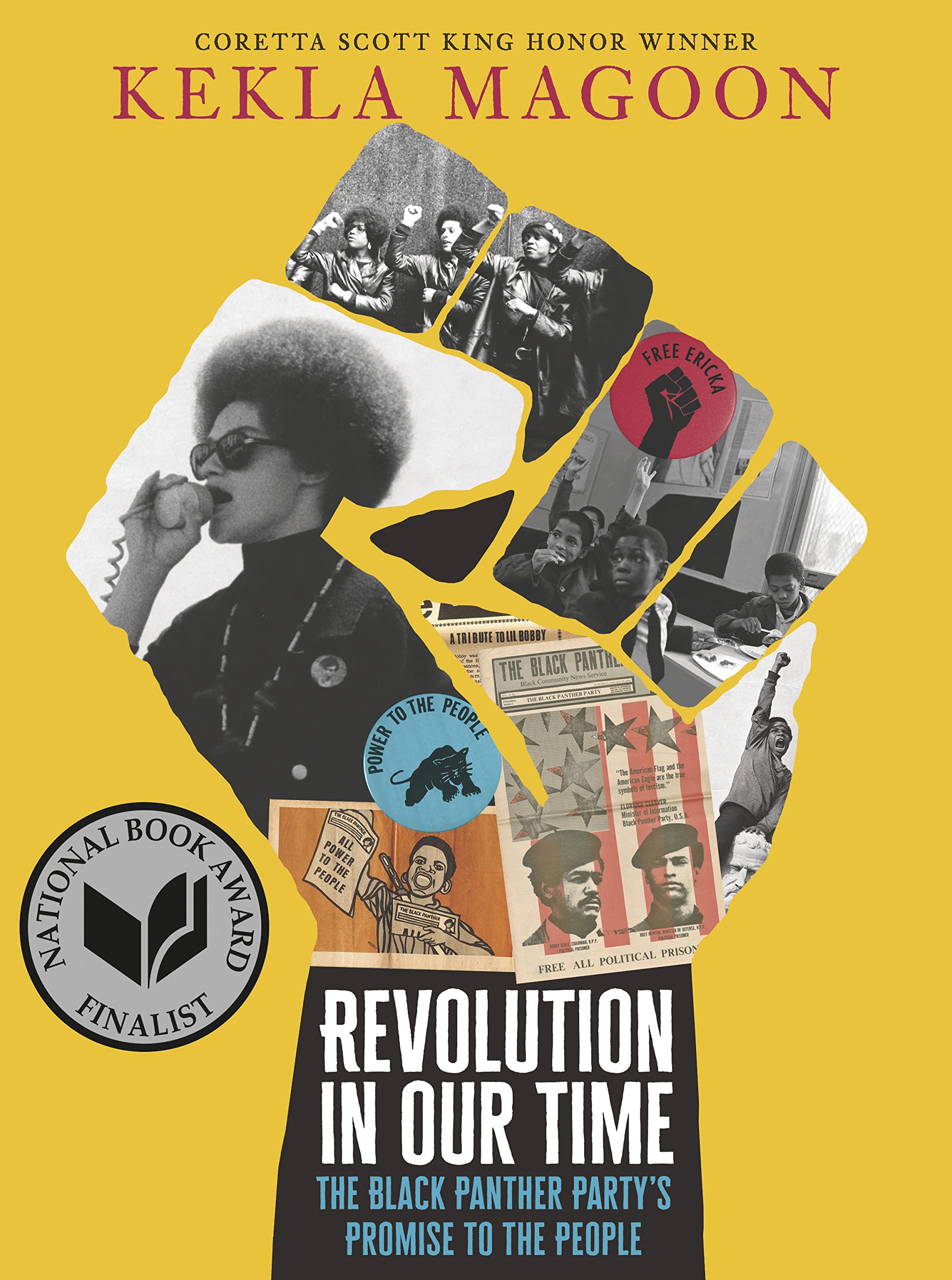
Revolution in Our Time: Chapters 4–5
This book explores the Black Panther Party's origins and the lasting impacts that the organization's community activism has had on America's ongoing fight for racial justice.
Here are links to our lists for the book: Chapters 1–3, Chapters 4–5, Chapters 6–10, Chapters 11–17, Chapters 18–21
30 words
293 learners
Learn words with Flashcards and other activities
Definition First

Other learning activities
Full list of words from this list:
-
grapple
work hard to come to terms with or deal with somethingBlack Americans grappled with the knowledge that their country would fight a dangerous and costly war to defend freedom and democracy worldwide, all the while denying full citizenship rights to many of its own people.
-
unanimous
in complete agreementThe court’s unanimous decision in Brown v. Board of Education of Topeka, Kansas, delivered on May 17, 1954, declared that “separate educational facilities are inherently unequal" and that schools must be integrated “with all deliberate speed.”
-
resonate
evoke or suggest a strong meaning or beliefClaudette’s story resonated with Black Montgomerians. Several other people tried similar protest tactics around the same time, but individuals lashing out against the system wasn’t enough to create systemic change.
-
impulsive
characterized by undue haste and lack of thoughtBut the emerging leaders of what would soon be known as the civil rights movement feared that someone like Claudette—an impulsive, now-pregnant teen girl—did not offer the right image.
-
figurehead
a leader in name only, without real power or authorityThey had begun to think about appearances, and NAACP leader Rosa Parks, a middle-aged seamstress, struck them as a better figurehead for their protest.
-
backlash
an adverse reaction to some political or social occurrenceThey monitored the major pickup and drop-off sites and made a point of pulling over and questioning Black drivers and passengers. As backlash increased, activists wondered: How long can Black Montgomerians keep up the struggle?
-
solidarity
a union of interests or purposes among members of a groupThe Montgomery Bus Boycott proved that Black people working in solidarity could change the system.
-
prominent
conspicuous in position or importanceA few short weeks later, on January 10, 1957, white supremacists tossed bombs into four Black churches—including Claudette Colvin’s church—and the homes of three prominent civil rights leaders.
-
leverage
provide with strategic advantageFounded in 1957 and led by the Rev. Dr. Martin Luther King Jr. along with other southern clergy, the SCLC leveraged the massive organizing potential of religious congregations.
-
sanction
give authority or permission toBut there is a deeper significance of the 101st Airborne patrolling Central High that often gets overlooked: this deployment was a U.S. government- sanctioned example of using the threat of force to repel racist violence.
-
hallmark
a distinctive characteristic or attributeNonviolent resistance became the hallmark of the civil rights movement.
-
epithet
a defamatory or abusive word or phraseTrainers would pull the trainees’ hair, throw things at them, shout racist epithets, and so on, to help prepare them to sit still through the onslaught that would come in real life.
-
oppressive
marked by unjust severity or arbitrary behaviorThe Freedom Riders weren’t even guilty of civil disobedience—the buses had been legally integrated. But not nearly enough was happening to change people’s hearts, minds, and behavior in the oppressive white South.
-
infraction
a violation of a law or ruleSome people argued that civil rights movement protestors were asking for trouble by participating in demonstrations that broke the law. Perhaps they deserved to be arrested, some suggested. In fact, that was part of the intent of the demonstrations—to show that segregation laws were unfairly punishing Black people for infractions as simple as sitting in the wrong seat.
-
disproportionate
not corresponding in size, extent, or degreeBut the way various laws were being enforced was disproportionate to the point of being inhumane.
-
reprisal
a retaliatory action against an enemyDid anyone deserve to have attack dogs sicced on them, simply for walking down the street—particularly in a nation that prided itself on each citizen’s right to speak freely in a public forum without fear of reprisal?
-
culmination
a concluding actionThe March on Washington for Jobs and Freedom, which took place on August 28, 1963, was the culmination of nearly a decade of organized protests, not to mention the previous centuries of struggle.
-
grievance
an allegation that something denies some legal rightThe march represented huge progress for Black Americans: this unprecedented opportunity to gather openly and express their grievances in the nation’s capital meant the world to them.
-
acquit
pronounce not guilty of criminal chargesAll-white juries acquitted him twice in 1964, but Medgar’s family fought for justice for decades, and Beckwith was finally convicted of the murder in 1994, in part because he had bragged about the killing to fellow Klan members over the years.
-
brunt
the main part, especially of a force or shockWhite supremacists planted dynamite beneath the steps of the church on a Sunday morning, and the girls were in a basement restroom that received the brunt of the blast.
-
provocation
unfriendly behavior that causes anger or resentmentPolice initiated violent and confrontational incidents all the time, often with no clear provocation beyond the skin color of their target.
-
manifest
reveal its presence or make an appearanceTheir fury and frustration, after being suppressed for many years, sometimes manifested in spontaneous protests.
-
subdue
put down by force or intimidationMany people believed Officer Gilligan should have been able to subdue the young suspect without resorting to firing his weapon.
-
emblematic
serving as a visible symbol for something abstractThese few days of uprising became emblematic of something deeper. Similar protests erupted in cities across the country in the months to follow.
-
rhetoric
using language effectively to please or persuadeMalcolm X’s inspiring vision, his powerful rhetoric, and his leadership skills made him a significant threat to the white establishment, to the civil rights movement, and even to the Nation of Islam itself, as he broke out on his own and began drawing followers.
-
altercation
a noisy, angry argument or fight between peopleThe furious onlookers, whose numbers had grown from dozens to hundreds to over a thousand during the course of the forty-minute altercation, began to rise up in the streets.
-
teem
be full of or abuzz withThe streets teemed with people releasing frustration and rage, taking it out on the buildings, cars, and people in their own community.
-
quell
suppress or crush completelyFinally, troops from the California National Guard were called in to help quell the violence.
-
faction
a dissenting cliqueAfter Malcolm X’s death, and in light of the never-ending violence against Black people, some frustrated factions of the civil rights struggle picked up the mantle of Black nationalism.
-
tamp
press down tightlyThey had tamped down their anger, their frustration for so long, in service to the grand idea of nonviolent protest that Dr. King and others had advocated for a decade or more.
Created on Fri Jan 07 13:44:57 EST 2022
(updated Thu Jan 13 09:23:02 EST 2022)
Sign up now (it’s free!)
Whether you’re a teacher or a learner,
Vocabulary.com can put you or your class
on the path to systematic vocabulary improvement.