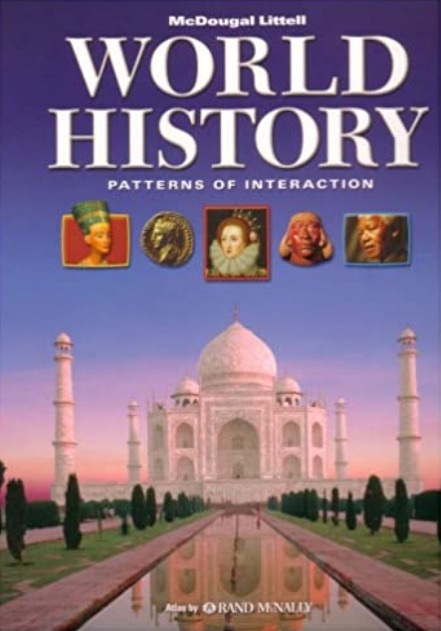
World History: Patterns of Interaction: Chapter 2
17 words
333 learners
Learn words with Flashcards and other activities
Definition First

Other learning activities
Full list of words from this list:
-
city-state
an independent nation comprised of a single townEach city and the surrounding land it controlled formed a city-state. A city-state functioned much as an independent country does today.
-
dynasty
a sequence of powerful leaders in the same familyIn time, some military leaders became full-time rulers. These rulers usually passed their power on to their sons, who eventually passed it on to their own heirs. Such a series of rulers from a single family is called a dynasty.
-
diffusion
spread of social institutions from one society to anotherSumerians exchanged products and ideas, such as living in cities, with neighboring cultures. This process in which a new idea or a product spreads from one culture to another is called cultural diffusion.
-
polytheism
belief in multiple godsThe belief in more than one god is called polytheism.
-
empire
a group of countries under a single authorityBy taking control of both northern and southern Mesopotamia, Sargon created the world’s first empire. An empire brings together several peoples, nations, or previously independent states under the control of one ruler.
-
delta
a low area of alluvial deposits where a river dividesTo the north, near the sea, Lower Egypt includes the Nile delta region.
-
pharaoh
an ancient Egyptian kingTo the Egyptians, kings were gods. The Egyptian god-kings, called pharaohs, were thought to be almost as splendid and powerful as the gods of the heavens.
-
theocracy
a political unit governed by a deityThis type of government in which rule is based on religious authority is called a theocracy.
-
pyramid
large monument with a square base and four triangular sidesFor the kings of the Old Kingdom, the resting place after death was an immense structure called a pyramid.
-
mummification
the act of embalming, drying, and wrapping a dead bodyRoyal and elite Egyptians’ bodies were preserved by mummification, which involves embalming and drying the corpse to prevent it from decaying.
-
hieroglyphic
a writing system using picture symbolsSimple pictographs were the earliest form of writing in Egypt, but scribes quickly developed a more flexible writing system called hieroglyphics. This term comes from the Greek words hieros and gluph, meaning “sacred carving.”
-
papyrus
tall sedge of the Nile valley yielding fiberAlthough hieroglyphs were first written on stone and clay, as in Mesopotamia, the Egyptians soon invented a better writing surface—papyrus reeds.
-
subcontinent
a large, distinct landmass that is part of a larger landmassGeographers often refer to the landmass that includes India, Pakistan, and Bangladesh as the Indian subcontinent.
-
monsoon
a seasonal wind in southern AsiaSeasonal winds called monsoons dominate India’s climate. From October to February, winter monsoons from the northeast blow dry air westward across the country.
-
loess
a fine accumulation of clay and silt deposited by the windThe Huang He, whose name means “yellow river,” deposits huge amounts of yellowish silt when it overflows its banks. This silt is actually fertile soil called loess, which is blown by the winds from deserts to the west and north.
-
oracle
an authoritative person who divines the futureShang kings consulted the gods through the use of oracle bones, animal bones and tortoise shells on which priests had scratched questions for the gods.
-
feudalism
the social system in which vassals were protected by lordsFeudalism is a political system in which nobles, or lords, are granted the use of lands that legally belong to the king.
Created on Thu Aug 26 16:06:57 EDT 2021
(updated Fri Sep 10 10:50:21 EDT 2021)
Sign up now (it’s free!)
Whether you’re a teacher or a learner,
Vocabulary.com can put you or your class
on the path to systematic vocabulary improvement.