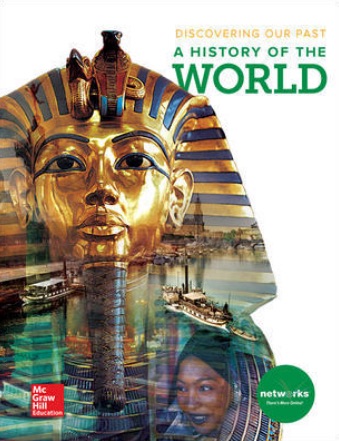
A History of the World: Chapter 20: Renaissance and Reformation
24 words
978 learners
Learn words with Flashcards and other activities
Definition First

Other learning activities
Full list of words from this list:
-
renaissance
a revival of learning and cultureTheir interest in learning and the arts was renewed. This new interest in culture is called the Renaissance, from the French word for "rebirth."
-
secular
not concerned with or devoted to religionDuring the Renaissance, most Europeans were still religious. However, they also began to value human efforts outside religion. As a result, people became more secular. That is, they became more interested in worldly ideas and events, not just religious ones.
-
urban
located in or characteristic of a city or city lifeThe population of Italy was becoming more urban. That is, more people were living in cities than in the country.
-
mercenary
serving for wages in a foreign armyA mercenary is a full-time soldier who fights in an army for money.
-
currency
the metal or paper medium of exchange that is presently usedAs goods poured into Italy from abroad, merchants had to determine the value of currency, or money, from different countries.
-
complex
complicated in structurePolitical affairs in Italy were complex, or complicated.
-
diplomacy
negotiation between nationsDiplomacy is the art of making agreements with other countries.
-
humanism
a doctrine emphasizing self-realization through reasonIn the 1300s and 1400s, European scholars developed a new way of understanding the world called humanism. It was based on ancient Greek and Roman ideas. Humanists, as these scholars were called, gave importance to the individual and to human society. They wanted to gain knowledge through reason, not just through religious faith.
-
range
a variety of different things or activitiesThe Canterbury Tales is a collection of stories told by pilgrims on a religious journey to the town of Canterbury, England. In this work, Chaucer portrayed the entire range of English society. His work shows both nobles at the top of society and the poor at the bottom.
-
perspective
appearance as determined by distance from the viewerThe most important was perspective, a way of showing people and things as they appear at different distances. Artists in the past had tried to use perspective, but Renaissance artists such as Leonardo da Vinci perfected it. Perspective, as used by these artists, gave paintings a realistic, three-dimensional look.
-
rouse
cause to be agitated or excitedThis day is called the feast of Crispian:
He that outlives this day, and comes safe home,
Will stand a tip-toe when the day is named,
And rouse him at the name of Crispian. -
vigil
the rite of staying awake for devotional purposesHe that shall live this day, and see old age,
Will yearly on the vigil feast his neighbors -
feat
a notable achievementBut he'll remember with advantages
What feats he did that day: then shall our names. -
vile
morally reprehensibleFor he to-day that sheds his blood with me
Shall be my brother; be he ne'er so vile,
This day shall gentle his condition -
accursed
under or as if under an evil spellAnd gentlemen in England now a-bed
Shall think themselves accursed they were not here -
reformation
improvement in the condition of institutions or practicesAt first, Luther only wanted to reform the Catholic Church. This is why these events are called the Reformation.
-
indulgence
remission by the pope of temporal punishment in purgatoryAn indulgence was a certificate issued by the Church. The certificate granted a pardon for a person's sins. Church members who performed "good works," such as giving money to build a church, could receive this pardon.
-
impose
charge and collect paymentRulers could impose their own church taxes and keep the money for themselves.
-
predestination
the doctrine that God has foreordained every eventCalvin's main idea was that God decides the final outcome of all events in the universe. Therefore, God has already chosen who will go to heaven and who will not. This belief is called predestination.
-
annul
declare invalidHenry asked the pope to annul, or declare invalid, his marriage to Catherine so that he could marry Anne.
-
restore
bring back into original existence, function, or positionAs queen, Mary restored the Catholic Church in England and arrested Protestants who opposed her.
-
seminary
a school for training ministers or priests or rabbisA seminary is a special school for training and educating priests.
-
heresy
a belief that rejects the orthodox tenets of a religionThe Spanish Inquisition was a religious court. It was similar to the one that the Catholic Church had set up earlier in Europe to root out heresy, or beliefs that opposed Church teaching.
-
unify
bring together for a common purpose or actionEuropean monarchs had used religion to help unify, or unite, their people and to build powerful nations.
Created on Thu Jun 17 10:27:36 EDT 2021
(updated Tue Jun 22 08:40:49 EDT 2021)
Sign up now (it’s free!)
Whether you’re a teacher or a learner,
Vocabulary.com can put you or your class
on the path to systematic vocabulary improvement.