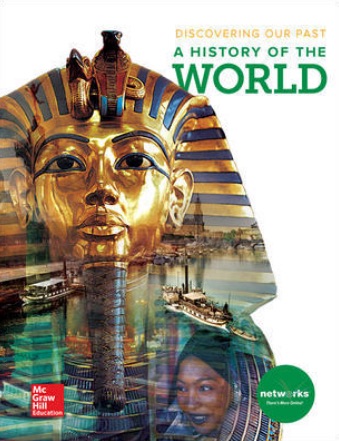
A History of the World: Chapter 13: The Rise of Christianity
23 words
158 learners
Learn words with Flashcards and other activities
Definition First

Other learning activities
Full list of words from this list:
-
create
bring into existenceJesus preached that God created all people and loved them the way a father loves his children.
-
parable
a short moral storyHe often preached using parables. These were stories about things his listeners could understand, using events from everyday life.
-
interpret
give an explanation toThey helped people interpret, or explain, the ideas Jesus taught.
-
resurrect
return from the deadThe message of Jesus' resurrection, or rising from the dead, led to the birth of Christianity.
-
apostle
an ardent early supporter of a cause or reformThe early Christian leaders who spread the message of Jesus were called apostles.
-
salvation
the act of delivering from sin or saving from evilBy becoming Christians and by accepting Jesus and his teachings, people could gain salvation. They would be saved from their sins, or wrongdoings, and allowed to enter heaven.
-
region
a large indefinite location on the surface of the EarthWell-constructed roads meant Christians could easily travel from one region to another.
-
community
a group of people living in a particular local areaChristians lived in communities where each member was responsible for taking care of the needs of others.
-
martyr
one who suffers for the sake of principleSome Christians became martyrs, or people who were willing to die rather than give up their beliefs.
-
military
associated with members of the armed servicesIn A.D. 312, the Roman emperor Constantine prepared to lead his military forces into battle.
-
hierarchy
organization of different ranks in an administrative bodyLike the empire, the church came to be ruled by a hierarchy. A hierarchy is an organization with different levels of authority.
-
clergy
the entire class of religious officialsThe clergy, or church officials, were the leaders of the church.
-
laity
members of a religious community who are not clergyThe role of the clergy was different from that of the laity, or regular church members.
-
doctrine
a belief accepted as authoritative by some group or schoolThe decisions they reached at these councils were accepted as doctrine, or official church teaching.
-
gospel
the written body of teachings accepted by a religious groupEach account was called a gospel, which means "good news." Christians later included the four gospels with the writings of Paul and other early Christian leaders. Together, these works became known as the New Testament.
-
pope
the head of the Roman Catholic ChurchBy A.D. 600, the bishop of Rome was called by a special title—pope. The title is from a Latin word, papa, related to the word pater, meaning "father."
-
icon
a conventional religious painting in oil on a small panelIn the A.D. 700s, a heated dispute about icons divided the Eastern Orthodox Church. Icons are paintings of Jesus, Mary (the mother of Jesus), and the saints, or Christian holy people.
-
display
make visible or apparentMany Byzantines displayed icons in their homes.
-
iconoclast
a destroyer of images used in religious worshipIn A.D. 726, Emperor Leo III ordered that all icons be removed from the churches. Government officials who carried out his orders were called iconoclasts, or image breakers. Today, this word refers to someone who criticizes traditional beliefs or practices.
-
reject
refuse to accept or acknowledgeThe Byzantines rejected the claim of the pope. They believed the patriarch of Constantinople and other bishops were equal to the pope.
-
excommunicate
expel from a church or a religious communityFinally, in A.D. 1054, after centuries of bitterness, the patriarch of Constantinople and the pope excommunicated each other. To excommunicate means to declare that a person or group no longer belongs to the church.
-
schism
the formal separation of a church into two churchesThis created a schism, or separation, between the two major churches of Christianity. The split between the Eastern Orthodox Church and the Roman Catholic Church still exists today.
-
monastery
the residence of a religious communityDuring the A.D. 300s, devout Christians in the Eastern Roman Empire formed religious communities called monasteries. In the monasteries, men called monks lived apart from the world.
Created on Thu Jun 17 10:13:24 EDT 2021
(updated Tue Jun 22 08:47:41 EDT 2021)
Sign up now (it’s free!)
Whether you’re a teacher or a learner,
Vocabulary.com can put you or your class
on the path to systematic vocabulary improvement.