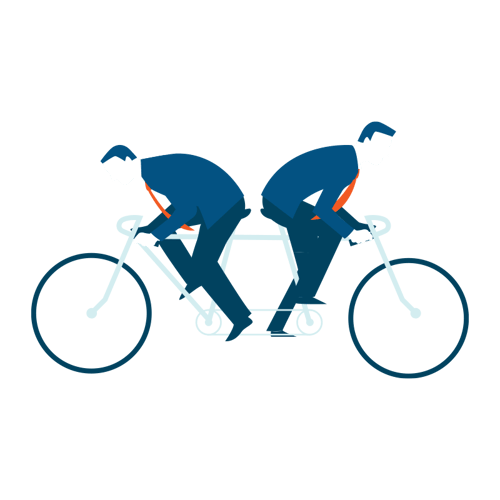
On the Contrary: Don't Distress: Words With Irregular Opposites
Up, down, left, right: many words have easy opposites that we all know. Or sometimes we just add un-, anti-, or dis- in front of a word and that takes care of it. But what about words that don't follow the rules? Check out this list and see how many you know!
10 words
16529 learners
Learn words with Flashcards and other activities
Definition First

Other learning activities
Full list of words from this list:
-
ambidextrous
equally skillful with each handAlcott would write feverishly, locked in a room — she taught herself to be ambidextrous when her hand got tired — and was known for losing her temper. New York Times (Jan 2, 2020)Our word dexterity comes from the Latin dexter, meaning "right." Ambidextrous literally means "two right hands," meaning someone is equally skilled with both. Ambilevous, using laevus, "left," means "equally clumsy with both hands."
-
anonymous
having no known name or identity or known sourceIn June, a wedding planner in Arkansas who wished to remain anonymous to protect her business predicted weddings would become the next super-spreader events. New York Times (Aug 4, 2020)Anonymous is Greek for "without a name." If you remove the prefix a- from it, which is the "without" part, you get onymous, its opposite.
-
catastrophe
a sudden violent change in the earth's surfaceThe media gets obsessed with the prospect of passing a bill, any bill, and neglects the question of whether the bill actually does something to relieve the economic catastrophe caused by the pandemic. Salon (Aug 10, 2020)A catastrophe is a disaster, like a massive earthquake. It comes from the Greek katastrophe, meaning "overturning." J.R.R. Tolkien, who wrote the epic fantasy series The Lord of the Rings, coined the term eucatastrophe, basically meaning "happy ending," by simply adding the Greek prefix eu-, meaning "good or well," to catastrophe.
-
deja vu
the experience of thinking a new situation already occurredIt's deja vu here at Sandbanks - another scorching Friday, another packed beach. BBC (Aug 7, 2020)Déjà vu means "already seen" in French. It's the term for that feeling of having seen something before, even when it's happening in front of your eyes. Its opposite, jamais vu, means "never seen." It describes a situation in which you don't recognize something or someone you know well.
-
distress
a state of adversityFire and Emergency Medical Services, said a person aboard the boat broadcast a distress signal on a maritime radio frequency when the three men went overboard. Washington Post (Aug 7, 2020)Distress comes from the Latin verb distringere, meaning "to pull apart." Eustress uses the Greek prefix eu- to add "good" to the beginning. It's used in psychology to describe positive stress: an invigorating challenge that can improve your mood and mental health.
-
diurnal
having a daily cycle or occurring every dayAuthorities say coatimundi are social animals and unlike their cousins the ringtail and the raccoon, are diurnal, which means they are active during the day. Washington Times (Apr 19, 2020)See nocturnal, below.
-
indent
set in from the marginTry indenting lines or creating extra white space in or around your words and lines for a visual effect. New York Times (Jun 7, 2020)You probably know that you hit the tab key to indent the text you're typing. What's the opposite? This one's easy: it's outdent!
-
nocturnal
belonging to or active during the nightThe small nocturnal mammal, which is about the size of a raccoon, was last seen nearby in her Asia Quest habitat on Tuesday evening. Washington Times (Jul 24, 2020)Nox is Latin for "night," and that's the root of nocturnal. Its opposite is built on dies, meaning "day," specifically the word diurnalis, "daily," so diurnal is the opposite of nocturnal.
-
optimum
most desirable possible under a restrictionFor Mouratoglou, the keys for Williams to break her streak in New York are optimum fitness, quality matches in the lead-up and the right mental approach, likely a new mental approach. New York Times (Aug 7, 2020)Optimus means "best" in Latin, so optimum means "ideal" or "best possible." If you know that the opposite of optimist is pessimist, then you might be able to guess that the opposite of optimum is pessimum: the worst possible performance or outcome.
-
placebo
an innocuous or inert medicationLater clinical trials are larger and measure a vaccine's effectiveness by comparing the outcomes of volunteers who receive the vaccine with those of people given a placebo. Salon (Aug 10, 2020)Placebo is Latin for "I shall please," which is a cute name for a sugar pill with no medical benefit given to some participants in a drug study where other patients get the real drug but none of them know which is which. Its opposite, nocebo, which is a recent coinage and rarely sees use, means "I shall harm."
Created on Mon Jul 06 11:53:54 EDT 2020
(updated Tue Aug 18 13:00:03 EDT 2020)
Sign up now (it’s free!)
Whether you’re a teacher or a learner,
Vocabulary.com can put you or your class
on the path to systematic vocabulary improvement.