Vocabulary.com Blog
Articles about Words
 Language authority Charles Harrington Elster is the "Grandiloquent Gumshoe," a word sleuth who gives no quarter to pompous usage and other tomfoolery. The author of The Big Book of Beastly Mispronunciations and What in the Word?, Charles is also a seasoned radio commentator and, as he says, "a fellow woolgatherer in the world of words." We had a lively discussion with him about language, usage -- and where he draws the line.
Continue reading...
Language authority Charles Harrington Elster is the "Grandiloquent Gumshoe," a word sleuth who gives no quarter to pompous usage and other tomfoolery. The author of The Big Book of Beastly Mispronunciations and What in the Word?, Charles is also a seasoned radio commentator and, as he says, "a fellow woolgatherer in the world of words." We had a lively discussion with him about language, usage -- and where he draws the line.
Continue reading...
 Fancy yourself a fashionista? Check out this fashion word list compiled by Jennifer Smith, former New York fashion designer now copywriter/PR pro for Deuce Creative. You'll be surprised by some of Seventh Avenue's parts of speech. Read on to sharpen your divaspeak...
Look. (noun) "Complete outfit, ensemble from head to toe including accessories and shoes. The number of outfits you send down the runway is equivalent to the number of looks in a fashion show."
Fitting. (noun) "Review of garments on a live model. Fit, proportion, make and details assessed. Changes are made to garments and patterns based on notes from a fitting."
Tchotchke. (noun) (from Yiddish) "Extraneous detail or treatment on a garment, often used negatively. An excess of novelty is often referred to as tchochke. Example: 'The dress appeared fussy, covered in ruffled tchochke.'"
Continue reading...
Designing clothes isn't just a leisurely prance down the catwalk: It's art and industry with its very own, often technical, language. The words themselves may seem familiar to us non-designers, but the meanings are anything but. We called New York fashion designer Mary Ping to help us decipher this particular tongue. ( The dress on the left is from a recent collection.)
Grain "Refers to the direction of the threads of a fabric. When fabric is woven you have a warp and a weft. The warp are yarns that run parallel to the loom, the weft are yarns that run perpendicular."
Shuttle "A tool on a loom to pass yarn through warp to form the weft."
Bias "The diagonal direction of yarn. You have yarns running vertically, yarns running horizontally -- the warp and the weft -- and the bias is the 45 degree angle between those two. It gives fabric a natural stretch. When people refer to a "bias-cut dress" it means the entire fabric is placed on the biased grain, or direction. So the dress has a tendency to cling to your body more, because it's stretching out more."
Continue reading...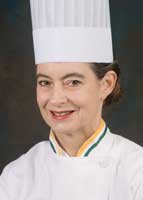
Want to know every top chef's secret ingredient? The right food terms! We called Chef Eve Felder, associate dean of the Culinary Institute of America, to ask her about words to cook by:
Bind. "When you bring two disparate ingredients together. You might bind through the emulsification of fat and meat. For example, if I were making sausage, I may add an egg as an additional binding agent to hold the ground meat together."
Devil. "It means adding spicy ingredients to food, from the French word for devil, diable. In America, we think of deviled eggs and deviled ham. It may have a spice component but we've mostly gotten away from that."
Grease. "A verb, as in to grease a pan. You would use paper towel or a gloved hand to grease a sheet tray or a cake pan with butter or oil."
Continue reading...Sign up now (it’s free!)
Whether you’re a teacher or a learner,
Vocabulary.com can put you or your class
on the path to systematic vocabulary improvement.