Vocabulary.com Blog
Articles about Language
English is not long on productive verb-creating affixes — things you can tack onto or tuck into words at will to make entirely new verbs and get away with it — so it's worth celebrating one of the few that have a proven track record: the suffix -ize. -Ize allows you to neologize when the occasion calls for it, in a way that very few other English affixes do.
Continue reading...
In the Sunday Review section of the New York Times, I took a look at how forensic linguists try to determine the author of an e-mail by picking up on subtle clues of style and grammar. This is very much in the news, thanks to a lawsuit filed against Facebook founder Mark Zuckerberg by one Paul Ceglia, who claims that Zuckerberg promised him half of Facebook's holdings, as proven by e-mail exchanges he says they had. Did Zuckerberg actually write the e-mails? Call the language detectives.
Continue reading...
 Two weeks ago, the British writer Matthew Engel set off a trans-Atlantic ruckus by writing an opinion piece for the BBC online magazine entitled, "Why Do Some Americanisms Irritate People?" Engel's piece, along with a followup of reader peeves, attracted the attention of American language watchers. Lexicographer Grant Barrett had some pointed criticisms for Engel, which the BBC ran in diluted fashion. Here we present Barrett's unexpurgated response to Engel.
Continue reading...
Two weeks ago, the British writer Matthew Engel set off a trans-Atlantic ruckus by writing an opinion piece for the BBC online magazine entitled, "Why Do Some Americanisms Irritate People?" Engel's piece, along with a followup of reader peeves, attracted the attention of American language watchers. Lexicographer Grant Barrett had some pointed criticisms for Engel, which the BBC ran in diluted fashion. Here we present Barrett's unexpurgated response to Engel.
Continue reading...
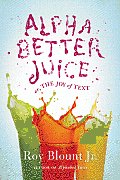 In 2009, we had the pleasure of speaking with Roy Blount, Jr. on the occasion of the publication of Alphabet Juice, a compilation of his linguistic musings presented in dictionary style. Now he's back with the sequel, titled, naturally, Alphabetter Juice. Blount's wit is just as sharp in this followup, which he subtitles "The Joy of Text." Here are a few choice excerpts from the letter A.
Continue reading...
In 2009, we had the pleasure of speaking with Roy Blount, Jr. on the occasion of the publication of Alphabet Juice, a compilation of his linguistic musings presented in dictionary style. Now he's back with the sequel, titled, naturally, Alphabetter Juice. Blount's wit is just as sharp in this followup, which he subtitles "The Joy of Text." Here are a few choice excerpts from the letter A.
Continue reading...
 When people talk about whether a word is "in the dictionary," have you stopped to think about what "the dictionary" actually means? In the following excerpt from her new book How to Read a Word, Elizabeth Knowles takes readers on a brief tour of the dictionary and its historical authority, informed by the likes of Voltaire and Samuel Johnson.
Continue reading...
When people talk about whether a word is "in the dictionary," have you stopped to think about what "the dictionary" actually means? In the following excerpt from her new book How to Read a Word, Elizabeth Knowles takes readers on a brief tour of the dictionary and its historical authority, informed by the likes of Voltaire and Samuel Johnson.
Continue reading...
The BBC Magazine ran a piece by Matthew Engel last week entitled, "Why do some Americanisms irritate people?" The Beeb then asked its readers to single out the American expressions they most despise, and in a followup gathered the top 50 peeves. The reader query generated a huge response -- 1,295 comments were posted before the BBC closed down the comment section -- but the most entertaining and incisive reactions came from language bloggers.
Continue reading...
With the final Harry Potter movie opening this weekend, many are reflecting on the last legacy of J.K. Rowling's oeuvre. In print and on screen, the Harry Potter franchise has been incredibly successful, and it's only natural that such a mass phenomenon would leave its imprint on popular culture, including the popular lexicon. Rowling's inventive use of language has been a key to conjuring the fantasy world of the Potterverse, and that language has seeped into real-world usage as well.
Continue reading...
Sign up now (it’s free!)
Whether you’re a teacher or a learner,
Vocabulary.com can put you or your class
on the path to systematic vocabulary improvement.