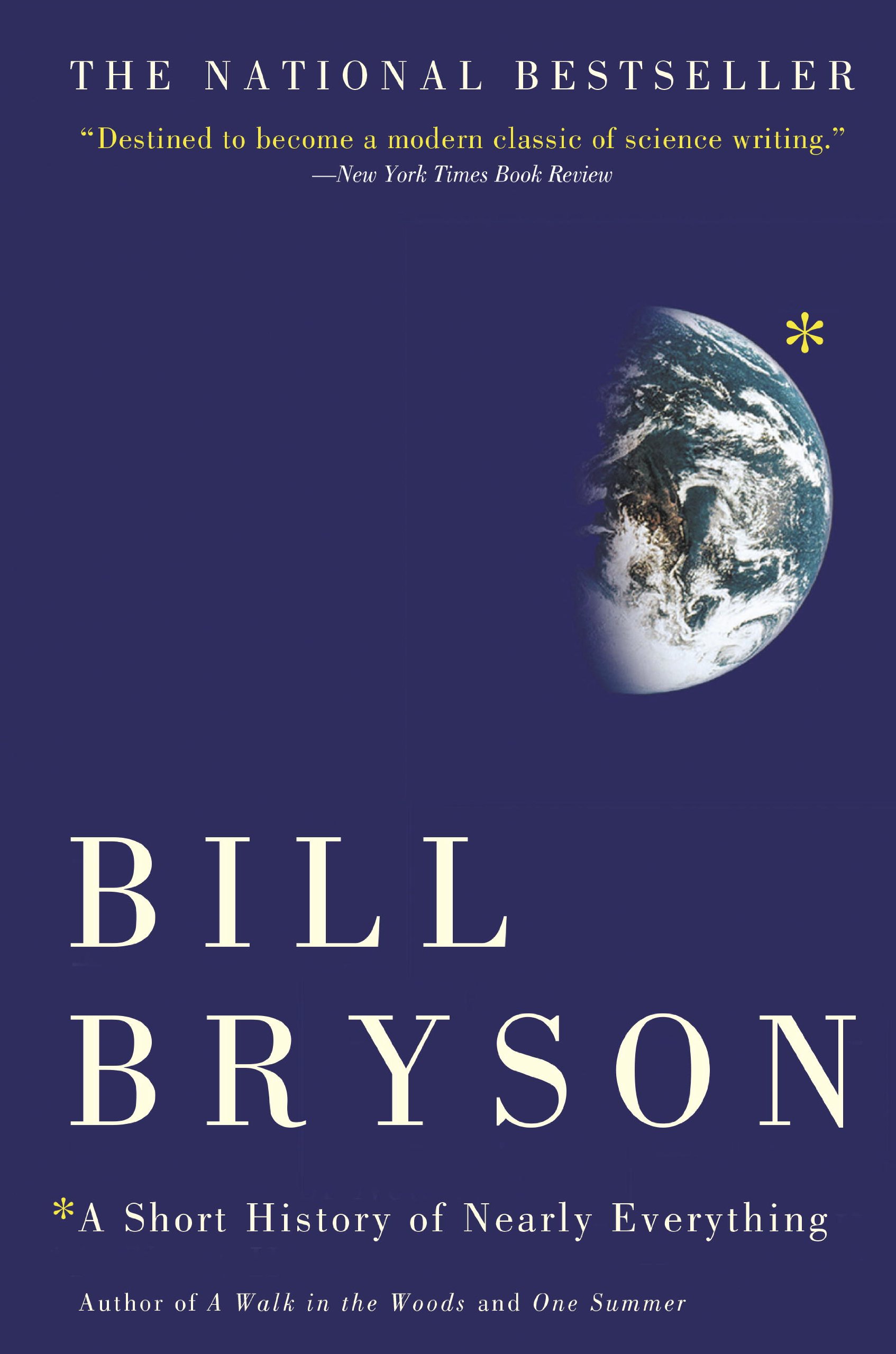
A Short History of Nearly Everything: Part II
In this engaging work of nonfiction, Bill Bryson explores profound questions about the origins of the universe, the development of life on Earth, and modern civilization.
Here are links to our lists for the book: Introduction–Part I, Part II, Part III, Part IV, Part V, Part VI
15 words
180 learners
Learn words with Flashcards and other activities
Definition First

Other learning activities
Full list of words from this list:
-
alchemy
a pseudoscientific forerunner of chemistry in medieval timesFor all his brilliance, real science accounted for only a part of his interests. At least half his working life was given over to alchemy and wayward religious pursuits.
-
plaudit
enthusiastic approvalIt made Newton instantly famous. For the rest of his life he would be draped with plaudits and honors, becoming, among much else, the first person in Britain knighted for scientific achievement.
-
predicate
involve as a necessary condition or consequenceThis was a great source of pride for the French, but it was predicated on the assumption that the Earth was a perfect sphere--which Newton now said it was not.
-
behest
an authoritative command or requestWe know that in 1772, at Maskelyne’s behest he accepted the commission to find a suitable mountain for the gravitational deflection experiment
-
metaphysics
the philosophical study of being and knowingIn the tradition of the day, Hutton took an interest in nearly everything, from mineralogy to metaphysics.
-
pecuniary
relating to or involving moneyThese weren’t people with a pecuniary interest in minerals, you understand, or even academics for the most part, but simply gentlemen with the wealth and time to indulge a hobby at a more or less professional level.
-
exegesis
an explanation or critical interpretation"No geologist of any nationality whose work was taken seriously by other geologists advocated a timescale confined within the limits of a literalistic exegesis of Genesis."
-
paleontology
the earth science that studies fossil organismsIn 1795 a selection of bones made their way to Paris, where they were examined by the rising star of paleontology, the youthful and aristocratic Georges Cuvier.
-
eponym
the person for whom something is namedIt was the Megalosaurus, and the name was actually suggested to Buckland by his friend Dr. James Parkinson, the would-be radical and eponym for Parkinson’s disease.
-
paucity
an insufficient quantity or numberAnother, more excusable error (given the paucity of specimens at the time) was that dinosaurs constitute not one but two orders of reptiles: the bird-hipped ornithischians and the lizard-hipped saurischians.
-
expunge
remove by erasing or crossing out or as if by drawing a lineCapitalizing on Mantell’s enfeebled state, Owen set about systematically expunging Mantell’s contributions from the record, renaming species that Mantell had named years before and claiming credit for their discovery for himself.
-
recondite
difficult to understandBy various recondite processes, he converted the urine first into a noxious paste and then into a translucent warty substance.
-
vitiate
make imperfectRight up to the closing years of the eighteenth century (and in Priestley's case a little beyond) scientists everywhere searched for, and sometimes believed they had actually found, things that just weren’t there: vitiated airs, dephlogisticated marine acids, phloxes, calxes, terraqueous exhalations, and, above all, phlogiston, the substance that was thought to be the active agent in combustion.
-
mephitic
of noxious stench from atmospheric pollutionHe threw out phlogiston and mephitic airs.
-
pragmatist
an adherent of a theory of observable practical consequencesEver the pragmatist Rutherford was the first to see that there could be a valuable practical application in this.
Created on Tue Feb 21 19:46:03 EST 2017
(updated Tue Jul 01 12:15:46 EDT 2025)
Sign up now (it’s free!)
Whether you’re a teacher or a learner,
Vocabulary.com can put you or your class
on the path to systematic vocabulary improvement.