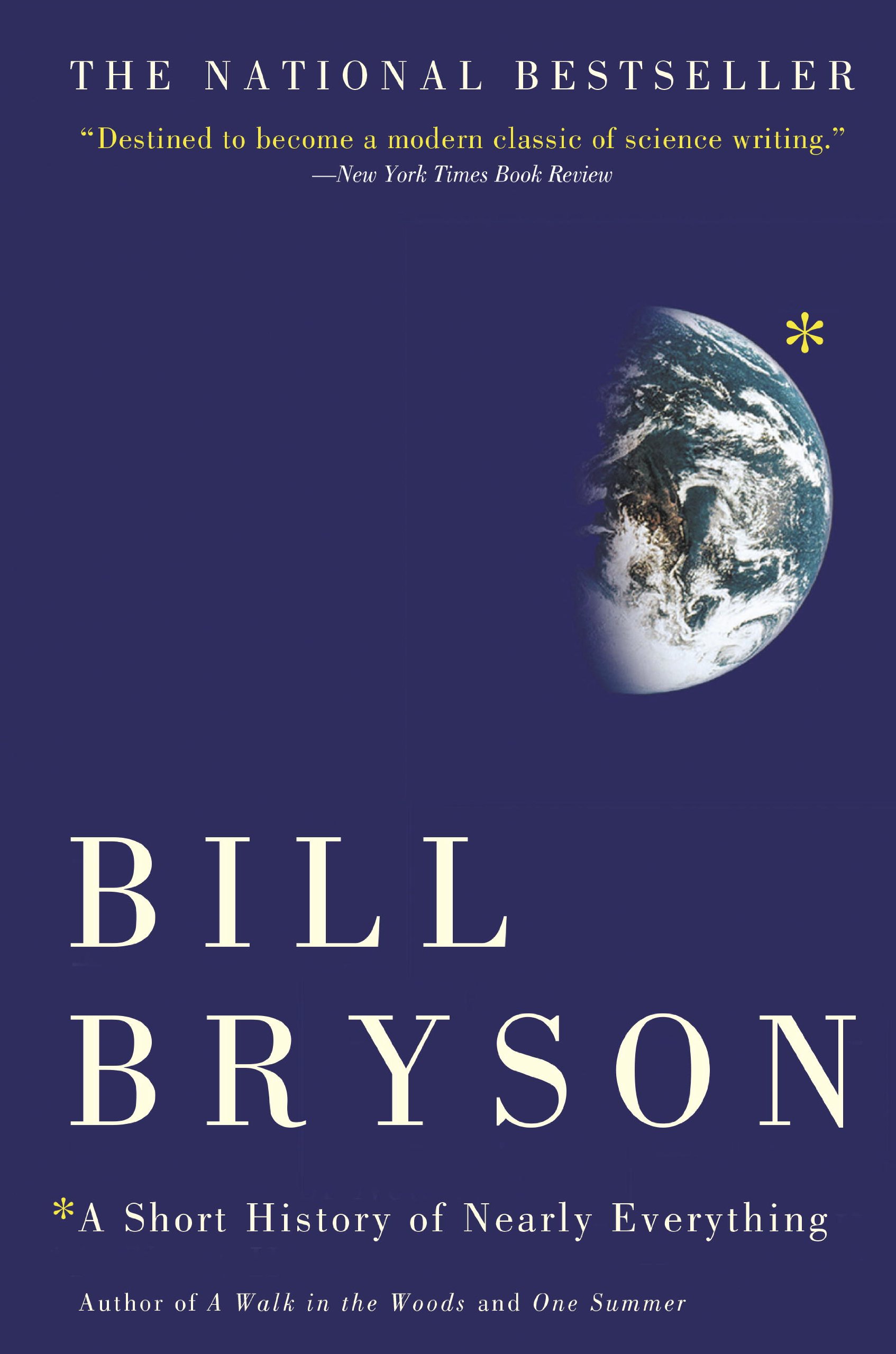
A Short History of Nearly Everything: Part V
In this engaging work of nonfiction, Bill Bryson explores profound questions about the origins of the universe, the development of life on Earth, and modern civilization.
Here are links to our lists for the book: Introduction–Part I, Part II, Part III, Part IV, Part V, Part VI
15 words
113 learners
Learn words with Flashcards and other activities
Definition First

Other learning activities
Full list of words from this list:
-
presage
indicate by signsHoward divided clouds into three groups: stratus for the layered clouds, cumulus for the fluffy ones (the word means "heaped" in Latin), and cirrus (meaning "curled") for the high, thin feathery formations that generally presage colder weather.
-
predilection
a predisposition in favor of somethingUnfortunately, human beings have a careless predilection for disrupting this cycle by putting lots of extra carbon into the atmosphere whether the foraminiferans are ready for it or not.
-
hydrosphere
the watery layer of the earth's surfaceThe water realm is known as the hydrosphere and it is overwhelmingly oceanic. Ninety-seven percent of all the water on Earth is in the seas, the greater part of it in the Pacific which covers half the planet and is bigger than all the landmasses put together.
-
detritus
loose material that is worn away from rocksSo it came as something of a surprise when, in 1860, one of the first transatlantic telegraph cables was hauled up for repairs from more than two miles down, and it was found to be thickly encrusted with corals, clams, and other living detritus.
-
polymer
a naturally occurring or synthetic compoundThe actual chemistry of all this is a little arcane for our purposes here, but it is enough to know that if you make monomers wet they don’t turn into polymers — except when creating life on Earth.
-
incipient
only partly in existence; imperfectly formedWithout an atmosphere ultraviolet rays from the sun, even from a weak sun, would have tended to break apart any incipient bonds made by molecules.
-
organelle
a specialized part of a cell; analogous to an organBut once the stage was set, and apparently quite suddenly, an entirely new type of cell arose — one with a nucleus and other little bodies collectively called organelles (from a Greek word meaning "little tools").
-
eukaryote
an organism of one or more cells with membrane-bound nucleiCompared with the new eukaryotes the old prokaryotes were little more than "bags of chemicals," in the words of the geologist Stephen Drury.
-
apogee
a final climactic stageSinglehandedly Woese had discovered an unsuspected division of life, so fundamental that it stood above the level of kingdom at the apogee of the Universal Tree of Life, as it is rather reverentially known.
-
phylum
the major taxonomic group of animals and plantsIn taxonomy the category that describes the basic body plans of all organisms is the phylum, and here, Conway Morris concluded, were drawer after drawer of such anatomical singularities — all amazingly and unaccountably unrecognized by the man who had found them.
-
propitious
presenting favorable circumstancesNever would there be a more propitious time to find an alternative environment to water.
-
fecundity
the state of being fertile or capable of producing offspringLife’s extraordinary fecundity is amazing, even gratifying, but also problematic.
-
esoteric
understandable only by an enlightened inner circleWhat is nearly always most arresting in any ramble through the scattered disciplines of modern science is realizing how many people have been willing to devote lifetimes to the most sumptuously esoteric lines of inquiry.
-
equable
not easily irritatedWallace, still in the distant East learned of these maneuverings long after the event, but was remarkably equable and seemed pleased to have been included at all.
-
nadir
the lowest point of anythingPerhaps the apogee (or nadir) of this faith in biodeterminism was a study published in the journal Science in 1980 contending that women are genetically inferior at mathematics.
Created on Wed Feb 22 20:40:09 EST 2017
(updated Tue Jul 01 13:26:07 EDT 2025)
Sign up now (it’s free!)
Whether you’re a teacher or a learner,
Vocabulary.com can put you or your class
on the path to systematic vocabulary improvement.