Vocabulary.com Blog
Articles about Writing
 On the surface, and/or seems like a helpful but mostly harmless little phrase — a little ugly, perhaps, but still useful for those times when you want to be extra clear about what all the options are. Most people associate the phrase with legal writing, but it turns out that a surprising number of lawyers and judges hate it, claiming that it's actually unclear and thus impossible to interpret.
Continue reading...
On the surface, and/or seems like a helpful but mostly harmless little phrase — a little ugly, perhaps, but still useful for those times when you want to be extra clear about what all the options are. Most people associate the phrase with legal writing, but it turns out that a surprising number of lawyers and judges hate it, claiming that it's actually unclear and thus impossible to interpret.
Continue reading...
Tasty MorselsGood stuff from Vocabulary.com
A Novelist Breaks Her Own "100-Dollar Word" Rule
National Book Award nominee Karen Joy Fowler on building a character with a larger vocabulary than her own
Karen Joy Fowler's PEN/Faulkner Award-winning novel We Are All Completely Beside Ourselves (now shortlisted for the Man Booker Prize as well) is narrated by a character with an outsize vocabulary. Here, Fowler speaks with Vocabulary.com about the process of finding the words to create that character and the fun of breaking the rule, "Never use a 100-dollar word when a one-dollar word will do."
Continue reading...
 I asked fellow editors recently what usage rule they wanted to know more about or what rule they saw broken regularly. I received lots of answers (thanks, all!), including this one: "Why is worth preceded with a possessive noun or pronoun, as in two days' worth?"
Continue reading...
I asked fellow editors recently what usage rule they wanted to know more about or what rule they saw broken regularly. I received lots of answers (thanks, all!), including this one: "Why is worth preceded with a possessive noun or pronoun, as in two days' worth?"
Continue reading...
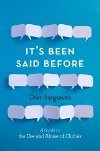 "A breath of fresh air." "Few and far between." "At the end of the day." These are just a few of the clichés examined by Orin Hargraves, an experienced lexicographer and one of our regular contributors, in his new book It's Been Said Before: A Guide to the Use and Abuse of Cliches. In this excerpt, Hargraves explains how to "free your speech and writing of unneeded and detrimental clichés."
Continue reading...
"A breath of fresh air." "Few and far between." "At the end of the day." These are just a few of the clichés examined by Orin Hargraves, an experienced lexicographer and one of our regular contributors, in his new book It's Been Said Before: A Guide to the Use and Abuse of Cliches. In this excerpt, Hargraves explains how to "free your speech and writing of unneeded and detrimental clichés."
Continue reading...
 One of the students in my Fiction Writing Workshop told a classmate to take a red pen and cross out the multitude of adverbs he had strewn throughout his story. The rest of the class nodded their heads in agreement. But just before I could move us on to the next item on the agenda, the author asked the young woman who'd spoken up, "But why? Why can't I use adverbs?"
Continue reading...
One of the students in my Fiction Writing Workshop told a classmate to take a red pen and cross out the multitude of adverbs he had strewn throughout his story. The rest of the class nodded their heads in agreement. But just before I could move us on to the next item on the agenda, the author asked the young woman who'd spoken up, "But why? Why can't I use adverbs?"
Continue reading...
 We're happy to introduce the first in a series of tips on usage and style from the inimitable Grammar Girl, a.k.a. Mignon Fogarty. First up: how do you punctuate do and don't when the words are pluralized?
Continue reading...
We're happy to introduce the first in a series of tips on usage and style from the inimitable Grammar Girl, a.k.a. Mignon Fogarty. First up: how do you punctuate do and don't when the words are pluralized?
Continue reading...
 One of the things everyone remembers about Shakespeare, whether they spent a few weeks on one play in high school or an entire semester on several plays in college, is that he wrote in iambic pentameter. Some may also have vague recollections about their teacher explaining that iambic pentameter isn't difficult to understand, because English "naturally" falls into its rhythms.
Continue reading...
One of the things everyone remembers about Shakespeare, whether they spent a few weeks on one play in high school or an entire semester on several plays in college, is that he wrote in iambic pentameter. Some may also have vague recollections about their teacher explaining that iambic pentameter isn't difficult to understand, because English "naturally" falls into its rhythms.
Continue reading...
Sign up now (it’s free!)
Whether you’re a teacher or a learner,
Vocabulary.com can put you or your class
on the path to systematic vocabulary improvement.