Vocabulary.com Blog
Articles about Words
As it has done for the past couple of years, the New York Times analytics department has kept track of which words readers of the Times website click on the most to look up definitions. At the top of the leaderboard this year are such stumpers as panegyric, immiscible, and Manichean. How well do you know the thorniest Times vocab?
Continue reading...
 Christopher Johnson, a branding expert who runs the website The Name Inspector, has a new book out called Microstyle: The Art of Writing Little about how contemporary message-makers need to become "verbal miniaturists." In this excerpt, Johnson explains how "neologisms can be among the most powerful of micromessages."
Continue reading...
Christopher Johnson, a branding expert who runs the website The Name Inspector, has a new book out called Microstyle: The Art of Writing Little about how contemporary message-makers need to become "verbal miniaturists." In this excerpt, Johnson explains how "neologisms can be among the most powerful of micromessages."
Continue reading...
Every technological advance brings with it new vocabulary, very often by taking old words and supplying new meanings. The age of social media has given us friending and unfriending, following and unfollowing, and so forth. Now Google's foray into social networking, Google+, has introduced its own lingo: circles and hangouts, sparks and huddles. But with such a new system (Google+ is still in limited field trial), there's naturally some initial confusion over basic terminology.
Continue reading...
 A journalist friend on Twitter, Oliver, asked my opinion of ongoing. He said he had been asked to ban it in a style guide, and that he didn't see why. I said I had nothing against it, and that banning it struck me as excessive and unhelpful. Although I sometimes find constructions like ongoing situation and ongoing issue vague or euphemistic, I see no point in prohibiting them outright.
Continue reading...
A journalist friend on Twitter, Oliver, asked my opinion of ongoing. He said he had been asked to ban it in a style guide, and that he didn't see why. I said I had nothing against it, and that banning it struck me as excessive and unhelpful. Although I sometimes find constructions like ongoing situation and ongoing issue vague or euphemistic, I see no point in prohibiting them outright.
Continue reading...
English is not long on productive verb-creating affixes — things you can tack onto or tuck into words at will to make entirely new verbs and get away with it — so it's worth celebrating one of the few that have a proven track record: the suffix -ize. -Ize allows you to neologize when the occasion calls for it, in a way that very few other English affixes do.
Continue reading...
 Two weeks ago, the British writer Matthew Engel set off a trans-Atlantic ruckus by writing an opinion piece for the BBC online magazine entitled, "Why Do Some Americanisms Irritate People?" Engel's piece, along with a followup of reader peeves, attracted the attention of American language watchers. Lexicographer Grant Barrett had some pointed criticisms for Engel, which the BBC ran in diluted fashion. Here we present Barrett's unexpurgated response to Engel.
Continue reading...
Two weeks ago, the British writer Matthew Engel set off a trans-Atlantic ruckus by writing an opinion piece for the BBC online magazine entitled, "Why Do Some Americanisms Irritate People?" Engel's piece, along with a followup of reader peeves, attracted the attention of American language watchers. Lexicographer Grant Barrett had some pointed criticisms for Engel, which the BBC ran in diluted fashion. Here we present Barrett's unexpurgated response to Engel.
Continue reading...
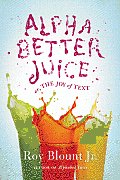 In 2009, we had the pleasure of speaking with Roy Blount, Jr. on the occasion of the publication of Alphabet Juice, a compilation of his linguistic musings presented in dictionary style. Now he's back with the sequel, titled, naturally, Alphabetter Juice. Blount's wit is just as sharp in this followup, which he subtitles "The Joy of Text." Here are a few choice excerpts from the letter A.
Continue reading...
In 2009, we had the pleasure of speaking with Roy Blount, Jr. on the occasion of the publication of Alphabet Juice, a compilation of his linguistic musings presented in dictionary style. Now he's back with the sequel, titled, naturally, Alphabetter Juice. Blount's wit is just as sharp in this followup, which he subtitles "The Joy of Text." Here are a few choice excerpts from the letter A.
Continue reading...
Sign up now (it’s free!)
Whether you’re a teacher or a learner,
Vocabulary.com can put you or your class
on the path to systematic vocabulary improvement.