Vocabulary.com Blog
Articles about Dictionaries
Blog Excerpts
The OED is All a-Twitter
The lexicographers at the Oxford English Dictionary are plumbing a new source for language use: Twitter. Hear how the OED is making use of ephemeral "tweets" from Editor at Large Jesse Sheidlower, on the public radio program Future Tense.
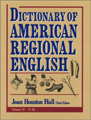 After half a century of research, the monumental Dictionary of American Regional English is nearing completion. DARE chief editor Joan H. Hall recently talked to National Public Radio about the long, arduous journey of the dictionary, which will see its fifth and final volume published next year. As a "rantum scoot" into peculiar American speech, here are some sample regionalisms culled from DARE.
Continue reading...
After half a century of research, the monumental Dictionary of American Regional English is nearing completion. DARE chief editor Joan H. Hall recently talked to National Public Radio about the long, arduous journey of the dictionary, which will see its fifth and final volume published next year. As a "rantum scoot" into peculiar American speech, here are some sample regionalisms culled from DARE.
Continue reading...
I recently made my way to Bloomington, Indiana for the biennial conference of the Dictionary Society of North America, a sublime convergence of unabashed word-nerdery. There was a fascinating array of paper presentations, on everything from grand old men like Samuel Johnson and Noah Webster to cutting-edge techniques in online lexicography. But one paper that I found particularly enjoyable had to do with a Victorian-era "Anglo-Indian glossary" that has had remarkable staying power over the past century or so, perhaps in part due to its memorable title: Hobson-Jobson. The paper, by Traci Nagle of Indiana University, took a look at exactly how the dictionary ended up with such a peculiar name.
Continue reading...
We left off last month on the horns of the dictionary publishers' dilemma: how do you keep a flagship title in print when it costs far more to produce it than it will ever generate in sales? We noted the lure of electronic licensing rights as a factor that might influence the way dictionaries are put together and marketed in the future; and we heard from a few readers who, not unpredictably, lamented any future in which dictionaries in book form were not available.
Continue reading...
Have you browsed through a dictionary (the kind printed on paper) lately? If you have, the publishers of it are probably glad you did, while being aware that you may be part of a dying breed. This month the Lounge is the first of a two-parter examining some implications of dictionary-making in the digital age.
Continue reading...
Behind the DictionaryLexicographers Talk About Language
April 15th: A Most Taxing Day for Dictionaries
 While most of us view April 15th as the day the tax man cometh (and our income goeth), it marked a more auspicious occasion in 1755. That was the day Samuel Johnson published his massive two-volume, 42,773-word dictionary of the English language. Mim Harrison, founding editor of Levenger Press, takes a look back.
Continue reading...
While most of us view April 15th as the day the tax man cometh (and our income goeth), it marked a more auspicious occasion in 1755. That was the day Samuel Johnson published his massive two-volume, 42,773-word dictionary of the English language. Mim Harrison, founding editor of Levenger Press, takes a look back.
Continue reading...
 Last week we interviewed the irrepressible Roy Blount, Jr. about his latest book, Alphabet Juice, an A-to-Z compendium of his musings on the glory of the English language. In this excerpt from the book's opening chapter, Blount considers the scholarly theory of the arbitrary relation between words and meanings, to which he firmly responds: "Arbitrary, schmarbitrary."
Continue reading...
Last week we interviewed the irrepressible Roy Blount, Jr. about his latest book, Alphabet Juice, an A-to-Z compendium of his musings on the glory of the English language. In this excerpt from the book's opening chapter, Blount considers the scholarly theory of the arbitrary relation between words and meanings, to which he firmly responds: "Arbitrary, schmarbitrary."
Continue reading...
Sign up now (it’s free!)
Whether you’re a teacher or a learner,
Vocabulary.com can put you or your class
on the path to systematic vocabulary improvement.