Vocabulary.com Blog Contributor
Mark Peters

Mark Peters is a language columnist, lexicographer, and humorist who has written for Esquire, The Funny Times, New Scientist, Psychology Today, Salon, and Slate. He contributes to OUPblog and writes the Best Joke Ever column for McSweeney's. You can read Mark's own jokes on Twitter, such as, "I play by my own rules, which is probably why no one comes to my board game parties anymore."
In his latest monthly batch of under-the-radar euphemisms, Mark Peters illuminates why the care of "post-health professionals" might be necessary after someone is sent on a "trip to Belize."
Continue reading...
Rebranding — which is a heckuva euphemism itself — has been the root cause of many euphemisms over the years, as fish have become sea kittens and rich jerks have become job creators. The latest attempt at ridiculous, retch-worthy rebranding is knowledge people: in other words, librarians.
Continue reading...
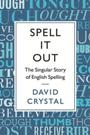 Much like the government, the English spelling system is a popular punching bag. People love to kvetch about its inconsistencies and exceptions, lamenting the near-impossible task of learning to spell.
Continue reading...
Lexicographer Hugh Rawson died recently. Among other accomplishments, he wrote Rawson's Dictionary of Euphemisms and Other Doubletalk, a monumental, essential look at euphemisms that every language-lover should own. I can't recommend it enough.
Continue reading...
Much like the government, the English spelling system is a popular punching bag. People love to kvetch about its inconsistencies and exceptions, lamenting the near-impossible task of learning to spell.
Continue reading...
Lexicographer Hugh Rawson died recently. Among other accomplishments, he wrote Rawson's Dictionary of Euphemisms and Other Doubletalk, a monumental, essential look at euphemisms that every language-lover should own. I can't recommend it enough.
Continue reading...
 Any news event brings new terms and phrases to life while reinvigorating old ones. Look how the recent Presidential election spread malarkey, binders full of women, and bayonets across headlines and tweets. Forevermore, those words will jog the memory of anyone who was paying attention to the 2012 election.
Continue reading...
Any news event brings new terms and phrases to life while reinvigorating old ones. Look how the recent Presidential election spread malarkey, binders full of women, and bayonets across headlines and tweets. Forevermore, those words will jog the memory of anyone who was paying attention to the 2012 election.
Continue reading...
 Late last year, there was some controversy in the media over a new book by Sarah Ogilvie about the Oxford English Dictionary's historical coverage of foreign words. The controversy turned out to be a tempest in a teapot, overshadowing the worthy book behind it. Here, Mark Peters has an appreciation of Ogilvie's Words of the World.
Continue reading...
Late last year, there was some controversy in the media over a new book by Sarah Ogilvie about the Oxford English Dictionary's historical coverage of foreign words. The controversy turned out to be a tempest in a teapot, overshadowing the worthy book behind it. Here, Mark Peters has an appreciation of Ogilvie's Words of the World.
Continue reading...
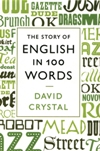 In his new book The Story of English in 100 Words, the absurdly prolific David Crystal provides a unique answer to a question he poses: "How can we tell the story of the English language?"
Continue reading...
In his new book The Story of English in 100 Words, the absurdly prolific David Crystal provides a unique answer to a question he poses: "How can we tell the story of the English language?"
Continue reading...
Sign up now (it’s free!)
Whether you’re a teacher or a learner,
Vocabulary.com can put you or your class
on the path to systematic vocabulary improvement.