Vocabulary.com Blog Contributor
Ben Zimmer

Ben Zimmer is language columnist for The Wall Street Journal and former language columnist for The Boston Globe and The New York Times Magazine. He has worked as editor for American dictionaries at Oxford University Press and as a consultant to the Oxford English Dictionary. In addition to his regular "Word Routes" column here, he contributes to the group weblog Language Log. He is also the chair of the New Words Committee of the American Dialect Society.
Word RoutesExploring the pathways of our lexicon
The Year in Words, 2011 Edition
Taking a look back at some lexical favorites.
Yes, it's time for that annual tradition: picking the words and phrases that best define the past year. Did occupy occupy your attention? Were you talking about tiger moms or tiger blood? Or were you paralyzed by the condition known as FOMO (fear of missing out)?
Continue reading...
Word RoutesExploring the pathways of our lexicon
Trump's "Apprenti": The Return of the Bogus Latin Plural
Was his plural of "apprentice" supposed to be a joke?
Earlier this week, Republican presidential hopeful Newt Gingrich emerged from a powwow with Donald Trump, and they had an announcement to make. Trump told reporters that, at Gingrich's request, he was starting a program for disadvantaged New York schoolchildren, modeled on his competitive reality TV show "The Apprentice." "We're going to be picking ten young, wonderful children, and we're going to make them apprenti," Trump said. That's right, he said apprenti.
Continue reading...
Word RoutesExploring the pathways of our lexicon
The Origins of "Black Friday"
You can thank the put-upon Philadelphia traffic cops.
Today is the day after Thanksgiving, when holiday shopping kicks off and sales-hunters are in full frenzy. The day has come to be known in the United States as "Black Friday," and there are a number of myths about the origin of the name. Retailers would like you to believe that it's the day when stores turn a profit on the year, thus "going into the black." But don't you believe it: the true origins come from traffic-weary police officers in Philadelphia in the early 1960s.
Continue reading...
Word RoutesExploring the pathways of our lexicon
Down Under, Obama Has a "Chinwag"
World leaders use "Strine" (Australian English) for humorous effect.
Visiting Australia earlier this week, President Obama broke the ice by injecting some Australian slang into his public speeches. He used a selection of Aussie-isms like chinwag and ear-bashing for comic effect, but it's probably a good thing that he didn't go overboard by trying to mimic a broad Australian English accent (often called "Strine"). British Prime Minister David Cameron, meanwhile, wasn't so lucky: he got into some hot water for an ill-advised attempt at Strine.
Continue reading...
Word RoutesExploring the pathways of our lexicon
Little Commas Make Big Waves
Passions over the serial comma can run deep among the stylistas.
Earlier this week, I had the pleasure of taking part in a lively panel discussion entitled "More than a Century of Style," celebrating The Chicago Manual of Style. The event, held at the University of Chicago and sponsored by the public radio station WBEZ, brought out more than two hundred committed stylistas, with hundreds more tuning in to a live stream on Facebook. Here's an indication of the type of crowd that braved that rainy Chicago night: when University of Chicago Press managing editor Anita Samen announced that she was "passionately pro-serial-comma," she was met with rapturous applause.
Continue reading...
Word RoutesExploring the pathways of our lexicon
Tracking Dialects on Twitter: What's Coo and What's Koo?
New techniques of "Twitterology" make it possible to study dialectal differences.
In last Sunday's New York Times, I wrote about how researchers are using Twitter to build huge linguistic datasets in order to answer all sorts of interesting analytical questions. Some are looking at the emotional responses of Libyans to unfolding events like the death of Qaddafi, while others are tracking the distribution of regional patterns in American English. This latter research area, Twitter dialectology, is just getting off the ground, but the results are already quite intriguing.
Continue reading...
Word RoutesExploring the pathways of our lexicon
David Henry Hwang Traverses the Language Barrier in "Chinglish"
A new Broadway comedy finds humor in the dangers of mistranslation.
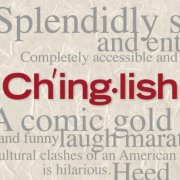 A new play is opening tonight on Broadway, and it's a treat for language lovers. It's called "Chinglish," and it was written by David Henry Hwang, who won a Tony Award for "M. Butterfly." I had a chance to talk to Hwang about his comic exploration of the perils of cross-linguistic misunderstanding.
Continue reading...
A new play is opening tonight on Broadway, and it's a treat for language lovers. It's called "Chinglish," and it was written by David Henry Hwang, who won a Tony Award for "M. Butterfly." I had a chance to talk to Hwang about his comic exploration of the perils of cross-linguistic misunderstanding.
Continue reading...
Sign up now (it’s free!)
Whether you’re a teacher or a learner,
Vocabulary.com can put you or your class
on the path to systematic vocabulary improvement.