 As of 2024, 37 states and the District of Columbia have passed laws or implemented new policies related to evidence-based reading instruction since 2013, according to an Education Week analysis.
Vocabulary is a core part of the science of reading.
Vocabulary.com can contribute to building comprehension in your classroom using a robust dictionary, gamified activities, and educator tools to set students up for success.
Vocabulary.com’s ELA experts provide an overview of how Vocabulary.com’s resources and activities contribute to effective literacy instruction.
What is vocabulary and why is it important?
Vocabulary refers to the collection of words and terms that an individual understands and uses. It allows them to communicate ideas, thoughts, and emotions clearly and effectively. It also aids in interpreting texts, instructions, and conversations accurately.
Strong vocabulary skills are correlated with academic achievement across subjects. Proficient readers tend to have larger vocabularies, which can aid in understanding complex texts and academic concepts. Vocabulary proficiency fosters critical thinking skills, enabling individuals to analyze, evaluate, and interpret information more effectively.
.jpg)
What is the relationship between the science of reading and vocabulary?
The science of reading is an evidence-based approach to literacy instruction that draws upon research from various fields such as psychology, linguistics, neuroscience, and education. It seeks to understand how individuals learn to read and how best to teach reading skills effectively. Research has shown that effective literacy instruction incorporates explicit teaching in five major areas: phonics, phonemic awareness, fluency, comprehension, and vocabulary (National Reading Panel, 2000).
Explicit teaching of vocabulary helps students acquire challenging words, especially those that convey concepts that students rarely encounter in their everyday lives (Beck et al., 2002). Students best gain vocabulary knowledge through direct instruction that teaches specific words as well as general word-learning strategies.
How does Vocabulary.com support the science of reading?
Vocabulary
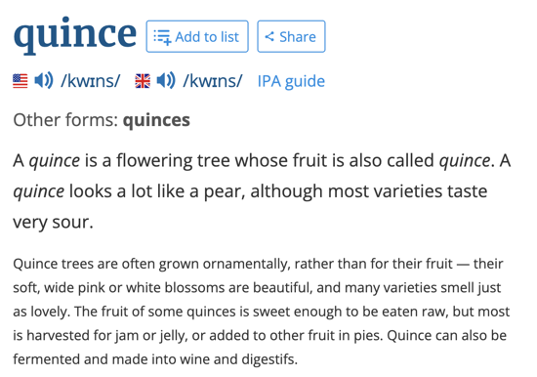
Research has shown that teaching students specific words before they read leads to better comprehension of a text (Baker, Fien, & Baker, 2010). Explicit vocabulary instruction requires teachers to directly teach the pronunciation and definitions of new vocabulary words in a structured manner. Vocabulary.com's dictionary uses student-friendly language to explain what words mean and how they are used. The dictionary’s audio, IPA transcriptions, and videos teach students to pronounce words correctly, resulting in a more robust understanding of each word.
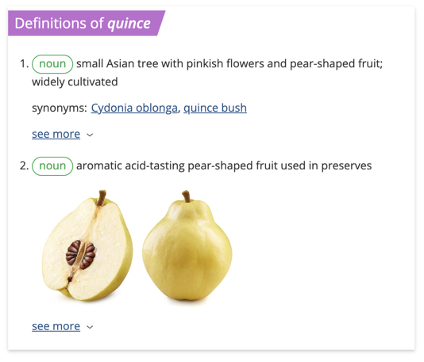

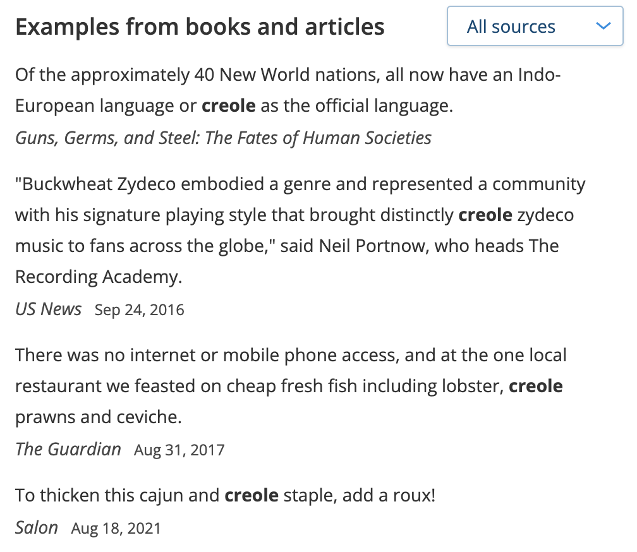
When students encounter new words in different contexts, they are more likely to learn and retain the new words (Santoro et al., 2016). Vocabulary.com's dictionary and word lists show how words are used in a variety of contexts, including literature, newspaper and magazine articles, academic journals, and textbooks. The example sentences provide crucial models of correct word usage that can help students internalize word meaning and commit word meaning to long-term memory.
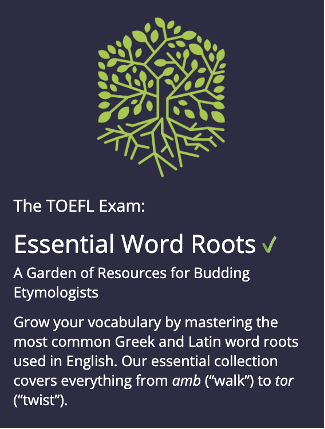
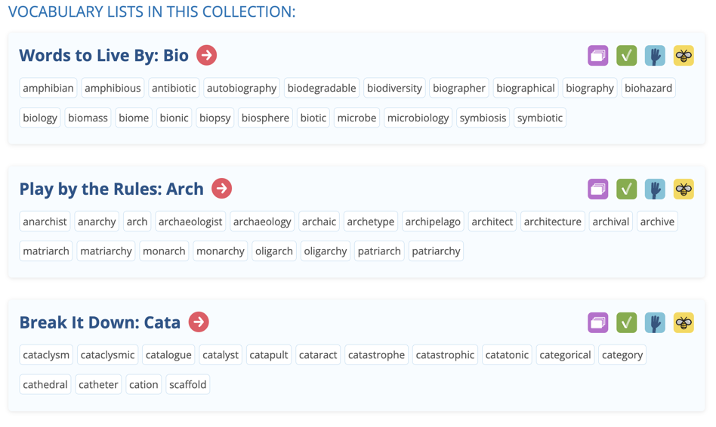
In addition to specific word instruction, research has shown that it is important to teach students specific word-learning strategies to determine the meaning of unfamiliar words while reading. Vocabulary.com has an extensive collection of vocabulary lists that can be used for explicit morphology teaching. Through direct instruction on word roots and affixes, students can improve their reading abilities and learn to uncover the meanings of new words.
Comprehension
Vocabulary knowledge is crucial for understanding the meaning of words encountered in text. When readers encounter unfamiliar words, their comprehension may suffer if they cannot decode or understand the meanings of these words. A rich vocabulary enables readers to comprehend text more effectively by recognizing and understanding a wide range of words.

Vocabulary.com helps set students up for comprehension success when they read. Our extensive collection of vocabulary lists for novels, non-fiction texts, and more can help students master the most challenging and important words found in texts, allowing them to grasp the meaning of the texts more readily. Additionally, Vocabulary.com's focus on word mastery enables readers to discern subtle nuances in word meaning, tone, and connotation within the text. This helps students appreciate an author's choice of words and understand the subtleties of language, leading to a richer understanding of the text.

Fluency
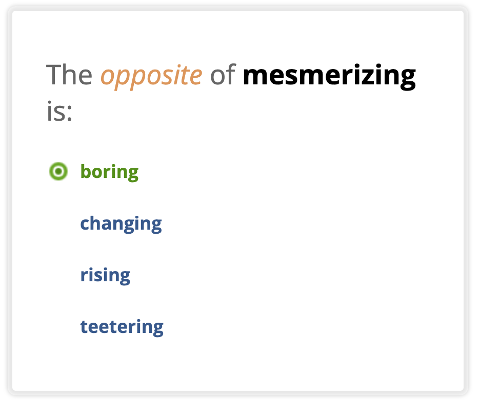
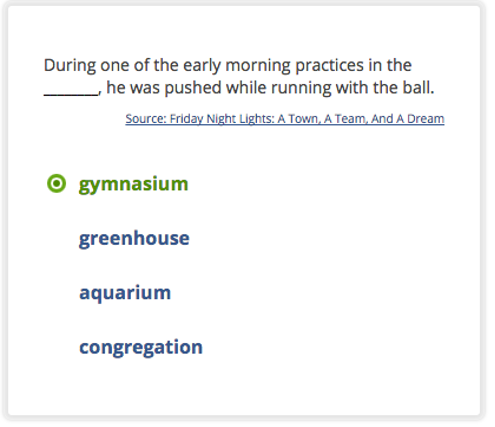
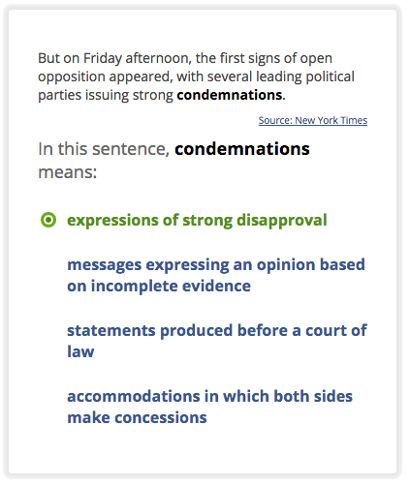
Reading fluency and vocabulary are closely interconnected elements of reading proficiency, each influencing and supporting the other. Reading fluency involves reading text accurately, quickly, and with appropriate expression. A strong vocabulary contributes to fluency by facilitating automatic word recognition. When readers encounter familiar words, they can recognize them instantly, leading to smoother and more fluent reading.
Fluency depends on the ability to recognize words effortlessly. A larger vocabulary gives readers a broader bank of familiar words, making it easier to recognize and process text quickly. Conversely, limited vocabulary can impede fluency, as readers may struggle to decode or comprehend unfamiliar words. Vocabulary.com's VocabTrainer and practice exercises help students build their word recognition skills, which in turn helps increase their reading fluency.
Summary
Vocabulary is a core part of the science of reading approach and enables individuals to analyze, evaluate, and interpret information more effectively. Vocabulary.com builds fluency, vocabulary, and comprehension with a robust dictionary, gamified learning activities, and educator tools to track student progress.
Learn more about Vocabulary.com and how you can implement this powerful tool into your classroom to support evidence-based reading instruction.

References
Baker, S. K., Fien, H., & Baker, D. L. (2010). Robust reading instruction in the early grades: Conceptual and practical issues in the integration and evaluation of tier 1 and tier 2 instructional supports. Focus on Exceptional Children, 42(9), 1–20.
National Reading Panel. (2000). Report of the National Reading Panel: Teaching children to read: An evidence-based assessment of the scientific research literature on reading and its implications for reading instruction: Reports of the subgroups. National Institute of Child Health and Human Development.Santoro, L.E., Baker, S.K., Fien, H., Smith, J.M., & Chard, D.J. (2016). TEACHING Exceptional Children, 48(6), 282-292. https://doi.org/10.1177/0040059916650634