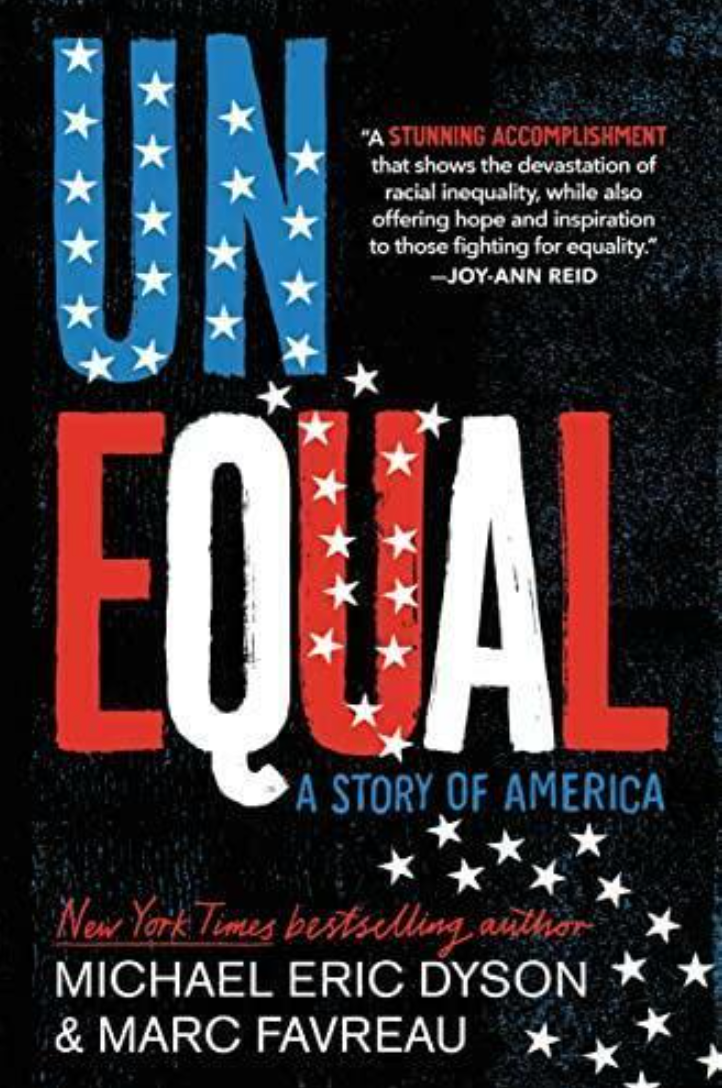
Unequal: A Story of America: Prologue–Chapter 3
In this nonfiction story of America, the authors recount the struggles of key African Americans in the country's march towards the equality and justice promised by the Constitution.
Here are links to our lists for the book: Prologue–Chapter 3, Chapters 4–7, Chapters 8–10, Chapters 11–13, Chapter 14–Afterword
35 words
388 learners
Learn words with Flashcards and other activities
Definition First

Other learning activities
Full list of words from this list:
-
till
work land as by ploughing to make it ready for cultivationThe real story of racial inequality—and resistance to it—is the prologue to our present. You can see it in where we live, where we go to school, and where we work. It’s reflected in our laws, in our system of government, and in who gets to call the shots. It’s even in the water we drink and in the soil we till.
-
ominously
in a manner suggesting something bad will happenThey founded the Ku Klux Klan in 1866, a vigilante army meant to keep Black people out of politics and to force them back onto white-owned plantations, and they passed the Black codes—a set of state laws that seemed ominously like slavery.
-
relent
give in, as to influence or pressureBut when their tug-of-war began to attract the notice of the few passengers remaining on the car, the conductor relented at last.
-
begrudge
allow unwillingly or reluctantly“You can go into that car if you want to,” he begrudged her.
-
plaintiff
a person who brings an action in a court of lawThe case had originated with a Black plaintiff named Homer Plessy, who attempted to ride a whites-only streetcar in New Orleans and was arrested, tried, and convicted for this “crime.”
-
perpetuate
cause to continue or prevailPlessy’s lawyer, Albion W. Tourgée, appealed that decision and argued before the court that segregation’s “only effect is to perpetuate the stigma of color.”
-
stigma
a symbol of disgrace or infamyPlessy’s lawyer, Albion W. Tourgée, appealed that decision and argued before the court that segregation’s “only effect is to perpetuate the stigma of color.”
-
ironclad
inflexibly entrenched and unchangeableBefore the court’s decision, Black people could at least attempt to claim their constitutional right to equality: equal schools, equal homes, equal employment opportunities, and more. But after Plessy v. Ferguson, the nation swapped its patchwork of laws and customs for the ironclad rule of racial inequality.
-
drafty
not airtight; exposed to currents of airBlack students, where they could attend school at all, met in drafty, unheated structures.
-
incur
receive a specified treatmentI only sensed scorn and hate; the kind of despising which a dog might incur.
-
demoralize
lower someone's spirits; make downheartedNo Black person believed for a moment that “separate” could ever be “equal.” Racial segregation was meant to demoralize, dehumanize, and destabilize Black people.
-
afflict
cause physical pain or suffering inBut all around her, the segregated city buzzed with thousands of white government workers, politicians, taxi drivers, and streetcar operators, all of them insensitive to the racial inequalities that still afflicted the capital of the world’s largest democracy.
-
desegregate
open to members of all races and ethnic groupsIt took a daring First Lady named Eleanor Roosevelt to finally desegregate the White House in the mid-1930s, but she was in a distinct minority of white people.
-
epithet
a defamatory or abusive word or phraseIn the 1930s and 1940s, spectators in the gallery of the US Senate could hear the likes of Mississippi senator Theodore Bilbo, who hurled racial epithets openly while his colleagues looked on and said nothing.
-
ploy
a maneuver in a game, conversation, or situation“Do you mean to tell me that you are not going to serve me?” Mary asked.
Terrell’s question was a carefully rehearsed ploy. -
undermine
weaken or impair, especially graduallyShe had remained an activist into old age, looking for every opportunity to undermine the power of Jim Crow.
-
servitude
the state of being required to labor for someone elsePassed in the 1860s and 1870s, the laws stated that all restaurants, theaters, bars, and hotels had to admit “any respectable, well-behaved person without regard to race, color or previous condition of servitude.”
-
momentous
of very great significanceIt was a quiet victory, compared with the momentous decision the court would hand down eleven months later, when Brown v. Board of Education of Topeka, Kansas, declared “separate but equal” unconstitutional, overruling Plessy v. Ferguson once and for all.
-
fateful
having extremely unfortunate or dire consequencesA third man joined the fateful chase in his truck to cut off Arbery’s route of escape.
-
jurisdiction
the territory within which power can be exercisedIt took a video of the killing, national outcry, multiple changes in jurisdiction, and three months for charges to be brought against the three men who were eventually convicted of murder.
-
emblazon
decorate, adorn, or inscribe with a designHe often wore a tan uniform emblazoned with the letters TR.
-
complicity
guilt as a confederate in a crime or offenseThe pages of the Free Speech crackled with new revelations, criticisms, and venom aimed at the city’s white leaders, whom she suspected of complicity in the lynchings.
-
devious
characterized by insincerity or deceitShe placed prominent people at the scene of the crime and also later exposed one of Moss’s white competitors as the devious purchaser of the People’s Grocery at a bargain-basement price.
-
perpetrate
perform an act, usually with a negative connotationThese murders were not perpetrated under the cover of darkness.
-
curio
something unusual, maybe worthy of collectingWhite spectators snapped pictures of men and women suffering slow and agonizing deaths. Some of these ended up on memorial postcards and became ghoulish items for sale in drugstores and curio shops.
-
lynch
kill without legal sanctionIn all, between the end of Reconstruction and 1950, lynch mobs murdered over four thousand African American people in the South.
-
accost
approach and speak to someone aggressively or insistentlyOn his way home, an armed vigilante named George Zimmerman accosted Trayvon on a sidewalk and began following him home.
-
heyday
the period of greatest prosperity or productivityWhen a Black person is killed under suspicious circumstances, white people move quickly to assign guilt to the victim, not the perpetrator. These false stories—much as they did in lynching’s heyday—serve to fuel the cycle of white violence.
-
dub
give a nickname to“Sweet Auburn” Avenue in Atlanta, Georgia, was a hub of religious, cultural, and economic life for Black people for much of the twentieth century; it was once dubbed “the richest Negro street in the world.”
-
indiscriminately
in a random mannerSeveral biplanes—most likely crop dusters recruited for the attack—made bombing runs over the neighborhood, firing indiscriminately at residents and dropping explosives.
-
reparation
something done or paid in expiation of a wrongIn 2003, Franklin helped bring a lawsuit against the city of Tulsa and the state of Oklahoma, seeking reparations for over one hundred then-living survivors of the massacre and three hundred children and grandchildren of victims.
-
imperceptibly
in a manner that is difficult to discern“The wealth gap,” according to the historian Mehrsa Baradaran, “is where the injustices sown in the past grow imperceptibly in the present.”
-
recoup
regain or make up forA report commissioned by the state of Oklahoma detailed nearly $2 million in insurance claims from the Greenwood massacre, which would be valued at nearly $30 million today. The total financial impact on victims was likely much higher, as many victims, fearing for their lives, fled the city without attempting to recoup their losses.
-
legacy
anything handed down by someone or something in the past“What if we had been allowed to maintain our family business?” asked one woman, whose grandfather’s shoe shop was destroyed by a white mob. “If they had been allowed to carry on that legacy, there’s no telling where we could be now.”
-
ebb
fall away or declineWhen the mob violence of these years finally ebbed, hundreds—perhaps thousands—of Black people had been murdered and many more injured.
Created on Thu Mar 30 13:18:06 EDT 2023
(updated Tue Apr 04 12:19:10 EDT 2023)
Sign up now (it’s free!)
Whether you’re a teacher or a learner,
Vocabulary.com can put you or your class
on the path to systematic vocabulary improvement.