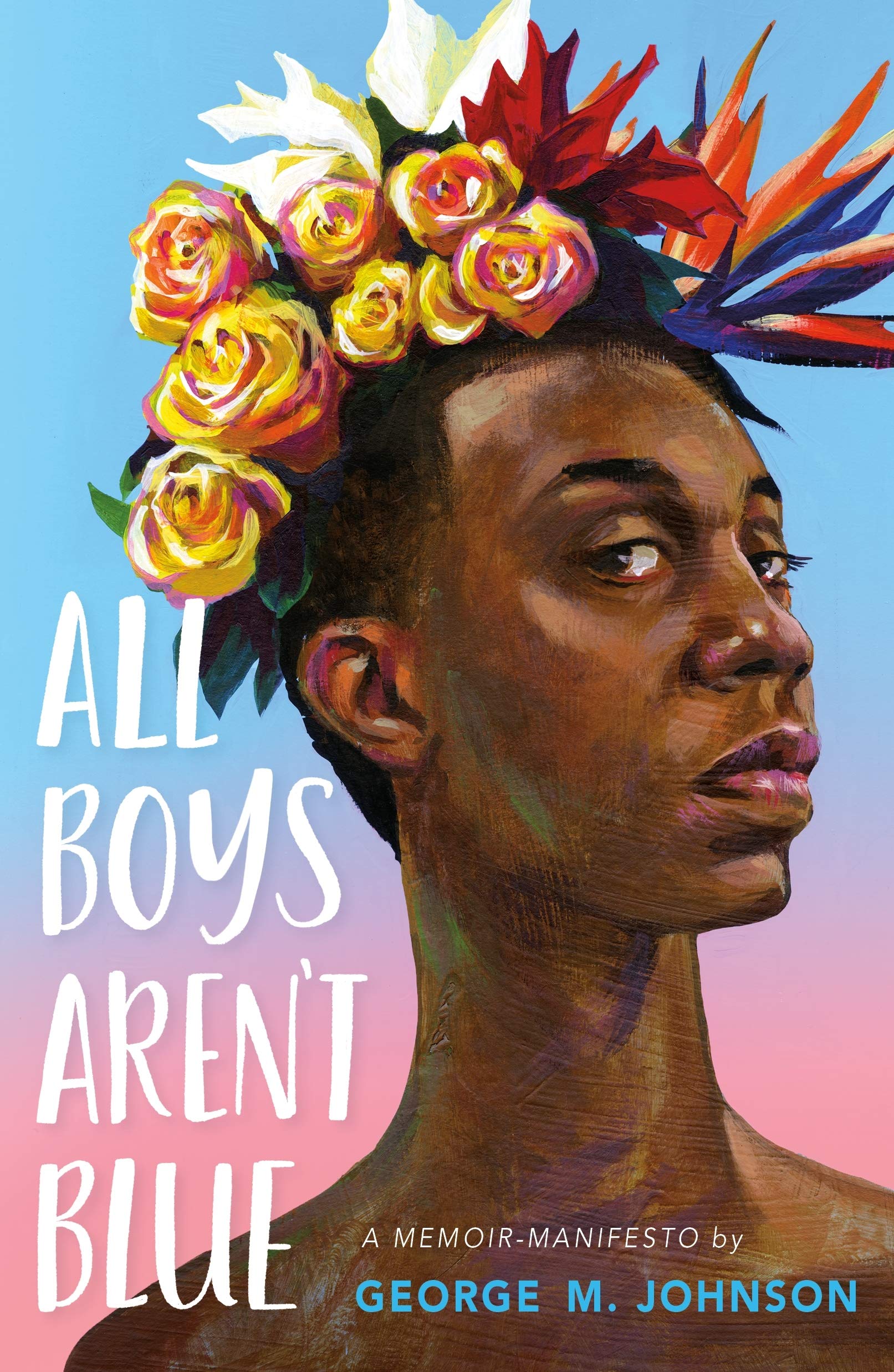
All Boys Aren't Blue: Act 1
In this unflinching memoir, George M. Johnson interweaves his personal history with reflections on systemic oppression.
Here are links to our lists for the memoir: Introduction, Act 1, Act 2, Act 3, Act 4
30 words
34 learners
Learn words with Flashcards and other activities
Definition First

Other learning activities
Full list of words from this list:
-
conducive
tending to bring about; being partly responsible forSome of my cousins used to live in the projects in Jersey City, an environment my mom’s mother, Nanny, felt wasn’t very conducive to the safe upbringing of small Black boys.
-
suppression
the conscious exclusion of unacceptable thoughts or desiresHowever, I was old enough to know that I would find safety only in the arms of suppression—hiding my true self—because let’s face it, kids can be cruel.
-
conflate
mix together different elementsThose who are seen as having issues with their mental health face a lot of stigma and discrimination because mental health is often conflated with mental illness.
-
assimilation
the process of absorbing one cultural group into anotherAs an adult, I have gone through the unlearning to understand that my community’s treatment of Black queer children is in fact a by-product of a system of assimilation to whiteness and respectability that forces Black people to fit one mold in society, one where being a man means you must be straight and masculine.
-
flack
intense adverse criticismBut she is responding to years of hate and flack she received for having crooked teeth.
-
emphatic
forceful and definite in expression or actionThankfully, my mother and Nanny gave him an emphatic “try again.”
-
innate
inborn or existing naturallyI was too young to ask myself whether my performance was innate or not—although I know now that I wasn’t imitating anyone.
-
mannerism
a behavioral attribute that is distinctive to an individualThere are moments even now when I’m simply not sure of my mannerisms, femininity, and more.
-
ostracize
avoid speaking to or dealing withLingo that children like me were ostracized for using.
-
emulate
strive to equal or match, especially by imitatingHowever, a lot of this history has been erased from those who identify as queer, which has allowed the notion that queer culture comes from emulating Black cishet women to spread.
-
elicit
call forth, as an emotion, feeling, or responseBut the fact that “Honeychild” was created by a boy elicited grave concerns.
-
disparate
fundamentally different or distinct in quality or kindLunch was always interesting because I would sit with the boys and talk about “boy” things, but then immediately go to recess and get with my girls. Code-switching like that, navigating disparate spaces like that, was pretty much normal.
-
altercation
a noisy, angry argument or fight between people...walking away from the altercation was seen as a sign of weakness and admission that you were, in fact, gay.
-
disdain
lack of respect accompanied by a feeling of intense dislikeIt wasn’t that I had a disdain for sports as much as I had a fear of interacting with people I wasn’t comfortable around.
-
homage
respectful deferenceOn January 31, the hallways were a mix of American history, including a few Black faces we should all know about. By the time we got to school on February 1, it was as if the ancestors had visited overnight and turned the hallways into an homage to Black history.
-
thespian
of or relating to dramaLucky for me, my queerness came off as thespian and I landed the lead role of Abraham Lincoln.
-
adherence
faithful support for a cause or political party or religionIt was seen as progress when Hattie McDaniel became the first Black woman to ever win for Best Supporting Actress, but needed a special exemption to enter a whites-only building to accept her Oscar because of the venue’s adherence to Jim Crow-era segregation laws.
-
disparaging
expressive of low opinionWe learned about the Emancipation Proclamation, but also read some of the statements he made that weren’t in the history books. The ones that were disparaging toward Black Americans and the fight for equality.
-
paramount
most important or impactful“My paramount object in this struggle is to save the Union, and is not either to save or to destroy slavery. If I could save the Union without freeing any slave I would do it, and if I could save it by freeing all the slaves I would do it; and if I could save it by freeing some and leaving others alone, I would also do that.”
-
inclination
an attitude of mind that favors one alternative over others“I have no purpose, directly or indirectly, to interfere with the institution of slavery in the States where it exists. I believe I have no lawful right to do so, and I have no inclination to do so.”
-
replete
deeply filled or permeatedI had on my mask, replete with smiles and laughter to hide my tears.
-
guile
shrewdness as demonstrated by being skilled in deceptionWe wear the mask that grins and lies,
It hides our cheeks and shades our eyes,—
This debt we pay to human guile -
sentiment
a personal belief or judgmentI never felt that my mom despised our traditional education; I just think that she knew we needed more. These sentiments were echoed by my father, who worked on a predominantly white police force.
-
marginalize
relegate to a lower or outer edge, as of groups of peopleMicroaggression is the academic term for what I was experiencing. Simply put, it’s when a person insults or diminishes you based solely on the marginalized group you are in.
-
overt
open and observable; not secret or hiddenThese little assumptions grow to create an entire stereotype. This kind of microaggressive behavior often leads to overt racism or homophobia, eventually.
-
condescending
characteristic of those who treat others with arroganceSometimes it’s intentional, like non-Black kids asking questions with a negative, condescending type of vibe to rattle you. But other times, a person doesn’t even know that they’ve insulted you or your culture.
-
absolve
excuse or free from blameYou’ll find that people often use the excuse “it was the norm” when discussing racism, homophobia, and anything else in our history they are trying to absolve themselves of.
-
underscore
give extra weight toThis double standard is called the “school-to-prison pipeline” nowadays, and it underscores how Black kids are given harsher penalties for the same offenses as white kids.
-
tangible
perceptible by the senses, especially the sense of touchIn Rose Hackman’s article in the Guardian on post-segregation public swimming pools, she explains how Black kids drown at roughly three times the rate of white kids due to a lack of resources, both tangible and cultural, as well as racism.
-
stigma
a symbol of disgrace or infamyEverything is connected, and it often requires someone breaking a stigma or pattern in order to change the trajectory of a family.
Created on Thu Jul 23 17:18:09 EDT 2020
(updated Mon Jul 27 16:40:03 EDT 2020)
Sign up now (it’s free!)
Whether you’re a teacher or a learner,
Vocabulary.com can put you or your class
on the path to systematic vocabulary improvement.