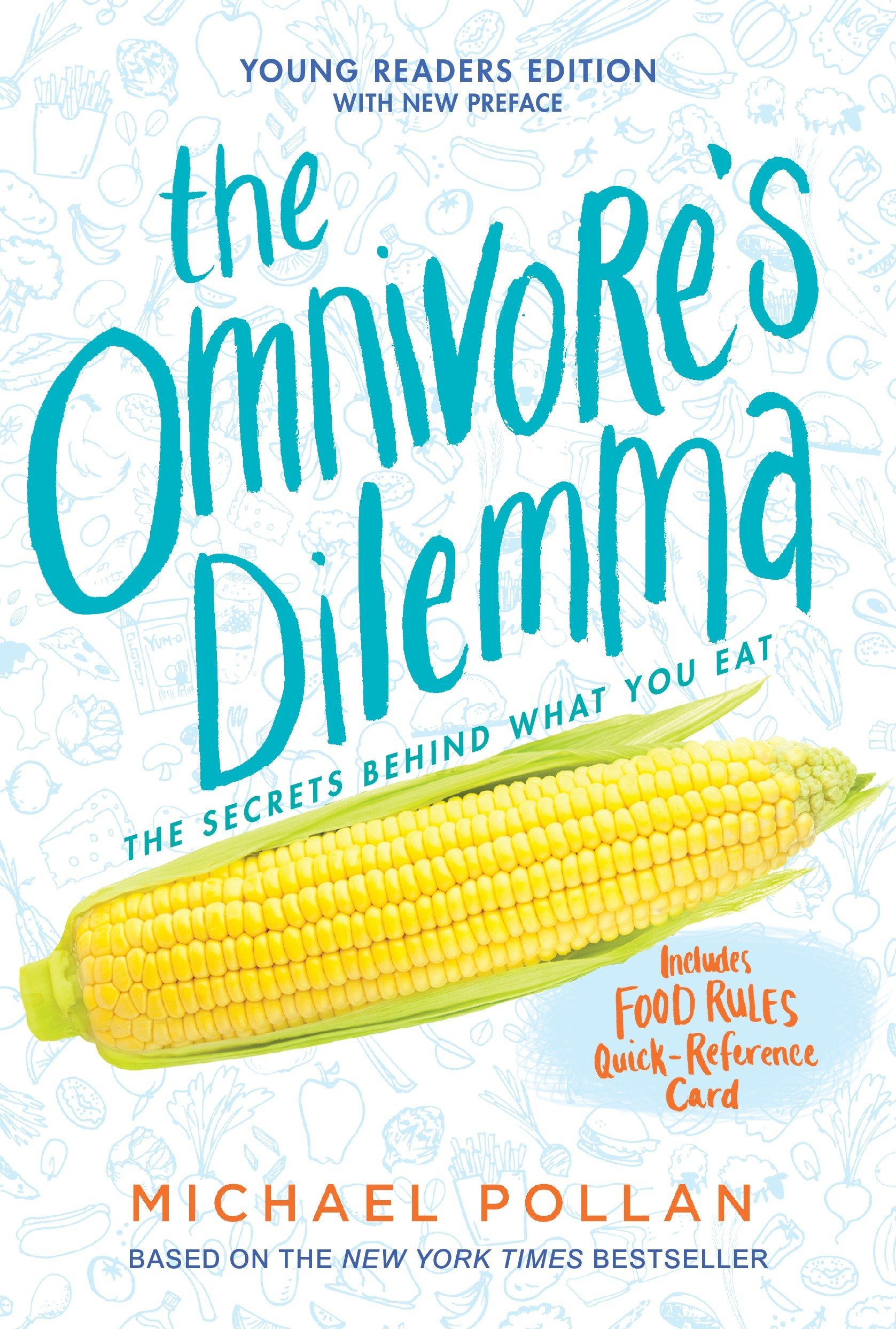
The Omnivore's Dilemma: Part II
Adapted for young readers, this important work is an investigation into the ways food production is shaped by politics and the effects of our food choices.
Here are links to our lists for the book: Introduction–Part I, Part II, Part III, Part IV–Afterword
15 words
2171 learners
Learn words with Flashcards and other activities
Definition First

Other learning activities
Full list of words from this list:
-
organic
grown or raised without synthetic fertilizers or pesticidesThe word organic has become a kind of shorthand for food that is healthier or more natural or chemical-free.
-
counterculture
a lifestyle and set of values that oppose societal normsBut the idea of organic food did not really catch on until 1969. That year marked the height of the counterculture of the 1960s. Civil rights and anti-war protests rocked the country. Young people were rebelling against a society they thought was violent, corrupt, and immoral.
-
commune
a body of people living together and sharing everythingSome “dropped out” to join communes, groups of people living and working on farms.
-
conventional
conforming with accepted standardsThe demand for organic food really jumped in the year 1990, after the Alar food scare. Alar was a chemical conventional growers sprayed on apples to help them ripen. In 1990 the Environmental Protection Agency found that Alar could cause cancer.
-
bandwagon
a popular trend that attracts growing supportOn one side of the fight were the agribusiness corporations, which had just jumped onto the organic food bandwagon.
-
sewage
waste matter carried away in drainsThey also wanted to be able to fertilize their “organic” fields with sewage sludge.
-
sludge
any thick, viscous matterThey also wanted to be able to fertilize their “organic” fields with sewage sludge.
-
synthetic
not of natural origin; prepared or made artificiallyHe argued that the rules for organics had to allow synthetic additives and preservatives.
-
fraud
deliberate trickery intended to gain an advantageMany people from the old organic movement argued that to put synthetics in a processed food and then call it organic was a fraud.
-
compost
a mixture of decaying vegetation and manureIn place of petrochemical fertilizers, Greenways’s organic acres are fed with compost from a nearby horse farm and by poultry manure.
-
mainstream
adhering to what is commonly acceptedBefore the Goodmans, salad for most Americans meant iceberg lettuce. They introduced dozens of different salad mixes to mainstream America.
-
hefty
large in amount, extent, or degreeThat comes to $34 to feed a family of three at home. (Though we did make a second meal from the leftovers.) That’s a hefty price compared to the same meal from the industrial food chain.
-
residue
matter that remains after something has been removedAlso, organic cows, like Rosie the organic chicken, are never fed corn that contains residues of atrazine, the herbicide commonly sprayed on American cornfields.
-
teeming
abundantly filled with especially living thingsA normal patch of dirt will be teeming with life, from earthworms to bacteria to the microscopic threads of fungi.
-
sustainable
using methods that do not cause harm to the environmentThe original organic food movement thought organic farming should be sustainable. That means it should be, as much as possible, a closed loop, recycling fertility and using renewable energy.
Created on Wed Apr 02 21:52:54 EDT 2014
(updated Wed Jun 25 16:26:55 EDT 2025)
Sign up now (it’s free!)
Whether you’re a teacher or a learner,
Vocabulary.com can put you or your class
on the path to systematic vocabulary improvement.